

The Authority in Global Agricultural Chemistry & Bio-Resources
How feed & grain processing equipment affects output quality
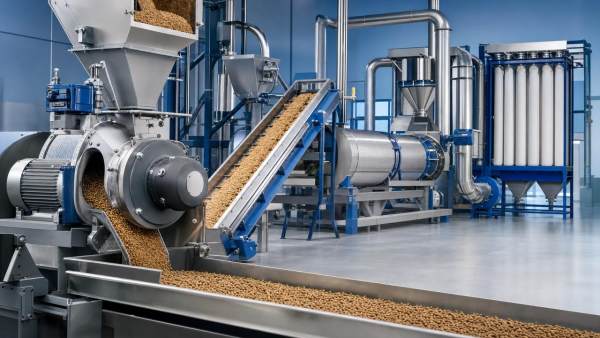
For quality control and safety management, Feed & Grain processing equipment shapes far more than throughput. It determines particle uniformity, moisture stability, pathogen reduction, foreign matter control, and traceable plant performance.
Across primary industries and fine chemical-linked supply chains, output standards are tightening. As a result, equipment decisions now influence not only efficiency, but also audit readiness, customer acceptance, and downstream formulation reliability.
Why Feed & Grain processing equipment is moving from utility to quality driver
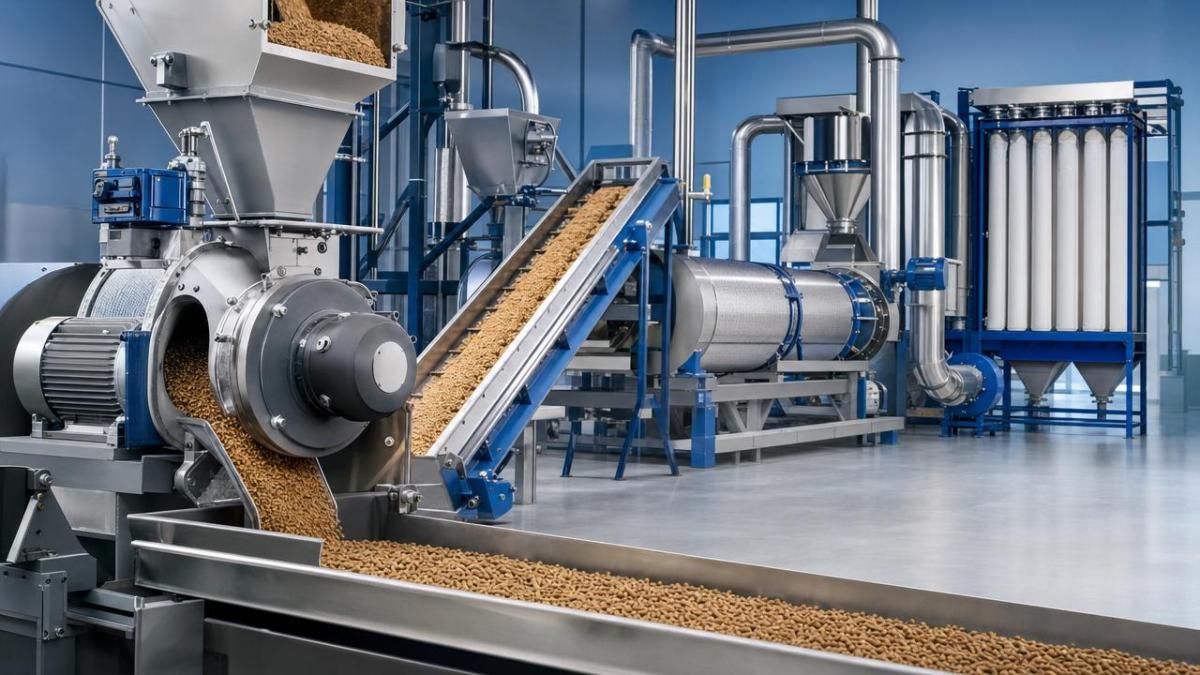
The role of Feed & Grain processing equipment has changed sharply in recent years. Plants are no longer judged only by volume. They are judged by consistency, safety, and verifiable process control.
This shift reflects broader changes in agriculture, food-linked manufacturing, bio-ingredients, and industrial raw material handling. Buyers increasingly expect stable lot quality, transparent records, and lower contamination risk from every batch.
In practice, a grinder, conditioner, dryer, pellet mill, screener, conveyor, or dust collection system can directly affect final product attributes. Poor design or poor maintenance often appears first as quality variation.
That is why Feed & Grain processing equipment is now evaluated through a wider lens. Mechanical performance, hygienic design, automation depth, cleanability, and data visibility all matter to output quality.
The clearest trend signals in modern processing environments
Several trend signals show how quality expectations are changing around Feed & Grain processing equipment. These signals appear across feed milling, grain handling, storage preparation, and ingredient pre-processing operations.
- Tighter particle size specifications for better mixing and nutritional consistency.
- Higher demand for thermal control to reduce microbial and moisture-related risks.
- Stronger focus on traceability, sensor feedback, and digital batch records.
- Growing pressure to reduce cross-contamination between formulations.
- Rising interest in energy-efficient systems without sacrificing product integrity.
- More scrutiny on dust, housekeeping, and explosion-prevention design.
These trends make equipment selection more strategic. A line that once met volume targets may now fail to support required quality tolerances, sanitation routines, or audit documentation.
What is driving stricter expectations for output quality
The pressure on Feed & Grain processing equipment comes from multiple directions. Quality demands are not caused by one issue. They are created by converging technical, commercial, and compliance forces.
Together, these factors explain why Feed & Grain processing equipment is increasingly assessed as a quality assurance system, not only as mechanical infrastructure.
How equipment choices directly change final output quality
Grinding precision sets the baseline
Grinding performance strongly influences digestibility, mixing behavior, pellet durability, and segregation risk. Inconsistent particle size creates uneven downstream processing and visible lot-to-lot quality variation.
Well-configured Feed & Grain processing equipment supports repeatable particle distribution. Screen selection, hammer condition, rotor speed, and feed rate all affect the result.
Conditioning and thermal treatment protect safety
Steam conditioning, heat exposure, and retention time shape starch gelatinization, pellet quality, and microbial reduction. Small deviations can undermine both product performance and safety targets.
High-quality Feed & Grain processing equipment allows tighter control over temperature, residence time, and moisture. That reduces rework, overprocessing, and uncontrolled thermal damage.
Material handling can either preserve or degrade quality
Conveyors, elevators, bins, and transfer points often receive less attention than mills or pellet presses. Yet poor handling design causes breakage, segregation, carryover, and dust generation.
When Feed & Grain processing equipment is designed for smooth flow and easy discharge, quality retention improves. Product reaches packaging or bulk delivery in a more stable condition.
Where the impact is felt across operations and business stages
The quality effect of Feed & Grain processing equipment extends across the full operating chain. It begins with intake and preparation, then continues through processing, storage, dispatch, and post-batch review.
- Inbound handling: better screening and cleaning improve raw material acceptance stability.
- Processing stage: controlled milling and conditioning reduce quality drift.
- Storage stage: moisture and airflow management limit spoilage risk.
- Loadout stage: cleaner transitions reduce contamination between batches.
- Quality review: stronger data capture supports root-cause analysis.
This broad impact matters in integrated sectors. Feed, grain, biochemical inputs, and ingredient systems increasingly interact. Quality deviation in one area can affect multiple downstream applications.
What deserves close attention when evaluating Feed & Grain processing equipment
Not every upgrade improves quality in the same way. The most important question is whether the equipment can sustain target specifications under real operating variability.
- Control range: Can settings adapt to changing raw materials without instability?
- Cleanability: Are surfaces, dead zones, and access points designed for reliable sanitation?
- Monitoring: Are temperature, moisture, power load, and throughput visible in real time?
- Containment: Does the system reduce dust escape and foreign matter ingress?
- Maintenance predictability: Can wear parts be replaced before quality drops?
- Validation support: Can process data demonstrate compliance and consistency?
Feed & Grain processing equipment should also be reviewed as part of a full system. A strong mill cannot compensate for poor ingredient transfer, uneven conditioning, or uncontrolled cooling.
Practical next-step judgments for a changing quality landscape
A useful response starts with identifying where quality loss occurs most often. In many plants, the issue is not one machine failure. It is an interaction between settings, wear, operator response, and material behavior.
The strongest long-term approach is phased improvement. Measure current variation, rank quality-critical assets, then upgrade Feed & Grain processing equipment where process control has the greatest quality impact.
A sharper quality strategy starts with equipment visibility
Output quality rarely improves through inspection alone. It improves when Feed & Grain processing equipment is selected, operated, and maintained as an integrated control system.
Review actual loss points, compare them against current equipment capability, and prioritize the stages where quality deviation begins. That step creates a more reliable path toward consistency, safety, and stronger operational confidence.
In a market shaped by tighter standards and more connected supply chains, the right Feed & Grain processing equipment supports more than production. It protects the credibility of every batch that leaves the line.
Related Intelligence
- Milling MachineryCan Agricultural Scientists Validate Grain Processing Machinery?Can agricultural scientists validate process machinery performance? Discover how grain equipment testing verifies throughput, quality, and efficiency before you invest.
- Milling MachineryGrain Processing Explained: From Cleaning and Milling to Finished Product QualityGrain Processing explained: discover how cleaning, conditioning, milling, and quality control turn raw grain into safe, consistent flour, feed, and food ingredients.
- Milling MachineryGerman Grain Processing Plants: Evaluating Automation and Energy-Efficiency UpgradesGrain processing Germany: evaluate automation and energy-efficiency upgrades to improve throughput, quality, safety, and lifecycle value.
The Morning Broadsheet
Daily chemical briefings, market shifts, and peer-reviewed summaries delivered to your terminal.
