

The Authority in Global Agricultural Chemistry & Bio-Resources
When feed & grain processing equipment needs an upgrade
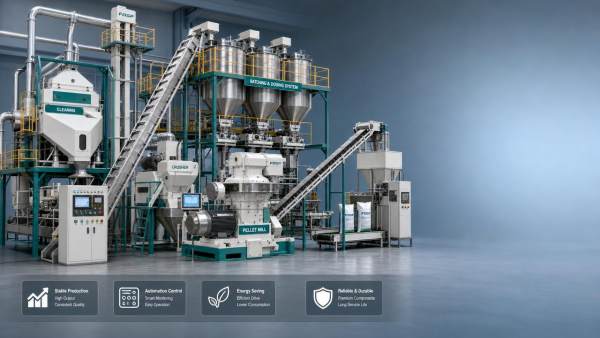
When feed & grain processing equipment starts constraining output, quality, or compliance, the issue is rarely isolated to maintenance alone.
It usually signals a broader operational mismatch between existing assets and current production demands.
In today’s industrial environment, feed & grain processing equipment must support efficiency, traceability, energy control, and stable product specifications.
An upgrade therefore becomes a strategic decision tied to cost structure, market access, and long-term plant resilience.
Understanding the upgrade threshold for feed & grain processing equipment
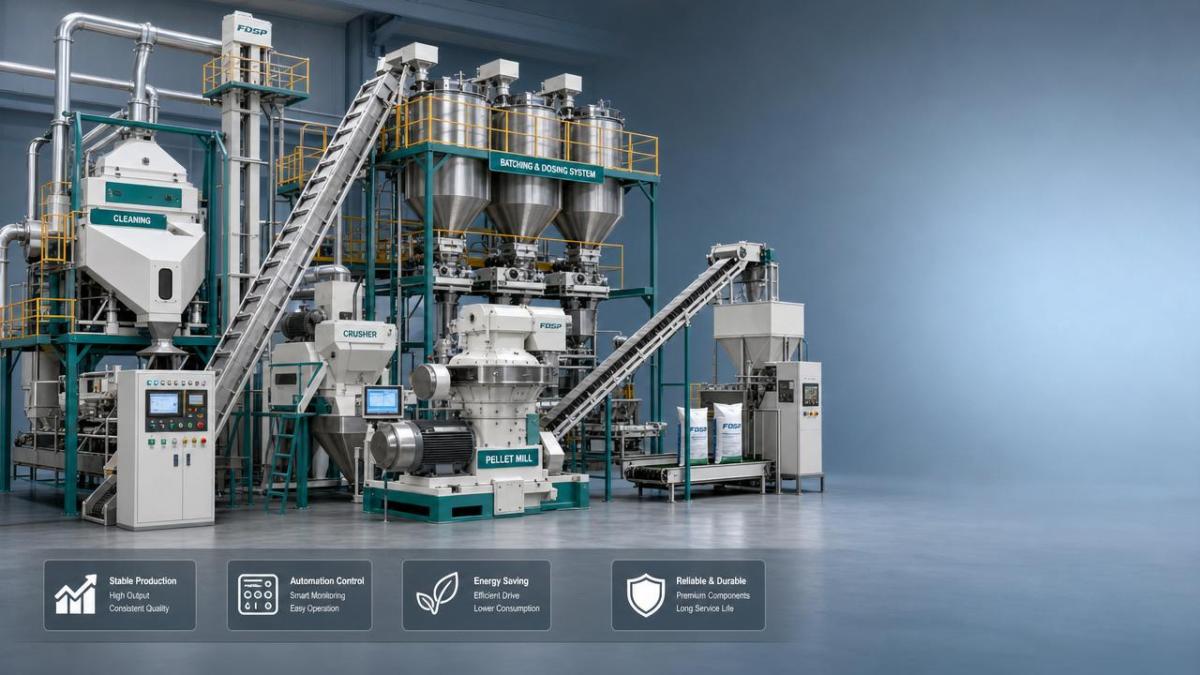
Feed & grain processing equipment includes intake, cleaning, drying, grinding, batching, mixing, pelleting, cooling, conveying, dust control, and packaging systems.
An upgrade does not always mean full replacement.
It may involve retrofitting drives, automating controls, replacing worn process units, or integrating digital monitoring across existing lines.
The threshold appears when equipment performance no longer aligns with production targets, quality expectations, regulatory obligations, or input variability.
In many facilities, older feed & grain processing equipment still runs, but hidden losses accumulate through downtime, rework, higher utility use, and inconsistent throughput.
Core signals that define the threshold
- Throughput remains below market demand or seasonal peak requirements.
- Product uniformity declines across batches or shifts.
- Maintenance intervals shorten while spare parts become harder to source.
- Energy consumption rises without proportional output gains.
- Dust, noise, or sanitation performance falls behind current standards.
- Manual intervention increases in weighing, mixing, or line changeovers.
Industry conditions shaping upgrade decisions
Across primary processing industries, equipment decisions are now influenced by tighter operating margins and stricter compliance expectations.
Feed & grain processing equipment must perform reliably even as raw material quality changes with climate, storage conditions, and sourcing patterns.
At the same time, facilities face pressure to document process stability and reduce unplanned shutdowns.
These conditions explain why feed & grain processing equipment upgrades are increasingly evaluated as business continuity projects, not isolated engineering tasks.
Business value created by timely modernization
Well-timed upgrades improve much more than line speed.
They strengthen process control across receiving, conditioning, size reduction, formulation, and final product handling.
Modern feed & grain processing equipment supports predictable yields and lowers the operational noise caused by frequent adjustments.
Common value areas
- Higher usable capacity through better flow balancing and reduced bottlenecks.
- Improved pellet durability, particle size consistency, and mix accuracy.
- Lower waste caused by spillage, contamination, fines, or overprocessing.
- Reduced energy draw per ton through optimized drives and process settings.
- More reliable audit trails for ingredient handling and production records.
- Safer working conditions through better guarding, dust management, and alarms.
For many sites, the most important outcome is operational stability.
Stable feed & grain processing equipment reduces daily variability, making scheduling, inventory planning, and customer fulfillment more dependable.
Typical upgrade scenarios across processing lines
Not every plant faces the same trigger.
Some facilities outgrow original design capacity, while others confront sanitation, dust, or formulation complexity.
The most effective approach links the feed & grain processing equipment upgrade to the exact point of value loss.
This line-by-line view prevents overspending and helps prioritize the feed & grain processing equipment changes with the fastest operational return.
Practical criteria for deciding between retrofit and replacement
The central decision is often whether to retrofit existing assets or replace entire sections.
A structured comparison reduces risk and keeps feed & grain processing equipment investment aligned with plant realities.
Retrofit is often suitable when
- Core mechanical frames remain sound.
- The bottleneck is mostly controls, drives, or instrumentation.
- Downtime windows are limited.
- Capacity needs are moderate rather than transformational.
Replacement is often suitable when
- Frequent failures affect multiple upstream and downstream systems.
- Parts obsolescence creates recurrent supply problems.
- Sanitation, safety, or emissions gaps are structural.
- Future product mix requires major flexibility not supported by legacy design.
A sound decision also includes installation risk, training needs, software compatibility, and the availability of local technical support.
Implementation priorities and risk controls
Even the right feed & grain processing equipment can underperform if implementation is rushed.
Upgrade planning should begin with baseline measurement, not assumptions.
- Document current throughput, downtime, energy use, and quality variation.
- Identify the real bottleneck with process mapping and maintenance history.
- Set measurable targets for capacity, consistency, traceability, and payback.
- Confirm utility load, layout fit, and integration with existing controls.
- Plan commissioning, operator training, and spare parts support in advance.
Attention to dust containment, explosion protection, hygienic design, and data capture is especially important in modern feed & grain processing equipment projects.
These details directly affect reliability and audit readiness after startup.
A disciplined next step for operational planning
The need to upgrade feed & grain processing equipment usually becomes clear before a major breakdown occurs.
The strongest organizations act when early indicators show capacity strain, quality drift, or rising operating cost.
A practical next step is to conduct a focused equipment audit covering line balance, utility efficiency, maintenance records, and compliance exposure.
That review helps rank which feed & grain processing equipment upgrades should be phased first, which can be retrofitted, and which need full replacement.
When modernization is guided by data and process reality, plants gain stronger output, better quality control, and more durable operational resilience.
Related Intelligence
- Milling MachineryCan Agricultural Scientists Validate Grain Processing Machinery?Can agricultural scientists validate process machinery performance? Discover how grain equipment testing verifies throughput, quality, and efficiency before you invest.
- Milling MachineryGrain Processing Explained: From Cleaning and Milling to Finished Product QualityGrain Processing explained: discover how cleaning, conditioning, milling, and quality control turn raw grain into safe, consistent flour, feed, and food ingredients.
- Milling MachineryGerman Grain Processing Plants: Evaluating Automation and Energy-Efficiency UpgradesGrain processing Germany: evaluate automation and energy-efficiency upgrades to improve throughput, quality, safety, and lifecycle value.
The Morning Broadsheet
Daily chemical briefings, market shifts, and peer-reviewed summaries delivered to your terminal.
