

The Authority in Global Agricultural Chemistry & Bio-Resources
India to Mandate e-FeedIndia Filing for Feed Pellets on July 15
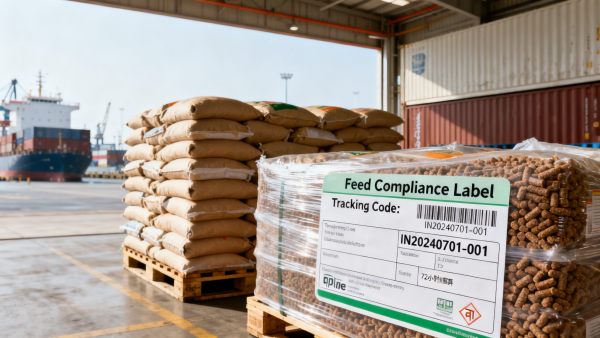
On June 29, 2026, India’s Ministry of Agriculture & Farmers Welfare (MoA&FW) announced that the e-FeedIndia Portal for Commercial Feed Pellet filings will become mandatory from 00:00 on July 15. Imported feed pellets will need to be filed online at least 72 hours in advance and receive a unique tracking code, while the transition period that had allowed local-language labeling will end at the same time. For importers, customs-facing teams, supply chain operators, and downstream buyers, this is worth close attention because the change directly affects whether goods can be accepted at the border.
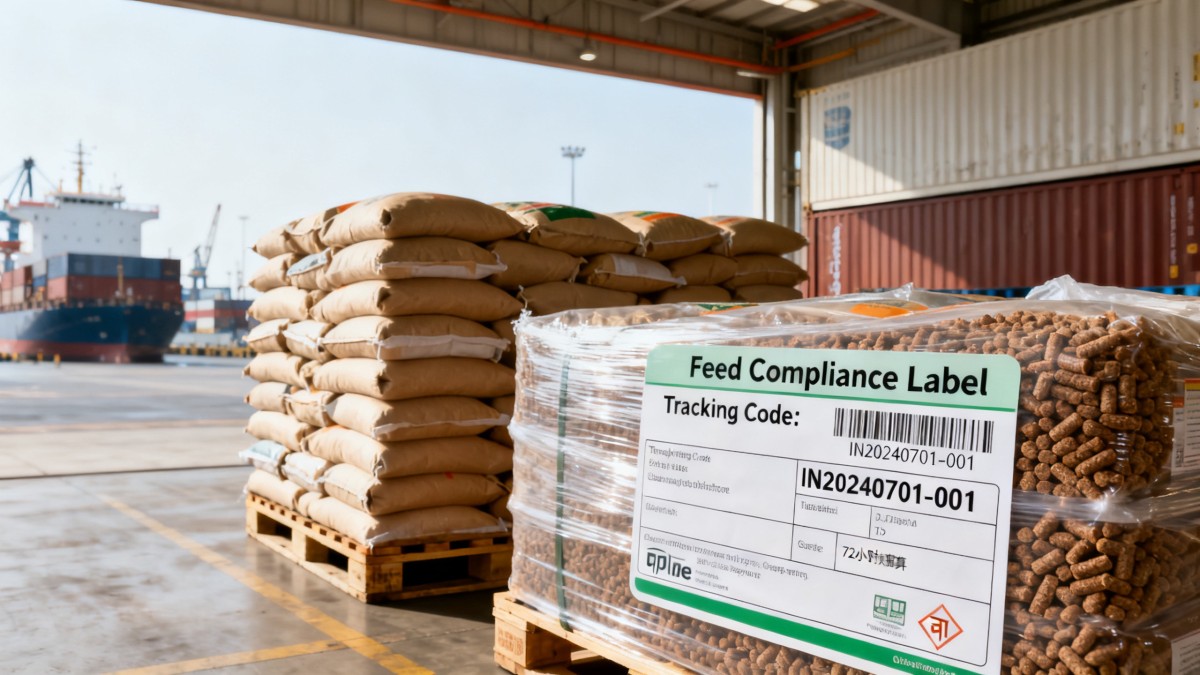
What the June 29 Notice Confirms
According to the information provided, MoA&FW issued a circular on June 29, 2026 stating that the full electronic filing system for Commercial Feed Pellet, named the e-FeedIndia Portal, will be compulsory starting at midnight on July 15.
The same notice states that all imported feed pellets must complete online filing 72 hours before arrival and obtain a unique tracking code.
It also confirms that the previously allowed transition arrangement for local-language labels will end at the same time. Products that are not filed will be refused by customs.
Where the Immediate Pressure May Appear
Import execution moves to a pre-arrival control point
From an industry perspective, direct trading companies and import operators are likely to feel the most immediate impact because the filing requirement now sits before customs acceptance. The practical effect is that shipment planning, document readiness, and pre-arrival coordination become more sensitive to timing than before.
What deserves closer attention is that the new rule does not only add a digital step; it ties that step to market entry. If the filing is not completed 72 hours in advance or a tracking code is not secured, the risk is not simply administrative delay but refusal at customs.
Label compliance can no longer be treated as a temporary issue
For suppliers, packers, and firms responsible for product presentation, the end of the local-language label transition period matters because a temporary accommodation is being withdrawn at the same moment the portal becomes mandatory. This means labeling and filing should be viewed together rather than as separate compliance tasks.
Observably, businesses serving the India market will need to pay closer attention to whether packaging, shipment preparation, and filing timelines are aligned before dispatch.
Downstream buyers may face timing and delivery implications
Processors, distributors, and end users purchasing imported feed pellets may also be affected, even if they are not the party making the filing. Their exposure is mainly through delivery schedules, customs clearance predictability, and supplier communication.
Analysis shows that buyers may need clearer confirmation from suppliers on whether the pre-filing has been completed and whether a tracking code has been obtained, especially for shipments scheduled around the July 15 start date.
What Companies Should Watch Now
Whether internal timelines actually meet the 72-hour rule
The most immediate operational question is whether existing booking, documentation, and shipment release processes leave enough time for mandatory online filing 72 hours before arrival. Companies involved in importing or arranging imported feed pellets should focus on the timing gap between commercial readiness and regulatory readiness.
How filing records and shipment documents connect
Because the notice specifies a unique tracking code, firms should pay close attention to how that code is captured, stored, and referenced across customs, logistics, and customer communication workflows. In practice, the issue is not only obtaining the code but ensuring it is available to the teams that need it at the right time.
Whether labeling adjustments are complete before the transition ends
Since the local-language label exemption period is ending together with the portal launch, companies should review whether any shipment still relies on the previous transition arrangement. This deserves particular attention for cargo prepared before July 15 but arriving under the new enforcement timeline.
How suppliers and customers are being briefed
For companies operating across borders, this is also a communication issue. Suppliers, import service providers, and customers may each assume another party is managing the filing or label check. The more practical focus now is confirming responsibilities in advance rather than addressing disputes after cargo reaches customs.
Why This Looks Like More Than a Routine Administrative Update
Analysis shows that this development is better understood as an immediate compliance change with broader signaling value. In the short term, it creates a hard operational deadline: online filing, tracking code issuance, and the end of the label transition period all converge on July 15.
At the same time, it may also indicate a firmer regulatory preference for traceable, pre-arrival digital controls in this product category. That broader reading remains an observation rather than a confirmed policy trend, and it should be treated carefully until further official clarification or follow-up measures appear.
What deserves closer attention is not only the existence of the portal, but how consistently the requirement is implemented in actual trade flows after the mandatory start date.
How the Market May Best Read This Development
It is more appropriate to understand this news first as a near-term execution issue rather than as a complete reshaping of the market. The confirmed facts already point to a clear operational consequence: unfiled imported feed pellets face customs refusal.
For the industry, the practical meaning is straightforward. Compliance for imported Commercial Feed Pellet in India is moving onto a stricter digital and pre-arrival basis, while temporary flexibility on labeling is ending. The broader market impact still requires observation, but the immediate business relevance is already clear.
Basis of This Article
This article is based on the user-provided news title, event date, and event summary concerning the June 29, 2026 MoA&FW circular on mandatory e-FeedIndia Portal filing for Commercial Feed Pellet and the end of the labeling transition period.
For developments of this kind, relevant source categories typically include official government notices, company compliance updates, industry association information, authoritative media reporting, and standard or regulatory documentation. A specific official source link was not provided in the input, so the exact document path still requires continued verification.
Further monitoring should focus on any subsequent official wording, implementation details tied to the portal process, and any clarification affecting filing timing, tracking code use, or label-related enforcement in actual import operations.
Related Intelligence
- Commercial Feed PelletFeed Production System Price Trends: Cost Drivers and Budgeting for New LinesFeed production systems price trend insights: compare cost drivers, automation, utilities, compliance, and total ownership costs to budget smarter for new feed lines.
- Commercial Feed PelletHow to Troubleshoot Common Feed Machinery BreakdownsHow to troubleshoot common feed machinery breakdowns with practical checks for blockages, pellet mills, mixers, motors, and preventive maintenance.
- Commercial Feed PelletHow Can Feed Pellet Quality Be Kept Consistent Across Batches?Learn how to ensure feed pellet quality consistency across batches with proven controls for ingredients, conditioning, milling, cooling, testing, and traceable process data.
The Morning Broadsheet
Daily chemical briefings, market shifts, and peer-reviewed summaries delivered to your terminal.
