

The Authority in Global Agricultural Chemistry & Bio-Resources
ANVISA Opens Fast-Track Remote GMP Review for China
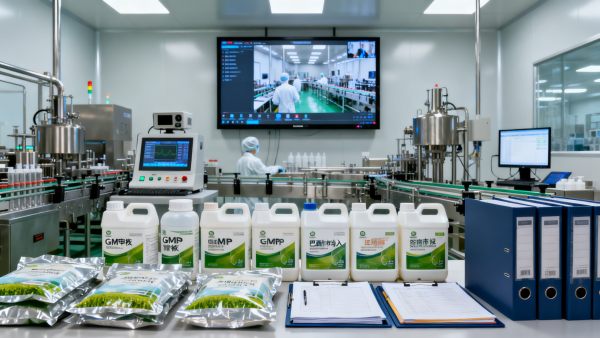
On June 29, 2026, Brazil’s National Health Surveillance Agency (ANVISA) announced a fast-track remote GMP audit channel for agrochemicals, open to Chinese producers of technical materials and formulations. For companies seeking registration and import customs clearance in Brazil, the update deserves close attention because it compresses a compliance step into a much shorter window through a digital factory dossier and live video review, while also limiting the first pilot round to 50 applicants.

What ANVISA Has Confirmed
According to the information provided, ANVISA launched the expedited remote audit pathway for Agrochemicals GMP on June 29, 2026. The channel is open to Chinese agrochemical technical-grade and formulation manufacturers. The process combines pre-submitted digital factory documentation with real-time video auditing. Eligible applicants may obtain a temporary GMP compliance certificate within eight working days. That temporary certificate is valid for 12 months and can be used for Brazil market registration and import customs clearance. The first pilot batch is limited to 50 companies.
Where the Immediate Operational Effects May Appear
Manufacturers preparing Brazil-facing supply programs
From an industry perspective, Chinese producers that already serve or plan to serve the Brazilian market may see the most direct impact. The reason is straightforward: the announced mechanism connects GMP compliance review more directly with registration and customs-related market access steps. The business effect would likely be felt in dossier preparation, audit readiness, and production-site documentation management.
Export and market access teams handling registrations
For teams responsible for Brazil registration progress, the announcement may change near-term scheduling assumptions. Analysis shows that the eight-working-day timeline, if achieved in practice for eligible cases, could affect how companies sequence application filing, customer commitments, and import planning. What deserves closer attention is that the certificate is temporary and valid for 12 months, which means teams should distinguish between immediate access support and longer-term compliance planning.
Supply chain and customs-facing service providers
Service providers involved in cross-border documentation, import coordination, and shipment release may also be affected. Observably, the practical value of the temporary certificate lies in its stated use for registration and customs clearance in Brazil. That makes document timing, validity tracking, and communication with downstream partners more important, especially for companies trying to align shipment windows with compliance approval windows.
Buyers and channel partners in Brazil-linked trade flows
For purchasing parties and channel partners connected to Brazil-bound agrochemical supply, the update may alter how they evaluate supplier readiness. The main point to watch is not only whether a supplier has entered the fast-track channel, but whether the supplier can complete the required digital dossier and live audit process within the pilot framework. In practice, this could influence delivery confidence, onboarding pace, and short-cycle procurement decisions.
What Companies Should Watch Now
Pilot quota and application timing
What deserves closer attention is the pilot limit of 50 companies. That cap means access may matter as much as eligibility. Companies with active Brazil projects should closely monitor whether application windows, acceptance criteria, or procedural clarifications evolve after the initial rollout.
The quality of the digital factory dossier
The announced process relies on pre-submitted digital factory files together with live video review. Analysis shows that companies should focus on whether their existing GMP documentation can be translated into a review-ready digital package without inconsistencies. The speed of the pathway does not reduce the need for document completeness; it may make documentation discipline more visible.
How temporary certification is used in real transactions
There is a practical difference between a policy opening and business execution. Companies should pay close attention to how the 12-month temporary certificate is applied in actual registration workflows and import customs processes. That distinction matters for sales planning, shipment release assumptions, and customer communication.
Internal coordination before customer-facing commitments
For export, regulatory, manufacturing, and logistics teams, the key issue is alignment. Observably, companies should avoid treating the headline timeline as a standalone promise before confirming audit readiness, dossier status, and partner expectations. Internal preparation and external communication will likely determine whether the faster route translates into smoother delivery execution.
Why This Looks Like a Signal Worth Tracking
Analysis shows that this update is meaningful because it links digital submission, remote review, and temporary compliance recognition in a format aimed at faster access for a defined group of Chinese agrochemical manufacturers. At the same time, it is more appropriate to understand this as an early-stage policy signal rather than a fully settled long-term regime. The pilot cap, the temporary nature of the certificate, and the need to see how the process works in actual cases all suggest that the market should continue watching implementation details rather than assuming uniform outcomes.
How the Market May Best Read This Update
At this stage, the announcement is best understood as a targeted operational opening with immediate relevance for companies tied to Brazil market entry, product registration, and import execution. It points to a potentially faster compliance route, but not to a final conclusion about long-term regulatory practice. A neutral reading is that the measure may create short-term procedural opportunities while also sending a broader signal about the growing importance of digital audit preparedness in cross-border agrochemical compliance.
Basis of This Article and Ongoing Verification
This article is based on the user-provided news title, event date, and event summary. For developments of this type, commonly relevant source categories may include official regulator notices, company disclosures, industry association updates, authoritative media coverage, and standard-setting documents. The specific official source link was not provided in the input, so further verification remains necessary. Continued observation should focus on any later ANVISA clarifications, pilot implementation details, and how the temporary certificate is recognized in registration and import clearance workflows.
Related Intelligence
- AgrochemicalsWhat Are the Main Risks of Non-Transparent Agricultural Supply Chains?what are the main risks of non transparent agri supply chains? Explore traceability, compliance, contamination, disruption, and cost risks—plus practical controls.
- AgrochemicalsGrain Production: Key Practices for Improving Yield While Protecting Soil HealthGrain production strategies to improve yield, protect soil health, manage nutrients, reduce compaction, and build resilient fields for lasting results.
- AgrochemicalsHow Do New FDA Rules Affect Agri-Chemical Sourcing Strategies?How do new FDA rules impact agri chemical sourcing strategies? Explore practical supplier screening, traceability, contaminant control, and risk-based compliance steps.
The Morning Broadsheet
Daily chemical briefings, market shifts, and peer-reviewed summaries delivered to your terminal.
