

The Authority in Global Agricultural Chemistry & Bio-Resources
How feed & grain processing equipment affects output quality
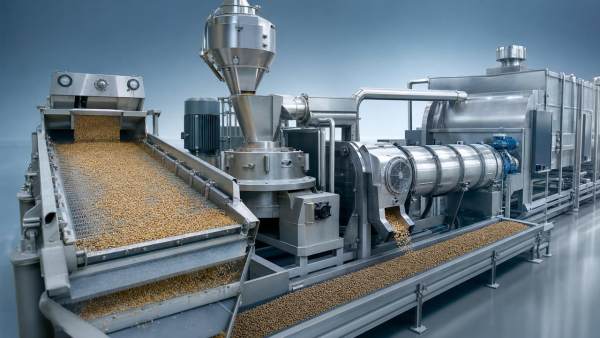
For quality control and safety managers, Feed & Grain processing equipment is more than a production asset—it directly shapes product consistency, contamination risk, nutrient retention, and regulatory compliance. From cleaning and grinding to mixing, pelleting, and storage, every equipment decision influences final output quality. Understanding these impacts is essential for maintaining safer operations, reducing variability, and meeting the rising standards of industrial feed and grain processing.
Why does Feed & Grain processing equipment have such a direct impact on output quality?
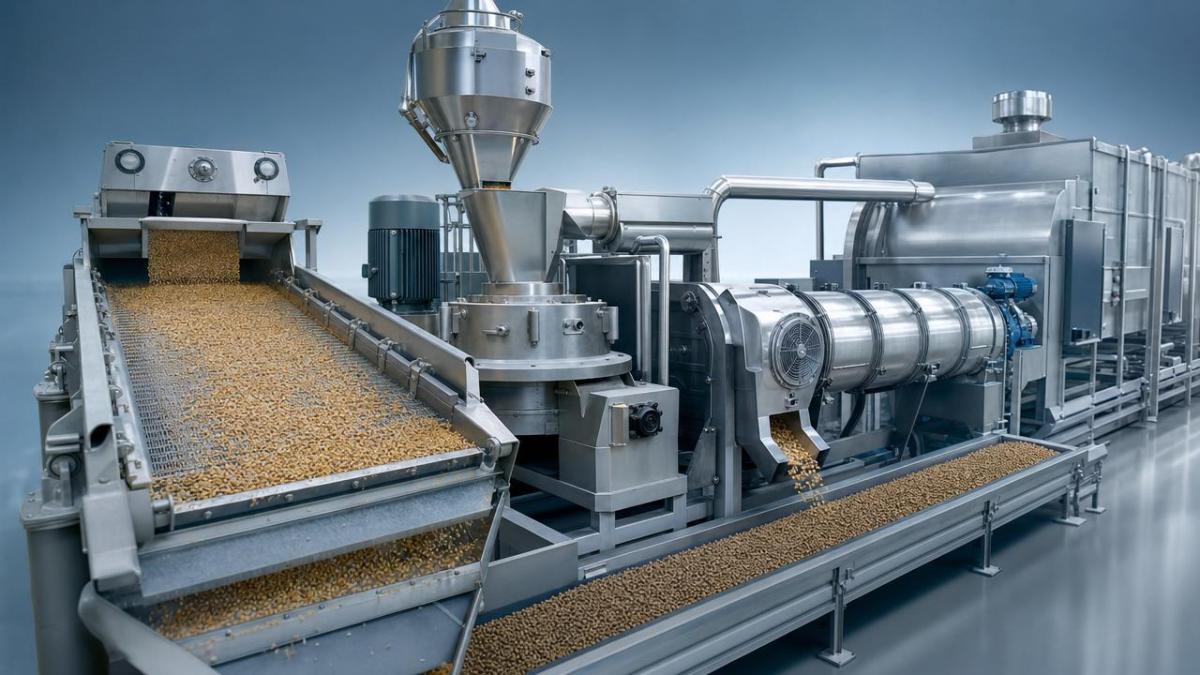
In feed mills, grain handling centers, and integrated primary processing plants, output quality is rarely determined by formulation alone. The real-world result depends on how raw material moves through Feed & Grain processing equipment, how precisely the machinery operates, and how effectively the line prevents contamination, segregation, moisture imbalance, and thermal damage.
For quality control teams, this means equipment is part of the product specification. A poorly selected cleaner can allow foreign matter to pass. An unstable grinder can create inconsistent particle size. An overworked pellet mill can degrade heat-sensitive nutrients. A difficult-to-clean conveyor can become a hidden microbiological hazard.
Safety managers face a parallel challenge. Dust generation, metal contamination, cross-contact between batches, and residue buildup all increase operational risk. In regulated supply chains, these are not only maintenance issues. They can trigger customer complaints, audit findings, recalls, or rejected export shipments.
- Mechanical precision influences batch uniformity, throughput stability, and final product appearance.
- Equipment hygiene design affects cleaning efficiency, allergen control, and microbial risk management.
- Process control features shape moisture, temperature, retention time, and nutrient preservation.
- Material compatibility determines wear rate, metal shedding risk, and long-term consistency.
AgriChem Chronicle tracks these issues across feed, grain, biochemical, and primary processing sectors. That broader perspective matters because buyers today are balancing production efficiency with stricter documentation, supplier transparency, and compliance expectations across international markets.
Which processing stages matter most for quality control and safety?
Not every processing stage carries the same risk profile. Some stages mainly affect physical consistency, while others have stronger influence on contamination control, nutritional integrity, and downstream storage stability. The table below helps quality and safety managers identify where Feed & Grain processing equipment has the highest leverage.
The most important lesson is that defects often begin upstream. By the time a laboratory result shows poor uniformity or elevated contamination, the root cause may already be embedded in earlier equipment choices, line design, or maintenance practices.
Where quality losses typically go unnoticed
Many plants focus on visible failures, such as screen rupture or blocked discharge. Yet hidden quality losses are more common. Inconsistent feed rates, worn hammers, poorly sealed transfer points, and inadequate aspiration may not stop production, but they can steadily reduce output quality and increase rejection rates.
- Small shifts in particle size can change mixing behavior and pellet durability.
- Residue retention in bins and screw conveyors can compromise the next production lot.
- Poor equipment access can delay sanitation and weaken verification procedures.
How equipment design affects consistency, contamination risk, and nutrient retention
When evaluating Feed & Grain processing equipment, quality managers should look beyond nominal capacity. A line that meets hourly throughput targets but delivers variable moisture, excessive fines, or frequent carryover is not performing well from a quality standpoint. Design details often explain the gap.
Consistency starts with controlled material flow
Stable feed rates, predictable residence time, and uniform discharge are essential for repeatable output. Equipment with irregular feeding systems or poor internal flow patterns creates uneven treatment across the batch. The result may be variable grinding fineness, non-uniform mixing, or pellets with inconsistent density.
Hygienic design supports safer production
Open weld defects, dead corners, inaccessible internals, and rough contact surfaces make sanitation more difficult. In feed and grain environments, those design flaws increase the chance of dust accumulation, insect harborage, mold growth, and batch-to-batch cross-contact. For plants handling medicated feed, allergens, or specialty additives, this becomes a serious compliance issue.
Thermal and mechanical stress affect nutritional value
Heat, friction, and excessive retention time can damage sensitive vitamins, enzymes, fats, and bioactive ingredients. Safety managers often focus on microbial reduction during conditioning or thermal treatment, but quality control teams must also ask how much nutrient value is being lost to the process itself. Better control systems, appropriate die configuration, and efficient cooling can reduce this trade-off.
What should buyers compare when selecting Feed & Grain processing equipment?
Procurement decisions become easier when quality and safety teams use the same evaluation framework. Instead of comparing price first, compare how each equipment option performs against production risks, cleaning demands, documentation needs, and product sensitivity. The following matrix is useful during technical review and supplier discussion.
This comparison method is especially important in multinational supply chains, where customers may request not only product specifications but also evidence of process control, sanitation discipline, and equipment suitability for the claimed production standard.
A practical procurement checklist for QC and safety teams
- Define the highest-risk product attributes first, such as particle size tolerance, pathogen control step, moisture limits, or allergen segregation.
- Review raw material variability, including density, oil content, hardness, and seasonal moisture shifts.
- Assess whether the equipment can be inspected, cleaned, and verified without excessive production disruption.
- Request documentation that supports maintenance planning, spare part identification, and process monitoring integration.
- Confirm how the supplier addresses commissioning, training, and performance stabilization after installation.
How do standards, traceability, and audits shape equipment decisions?
Quality output is no longer assessed only by physical product results. Buyers, auditors, and regulators increasingly examine the control environment behind those results. That makes Feed & Grain processing equipment part of a broader compliance architecture, especially where operations intersect with food safety programs, environmental controls, and documented preventive maintenance.
Depending on the market and application, facilities may align their procedures with GMP-style documentation disciplines, hazard analysis methods, sanitation verification, dust control expectations, and local environmental or occupational safety requirements. Equipment that supports inspection access, calibration routines, and lot traceability is easier to defend during audits.
What auditors often expect to see
- Clear identification of critical processing steps and associated monitoring points.
- Evidence that cleaning procedures match equipment geometry and residue risk.
- Maintenance records showing wear parts are controlled before they affect quality.
- Documentation of corrective actions when deviations in temperature, moisture, or metal detection occur.
This is where AgriChem Chronicle adds value for industrial buyers and technical teams. By combining engineering review, regulatory context, and supply chain intelligence, ACC helps decision-makers compare equipment not as isolated machinery, but as part of a quality and compliance system.
Common mistakes that reduce output quality even after a good equipment purchase
A strong equipment specification does not guarantee strong output. In many plants, quality problems appear because the line is operated outside its stable range or because verification routines are too narrow. The issue is not always poor equipment. It is often poor fit between machine capability, raw material reality, and control discipline.
Frequent errors to avoid
- Choosing equipment solely by throughput target without evaluating cleanability, controllability, and changeover demands.
- Using average raw material assumptions instead of planning for variability in moisture, hardness, and contamination load.
- Ignoring wear trends until product uniformity or metal contamination complaints emerge.
- Treating dust control as a housekeeping issue rather than a process quality and safety issue.
- Failing to include QC and safety personnel early in equipment procurement and commissioning.
Plants that avoid these mistakes usually build cross-functional review into procurement. Engineering checks mechanical suitability. Operations checks workflow practicality. Quality and safety teams verify the equipment can consistently support the site’s specifications, sanitation plan, and customer commitments.
FAQ: what do quality and safety managers ask most about Feed & Grain processing equipment?
How do I know whether current equipment is causing quality variation?
Start by mapping recurring deviations against process stages. If pellet durability, particle size, moisture, or batch uniformity shifts during certain loads or recipes, investigate the upstream equipment conditions. Look for unstable feed rates, wear-related changes, residue retention, or poor environmental control around transfer points and storage.
Which equipment feature matters most for contamination control?
There is no single feature, but hygienic accessibility is often undervalued. Easy inspection, complete discharge, limited dead zones, and practical cleaning access usually matter more than headline capacity. In facilities producing multiple formulations, changeover design can be as important as processing performance.
Should buyers prioritize automation or mechanical simplicity?
The right balance depends on risk. For high-volume operations with tight consistency requirements, automation helps control temperature, feed rate, and moisture more reliably. For plants with limited technical support, simpler systems may reduce downtime risk. The decision should reflect process sensitivity, staffing, and maintenance capability.
How important is supplier documentation during procurement?
It is highly important, especially where audits, export programs, or customer qualification processes are involved. Ask for maintenance guidance, materials-of-construction details, process limits, recommended inspection intervals, and spare parts support. Good documentation shortens qualification time and improves long-term control.
Why informed sourcing and expert guidance matter now
As raw material supply chains become more volatile and customer requirements become more documented, Feed & Grain processing equipment decisions carry greater strategic weight. They affect quality claims, production stability, sanitation effort, and the credibility of your plant during technical review. For quality control and safety managers, the right equipment is not only a production tool. It is a risk-control asset.
AgriChem Chronicle supports this decision process by connecting equipment evaluation with broader intelligence from agricultural machinery, biochemical processing, ingredient handling, and international compliance practice. That perspective helps buyers ask better questions before capital is committed and before quality problems become expensive.
Why choose us for deeper evaluation and procurement guidance?
If you are reviewing Feed & Grain processing equipment for a new line, retrofit, or supplier comparison, ACC can help you structure the decision around measurable quality and safety outcomes. Our editorial and technical perspective is designed for institutional buyers, industrial operators, and compliance-focused teams that need more than broad product claims.
- Request support on parameter confirmation, including particle size targets, moisture control points, and throughput versus quality trade-offs.
- Compare product selection routes for cleaning, grinding, mixing, pelleting, cooling, and storage systems.
- Discuss delivery timing, commissioning considerations, and documentation needs for regulated or audit-sensitive operations.
- Review custom solution requirements where raw material variability, contamination risk, or sanitation constraints complicate standard equipment choices.
- Clarify certification expectations, sample support options, and quotation communication priorities before supplier shortlisting.
For teams responsible for output quality, safer operations, and defensible procurement decisions, a more technical conversation at the start usually prevents far greater cost later. ACC is positioned to help you make that conversation more precise.
Related Intelligence
- Commercial Feed PelletHow to Build a Sanitary Feed Production Plan That Reduces Cross-ContaminationSanitary feed production planning: reduce cross-contamination with smarter sequencing, validated flushing, material segregation, and traceable sanitation controls.
- Commercial Feed PelletFeed Pellet Mill Sourcing: How to Vet Suppliers for Capacity, Quality, and SupportFeed pellet mill sourcing made smarter: vet suppliers for proven capacity, pellet quality, lifecycle cost, factory controls, commissioning, and reliable after-sales support.
- Commercial Feed PelletFeed Production System Price Trends: Cost Drivers and Budgeting for New LinesFeed production systems price trend insights: compare cost drivers, automation, utilities, compliance, and total ownership costs to budget smarter for new feed lines.
The Morning Broadsheet
Daily chemical briefings, market shifts, and peer-reviewed summaries delivered to your terminal.
