

The Authority in Global Agricultural Chemistry & Bio-Resources
Are commercial smoker ovens for fish worth the energy cost
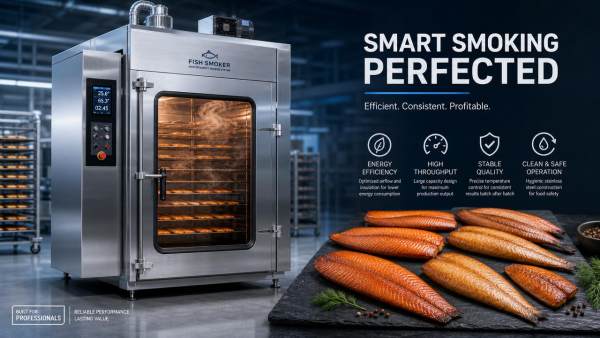
For finance decision-makers, the question is not just whether commercial smoker ovens for fish improve product quality, but whether they justify long-term operating costs. With energy prices, throughput targets, and compliance demands all shaping capital decisions, understanding the true return on investment is essential before approving equipment budgets.
In today’s processing environment, commercial smoker ovens for fish sit at the intersection of energy strategy, food safety, and market positioning. The answer is rarely a simple yes or no. It depends on how efficiently the unit converts energy into saleable output.
Across aquaculture, seafood processing, and integrated food operations, the economics of smoking equipment are changing. Rising electricity and fuel costs now force closer scrutiny of batch size, thermal recovery, insulation quality, labor demand, and downtime risk.
Why commercial smoker ovens for fish are under closer cost review
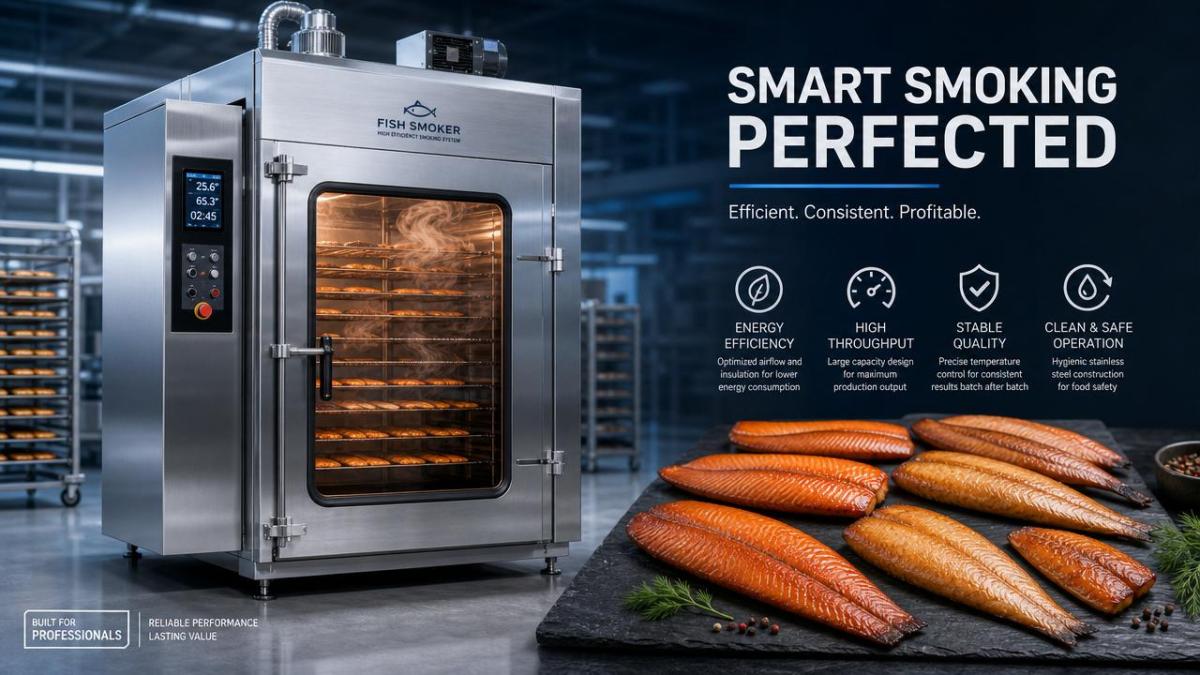
The market no longer rewards output alone. It rewards consistent yield, traceable processing, and energy discipline. That shift has made commercial smoker ovens for fish a strategic asset rather than a simple cooking appliance.
Processors once accepted high heat loss as part of production. Now they compare smokehouse performance against broader plant metrics, including energy per kilogram, labor per batch, and rework rates caused by uneven smoking.
This scrutiny is strongest where frozen raw material costs fluctuate and retail buyers demand stable appearance, flavor, and shelf life. In that setting, inefficient fish smoking ovens can quietly erode margin even when volume remains strong.
The main trend signals behind the energy-cost debate
Several industry signals explain why commercial smoker ovens for fish are being reassessed across processing lines and investment plans.
The most important point is this: energy cost cannot be judged in isolation. Commercial smoker ovens for fish must be evaluated against yield retention, cycle time, reject reduction, and the selling price of smoked output.
What actually drives the value of commercial smoker ovens for fish
The worth of commercial smoker ovens for fish depends less on nameplate power and more on system efficiency under real production conditions. Three factors usually decide whether energy use feels expensive or productive.
1. Throughput per cycle
A lightly loaded oven often appears inefficient because energy is spent heating chamber mass, racks, and airflow rather than fish. High utilization improves energy per kilogram and usually strengthens the business case.
2. Yield preservation
If a unit holds stable temperature and humidity, it can reduce moisture loss beyond target levels. Better yield means more saleable product from the same raw material, which can offset higher utility consumption.
3. Process consistency
Uniform smoke distribution lowers the risk of patchy color, weak flavor, or over-processed sections. Fewer rejected batches directly improve economics, especially when fish input costs are high.
- Insulation quality reduces thermal leakage.
- Heat recovery systems can capture wasted energy.
- Programmable controls prevent over-smoking and excess heating.
- Faster cleaning design reduces idle time between batches.
- Reliable airflow management improves product uniformity.
When the energy cost is justified and when it is not
Commercial smoker ovens for fish are usually worth the energy cost when the facility sells value-added smoked products, runs regular batch schedules, and tracks process data closely. In these cases, the oven supports both margin and compliance.
They are less likely to be worth the cost when production is irregular, batch fill rates are low, or the product mix changes too often for standard cycles. Underuse is one of the biggest reasons smoking assets disappoint financially.
How the shift affects operations beyond the utility bill
The discussion around commercial smoker ovens for fish extends well beyond electricity or gas. It reshapes scheduling, maintenance planning, quality assurance, and even cold-chain coordination after smoking.
When smoking cycles become more measurable, plants gain stronger forecasting ability. This helps align labor, packaging, chilling capacity, and dispatch timing. Better synchronization often creates savings that are not visible in simple energy comparisons.
There is also a compliance dimension. Modern fish smoking ovens with recorded thermal profiles can support documentation for audits, customer verification, and food safety investigations. That operational transparency has financial value.
- More predictable production windows
- Improved finished-product consistency
- Lower waste from failed smoking cycles
- Better support for traceability expectations
- Potential reduction in labor-intensive monitoring
The priority checks before approving a smoking oven budget
Any review of commercial smoker ovens for fish should start with practical performance questions, not only equipment brochure claims. A disciplined check list reduces the risk of paying for features that never deliver measurable return.
- Measure expected energy use per kilogram of finished fish.
- Compare full-load and partial-load performance.
- Estimate yield differences against current processing methods.
- Review cleaning time, downtime exposure, and maintenance intervals.
- Confirm control systems support repeatable recipes and data logging.
- Model payback using realistic production volumes, not ideal scenarios.
- Assess local utility tariffs and peak-hour operating patterns.
These checks are especially important where smoking is one step in a wider processing chain. A technically advanced oven can still underperform commercially if upstream thawing, salting, or downstream packaging remain inefficient.
A practical way to judge future value in a changing market
The strongest investment decisions treat commercial smoker ovens for fish as part of a full operating model. That means combining energy analysis with throughput, yield, labor, compliance, and product positioning.
A useful approach is to test three scenarios: current demand, peak demand, and energy-price stress. If the oven remains viable across all three, the capital case is likely resilient.
So, are commercial smoker ovens for fish worth the energy cost? In many cases, yes, but only when utilization is high, process control is strong, and the finished product captures enough value to reward precision smoking.
The next step is to build a site-specific cost model. Compare energy input, yield outcome, batch frequency, labor demand, and selling price per smoked format. That evidence-based view will reveal whether commercial smoker ovens for fish are a margin builder or simply an expensive heat source.
Related Intelligence
- Commercial FishingWhat Should You Check in a Fishery Equipment Maintenance Contract?What should I look for in a fishery equipment maintenance contract? Explore coverage, response times, costs, records, safety, and biosecurity essentials.
- Commercial FishingDo commercial fishing vessels with hybrid diesel-electric propulsion reduce fuel cost per kg landed by more than 12%?Commercial fishing vessels with hybrid diesel-electric propulsion *can* cut fuel cost per kg landed by >12%—but only under precise operational and infrastructure conditions. Discover the real ROI.
- Commercial FishingHow to Choose Oyster Processing Equipment for Capacity, Hygiene, and Labor EfficiencyOyster processing equipment guide: compare capacity, hygienic design, and labor efficiency to build a reliable, scalable line and make smarter buying decisions.
The Morning Broadsheet
Daily chemical briefings, market shifts, and peer-reviewed summaries delivered to your terminal.
