

The Authority in Global Agricultural Chemistry & Bio-Resources
Guangdong-Shanghai Zero-Carbon Freight Corridor Launched
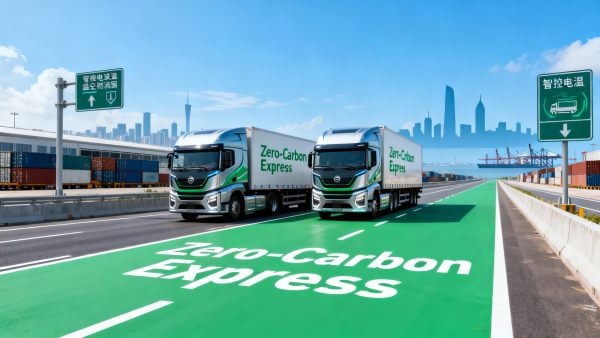
On May 9, 2026, the ‘Guangdong–Shanghai Green Transport Express’ — a 1,500-kilometer zero-carbon intelligent road freight corridor — officially commenced operations. Covering the Guangzhou Logistics Park to Shanghai Waigaoqiao Port, the initiative introduces hydrogen-electric hybrid long-haul trucks and blockchain-enabled temperature-controlled traceability systems, with dedicated green lanes for agricultural products and natural botanical extracts. Its rollout directly impacts feed ingredient exporters, herbal extract suppliers, and cross-border logistics stakeholders across Southeast Asia, Central Asia, and RCEP markets.
Event Overview
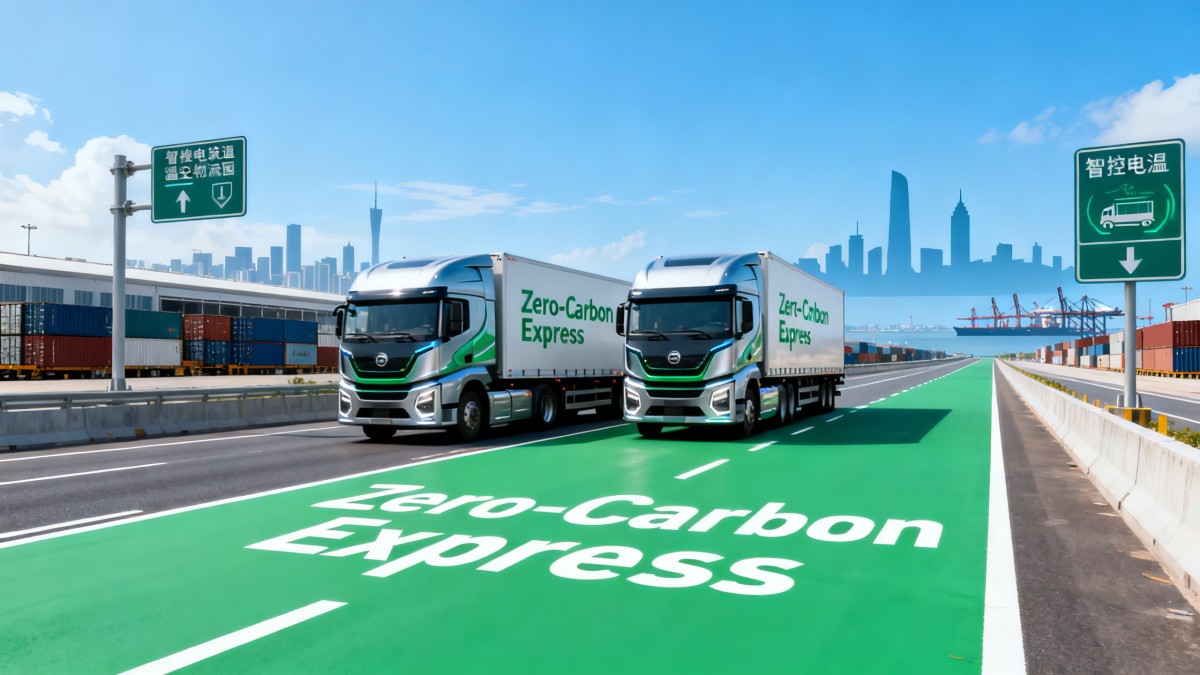
On May 9, 2026, the ‘Guangdong–Shanghai Green Transport Express’ zero-carbon smart road freight corridor entered formal operation. The corridor spans 1,500 km between Guangzhou Logistics Park and Shanghai Waigaoqiao Port. It deploys hydrogen-electric hybrid heavy-duty vehicles and integrates a blockchain-based temperature monitoring and traceability system. A dedicated green lane is established for agricultural commodities and natural botanical extracts. For importers in Southeast Asia, Central Asia, and RCEP countries, export shipments of Commercial Feed Pellets and Botanical Extracts via this corridor achieve an average reduction of 2.1 days in pre-clearance lead time and a 76% decrease in cold-chain breakage risk — supporting stability of thermolabile active compounds and batch-to-batch consistency.
Industries Affected
Direct Trading Enterprises
Export-oriented trading firms handling Commercial Feed Pellets and Botanical Extracts face direct operational impact: shorter pre-clearance timelines reduce working capital lock-up and improve order fulfillment predictability. However, eligibility for the green lane requires compliance with real-time temperature logging and digital documentation standards — shifting administrative burden toward data readiness rather than physical transit speed alone.
Raw Material Sourcing Enterprises
Companies procuring raw botanicals or feed-grade agricultural inputs (e.g., soybean meal, dried herbs) benefit from enhanced supply continuity. Reduced cold-chain failure rates lower rejection rates at destination ports — especially critical for heat-sensitive phytochemicals or enzyme-rich pellets. Yet, upstream sourcing partners must now align harvest, drying, and pre-cooling protocols with the corridor’s traceability requirements, introducing new coordination layers.
Processing & Manufacturing Enterprises
Manufacturers producing standardized feed formulations or extract-based nutraceuticals gain improved input reliability and tighter control over active ingredient potency. Batch consistency improvements support regulatory filings in stringent markets (e.g., EU EFSA, US FDA). Still, integration with the blockchain traceability system demands internal IT upgrades or third-party middleware — a non-trivial investment for mid-sized producers.
Supply Chain Service Providers
Cold-chain logistics providers, customs brokers, and certification bodies face both opportunity and adaptation pressure. Demand for certified temperature-controlled warehousing and blockchain-integrated documentation services is rising. At the same time, legacy systems not interoperable with the corridor’s data architecture may become functionally obsolete — particularly for smaller regional agents lacking API-ready platforms.
Key Considerations and Recommended Actions
Verify Eligibility Criteria for Green Lane Access
Confirm whether your product category, packaging specifications, and temperature logging hardware meet the corridor’s technical onboarding requirements — including minimum sensor resolution, data upload frequency, and certificate-of-origin digitization standards.
Assess Impact on Existing Incoterms and Liability Clauses
Evaluate how reduced cold-chain risk and shortened clearance windows affect responsibility allocation under current Incoterms® (e.g., FCA vs. DAP). Re-negotiate handover points and insurance coverage thresholds where temperature deviations previously triggered liability disputes.
Map Traceability System Integration Pathways
Identify internal or external capability gaps in generating, transmitting, and verifying blockchain-anchored temperature logs. Prioritize vendors offering GS1-compliant or ISO/IEC 17025-aligned traceability modules — especially if targeting multiple RCEP jurisdictions with divergent digital customs frameworks.
Editorial Insight / Industry Observation
Observably, this corridor is less a standalone infrastructure project and more a regulatory sandbox for harmonizing green transport standards with phytosanitary and digital trade governance. Analysis shows its design prioritizes verifiability over raw speed — suggesting future corridors may benchmark against data integrity, not just kilometers-per-hour. From an industry perspective, the 76% cold-chain risk reduction matters more for high-value botanicals than for commodity feeds; however, the 2.1-day clearance acceleration benefits all segments equally. Current evidence does not confirm scalability beyond Guangdong–Shanghai, nor interoperability with ASEAN or Central Asian rail networks — making its near-term influence geographically and functionally bounded.
Conclusion
This corridor represents a tangible step toward decarbonized, digitally auditable agri-logistics — but its broader significance lies in institutional learning. It tests how policy-driven infrastructure can co-evolve with private-sector traceability investments and multilateral sanitary standards. Rather than signaling an immediate shift in global routing patterns, it better serves as a reference model for regulatory alignment — especially where climate commitments intersect with food safety and botanical IP protection.
Source Attribution
Official launch announcement issued by the Guangdong Provincial Department of Transport and Shanghai Municipal Commission of Commerce, May 9, 2026. Technical specifications published in the RCEP Digital Trade Infrastructure White Paper (Q2 2026). Further details on onboard verification protocols remain pending publication by the China Certification & Accreditation Administration (CNCA). Ongoing observation is warranted regarding cross-border recognition of its blockchain audit trail by ASEAN customs authorities and EU DG SANTE.
Related Intelligence
- Commercial Feed PelletFeed Production System Price Trends: Cost Drivers and Budgeting for New LinesFeed production systems price trend insights: compare cost drivers, automation, utilities, compliance, and total ownership costs to budget smarter for new feed lines.
- Commercial Feed PelletHow to Troubleshoot Common Feed Machinery BreakdownsHow to troubleshoot common feed machinery breakdowns with practical checks for blockages, pellet mills, mixers, motors, and preventive maintenance.
- Commercial Feed PelletHow Can Feed Pellet Quality Be Kept Consistent Across Batches?Learn how to ensure feed pellet quality consistency across batches with proven controls for ingredients, conditioning, milling, cooling, testing, and traceable process data.
The Morning Broadsheet
Daily chemical briefings, market shifts, and peer-reviewed summaries delivered to your terminal.
