

The Authority in Global Agricultural Chemistry & Bio-Resources
Feed & Grain processing technology affects feed quality
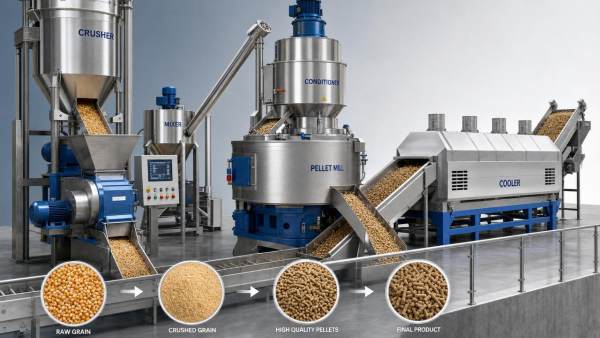
Feed & Grain processing technology directly shapes pellet durability, mash uniformity, nutrient availability, dust generation, and pathogen control. In modern feed systems, process design is no longer a secondary engineering issue. It is a quality variable that affects audit readiness, production stability, and downstream animal performance. A practical review framework helps connect equipment settings, material behavior, and final product quality before small deviations become costly failures.
Why Feed & Grain processing technology needs a checklist approach
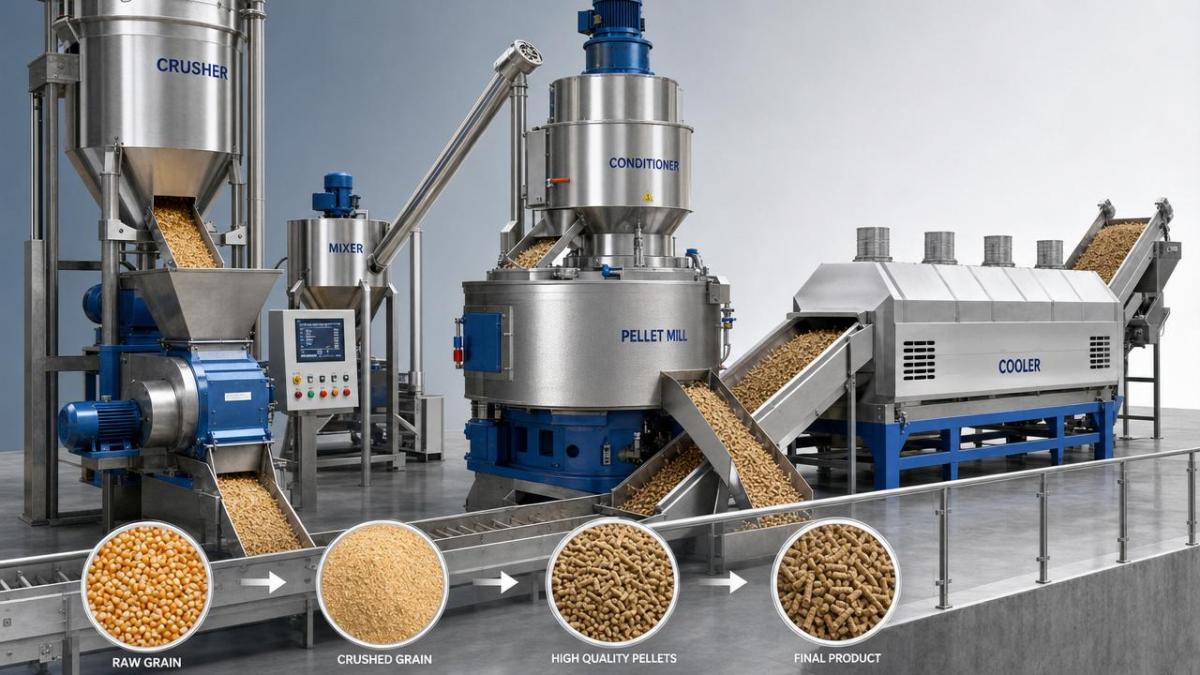
Feed & Grain processing technology involves many linked stages. Grinding affects mixing. Mixing affects conditioning. Conditioning influences pelleting, cooling, and storage stability. Because each step changes particle structure, moisture, temperature, and microbial load, isolated troubleshooting often misses the real source of quality drift.
A checklist approach supports consistent evaluation across equipment, process controls, sanitation, and documentation. It also improves communication between production, maintenance, laboratory, and compliance teams. In regulated supply chains, this discipline reduces variation and creates traceable evidence for internal reviews and external audits.
For integrated primary industries, the same logic applies across compound feed, grain handling, premix preparation, and ingredient processing. Feed & Grain processing technology must be assessed as a system, not a series of independent machines.
Core checklist for evaluating feed quality impact
Use the following checklist to review whether Feed & Grain processing technology is supporting quality targets or introducing avoidable risk.
- Verify particle size distribution at the mill outlet, not only average grind size, because excessive fines or oversized fractions reduce mix uniformity and pellet consistency.
- Check hammer, screen, and roller condition regularly, since worn grinding components increase heat generation, widen particle variation, and lower process repeatability.
- Confirm batching accuracy through scale calibration and sequence validation, because dosing errors at the front end cannot be corrected later in Feed & Grain processing technology.
- Measure mixer performance using tracer tests, as visual inspection alone cannot detect dead zones, segregation, or short-cycle under-mixing.
- Control steam quality and conditioner retention time, because poor conditioning reduces starch modification, weakens pellet binding, and limits microbial reduction.
- Review die specification, roll adjustment, and load profile, since pellet mill settings strongly influence durability, throughput, and nutrient damage risk.
- Monitor cooler discharge temperature and residual moisture, because inadequate cooling promotes condensation, mold growth, and rapid quality deterioration in storage.
- Inspect transfer points and conveyors for breakage zones, as well-designed Feed & Grain processing technology can still lose quality through rough post-pellet handling.
- Validate metal detection, sieving, and foreign material controls to prevent contamination events that compromise both safety performance and regulatory compliance.
- Audit sanitation schedules and cleanout procedures, especially around fat lines, bins, and dead legs where residue buildup can trigger cross-contamination.
- Track in-process data trends, including amperage, temperature, moisture, and throughput, because stable quality depends on trend control rather than isolated readings.
- Document changeovers, maintenance, and deviations carefully, so feed quality findings can be connected to specific process events and corrected systematically.
How quality priorities change by application scenario
High-throughput livestock feed lines
In large-volume lines, Feed & Grain processing technology must balance speed with repeatability. Small process deviations become large tonnage losses when throughput is high. Particle control, steam consistency, and pellet cooling deserve priority because they influence both physical quality and line efficiency.
These operations benefit from trend-based monitoring. Motor load variation, die choking frequency, and cooler discharge instability often reveal hidden quality issues before customer complaints or lab failures appear.
Aquafeed and specialty nutrition products
Specialty formulations are more sensitive to thermal stress, ingredient segregation, and moisture imbalance. Here, Feed & Grain processing technology must protect nutrient integrity while still producing stable physical form. Fine grinding, precise liquid addition, and tighter conditioning control are usually more important than raw throughput.
Where high-value additives are used, carryover control becomes critical. Flush validation, sequencing discipline, and equipment cleanability directly affect compliance, label accuracy, and product reputation.
Grain receiving, storage, and pre-processing systems
Feed & Grain processing technology starts before grinding. Incoming grain condition influences every downstream result. Moisture variation, insect activity, dockage level, and kernel damage affect grinding energy, contamination risk, and finished feed stability.
In this scenario, aeration, cleaning, and storage turnover planning are quality controls, not just logistics functions. If raw grain deteriorates in storage, later process optimization cannot fully recover quality.
Commonly overlooked risks in Feed & Grain processing technology
Ignoring particle size spread
Average micron data can look acceptable while the actual distribution is unstable. Wide spread increases segregation, weakens pellet structure, and creates inconsistent nutrient delivery across batches.
Treating steam as a utility only
Wet, low-pressure, or contaminated steam changes conditioner performance significantly. Steam quality is a direct process input in Feed & Grain processing technology, not a background service.
Focusing on pellet mill output alone
High hourly tonnage may hide poor durability, elevated fines, or nutrient degradation. Throughput should be judged together with PDI, moisture, temperature, and rework rate.
Missing post-process contamination points
Even when kill-step conditions are adequate, coolers, bins, elevators, and loadout systems can reintroduce contamination. Sanitary design and environmental monitoring remain essential after thermal treatment.
Separating maintenance from quality review
Loose drives, worn seals, air leaks, and damaged sensors often first appear as quality variation. Maintenance records should be reviewed alongside laboratory and production data.
Practical execution steps for stronger process control
- Set critical quality attributes first, including particle size range, mix CV, conditioning temperature, pellet durability, moisture, and contamination limits.
- Map each attribute to the exact stage of Feed & Grain processing technology where it is created, changed, or lost.
- Install routine verification points with defined sampling frequency, test method, and acceptance criteria.
- Use trend charts instead of pass-fail records only, so drift can be corrected before it reaches specification failure.
- Link corrective actions to root causes such as screen wear, steam instability, formulation shifts, or cooler airflow imbalance.
- Review process capability after ingredient changes, seasonal humidity swings, or major maintenance interventions.
This structured method strengthens both quality assurance and operational efficiency. It also creates cleaner evidence trails for certification reviews, customer questionnaires, and internal continuous improvement programs.
Conclusion and next-step action guide
Feed & Grain processing technology affects feed quality through every mechanical and thermal decision, from raw grain preparation to final loadout. Consistent quality depends on controlling interactions, not just individual machines. The strongest results come from combining equipment discipline, process data, sanitation design, and verification routines.
Start with one line audit using the checklist above. Compare target specifications with actual in-process measurements. Identify one chronic source of variation, assign a corrective action, and verify the result with trend data. Repeating that cycle turns Feed & Grain processing technology into a measurable quality advantage rather than a hidden production risk.
Related Intelligence
- Commercial Feed PelletHow to Build a Sanitary Feed Production Plan That Reduces Cross-ContaminationSanitary feed production planning: reduce cross-contamination with smarter sequencing, validated flushing, material segregation, and traceable sanitation controls.
- Commercial Feed PelletFeed Pellet Mill Sourcing: How to Vet Suppliers for Capacity, Quality, and SupportFeed pellet mill sourcing made smarter: vet suppliers for proven capacity, pellet quality, lifecycle cost, factory controls, commissioning, and reliable after-sales support.
- Commercial Feed PelletFeed Production System Price Trends: Cost Drivers and Budgeting for New LinesFeed production systems price trend insights: compare cost drivers, automation, utilities, compliance, and total ownership costs to budget smarter for new feed lines.
The Morning Broadsheet
Daily chemical briefings, market shifts, and peer-reviewed summaries delivered to your terminal.
