

The Authority in Global Agricultural Chemistry & Bio-Resources
EU COO Label Rule Takes Effect for Natural Ingredients
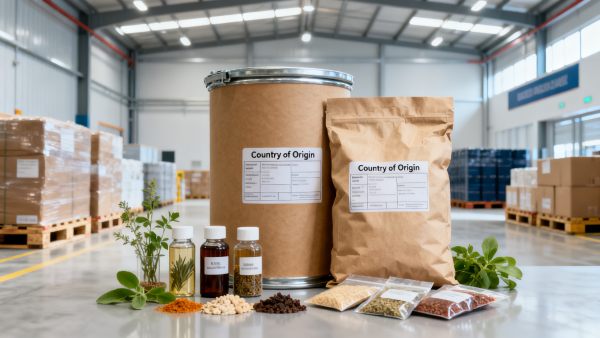
On June 30, 2026, a new EU requirement took effect for Natural Ingredients products entering the bloc, making country-of-origin labeling and verifiable end-to-end traceability a practical compliance issue rather than a documentation detail. The change is especially relevant for importers, ingredient traders, processors, and supply chain partners handling plant extracts, natural flavors, and functional ingredients, because clearance risk and financial exposure now depend on whether origin can be clearly demonstrated.
What the rule now requires at the border
According to the provided information, from June 30, 2026, all Natural Ingredients products entering the EU market must clearly state the Country of Origin on packaging and in accompanying documents. The requirement also calls for verifiable full-chain traceability information. It applies to products including plant extracts, natural flavors, and functional ingredients.
The same information states that “place of processing” is not accepted as a substitute for “Country of Origin.” Non-compliant products may be refused customs clearance or face substantial fines.
Where pressure is likely to appear first
Import-side document review becomes more sensitive
From an industry perspective, importers are likely to feel the impact first because they are directly exposed to customs review and compliance checks. The main pressure point is whether packaging and accompanying paperwork align clearly on origin statements and traceability records.
Supplier qualification moves closer to trade execution
Analysis shows that sourcing teams and direct trading companies may need to pay closer attention to supplier traceability capabilities, especially when working with Chinese suppliers mentioned in the provided summary. The issue is not only product availability, but whether upstream documentation can support a verifiable origin claim.
Processing and relabeling workflows face tighter scrutiny
For processors and manufacturers handling Natural Ingredients for EU-bound business, the immediate concern is that processing location cannot replace origin labeling. Observably, any workflow that previously relied on processing-based descriptions may need closer review in labels, shipment files, and customer-facing product documentation.
Logistics and supply chain service partners may face coordination risk
Supply chain service providers and distribution partners may also be affected where they manage shipment files, customs packets, or product handover records. What deserves closer attention is whether traceability information remains consistent across the full chain rather than only at the final export stage.
What companies should check now
Confirm how origin is declared across all materials
Companies involved in EU-bound Natural Ingredients trade should review whether the Country of Origin is stated clearly and consistently on packaging and in accompanying documents, rather than relying on processing location language.
Test whether traceability can be verified, not only described
Analysis shows that the practical issue is not simply having traceability claims on file, but whether those claims are verifiable across the chain. Businesses may need to examine whether supplier records, shipment documents, and product documentation can support the declared origin if challenged.
Recheck high-exposure product categories
Plant extracts, natural flavors, and functional ingredients are specifically named in the provided information, so companies active in these categories may want to prioritize internal review there first. This is especially relevant where multiple sourcing origins or processing steps could create ambiguity.
Prepare customer and supplier communication early
Observably, the compliance risk reaches beyond customs to contract execution and delivery timing. Importers may need to verify supplier readiness in advance, while exporters may need to prepare clearer origin and traceability communication for EU customers.
Why this matters beyond a label update
Analysis shows that this development is better understood as a compliance tightening around proof of origin, not just a packaging adjustment. The confirmed facts point to a stricter distinction between where a product comes from and where it is processed, which may affect how companies structure records, supplier checks, and shipment preparation.
It is more appropriate to understand this as an immediate operational change with longer-term signaling value. The rule is already in effect based on the provided date, but the broader industry meaning will depend on how consistently it is enforced in practice and how market participants adapt their traceability processes.
How to read the signal at this stage
At this stage, the clearest industry takeaway is that EU-bound Natural Ingredients business now requires stronger alignment between labeling, supporting documents, and traceability evidence. The confirmed consequences—clearance refusal or high fines for non-compliance—mean the issue should be treated as a current trade execution matter rather than a distant policy discussion.
From an industry perspective, this is best read as both a short-term compliance requirement and a longer-term signal that origin transparency is becoming more central to market access. The immediate task is verification, while the broader implications still warrant continued observation.
Basis of this article and what still needs verification
This article is based on the user-provided news title, event date, and event summary. For this type of development, commonly relevant source categories may include official notices, company statements, industry association updates, authoritative media coverage, and standard-setting documents.
No specific official source link was provided in the input, so the exact official publication path still needs ongoing verification. Areas that remain worth monitoring include any further official wording, implementation clarifications, and how the requirement is applied in actual customs and supply chain operations.
Related Intelligence
- Natural IngredientsFreeze-Dried Fruit Ingredients: A Packaging Checklist for Bulk StorageBuying freeze dried fruit ingredients? Use this bulk packaging checklist to assess moisture barriers, seals, and pack sizes, reduce waste, and protect quality from storage to production.
- Natural IngredientsBotanical Ingredient Prices in Europe: Comparing Quotes by Grade and Order VolumeCompare Europe botanical ingredients price quotes by grade and order volume. Discover how potency, testing, delivery, and inventory costs reveal real savings before you buy.
- Natural IngredientsMayonnaise vs. Salad Dressing: Ingredient and Texture DifferencesMayonnaise vs. salad dressing: discover key ingredient, texture, stability, and application differences to choose the right product for every recipe.
The Morning Broadsheet
Daily chemical briefings, market shifts, and peer-reviewed summaries delivered to your terminal.
