

The Authority in Global Agricultural Chemistry & Bio-Resources
US CBP Enforces Dual Verification for Food-Grade Enzymes
Effective May 1, 2026, U.S. Customs and Border Protection (CBP) has formally extended its ‘5H’ high-priority inspection framework — targeting High-Risk, High-Volume, High-Value, High-Compliance, and High-Traceability shipments — to imports of food-grade enzymes. This policy shift imposes new documentary and testing requirements on exporters, particularly those based in China, and signals a structural tightening of biosecurity oversight at the U.S. border.
Event Overview
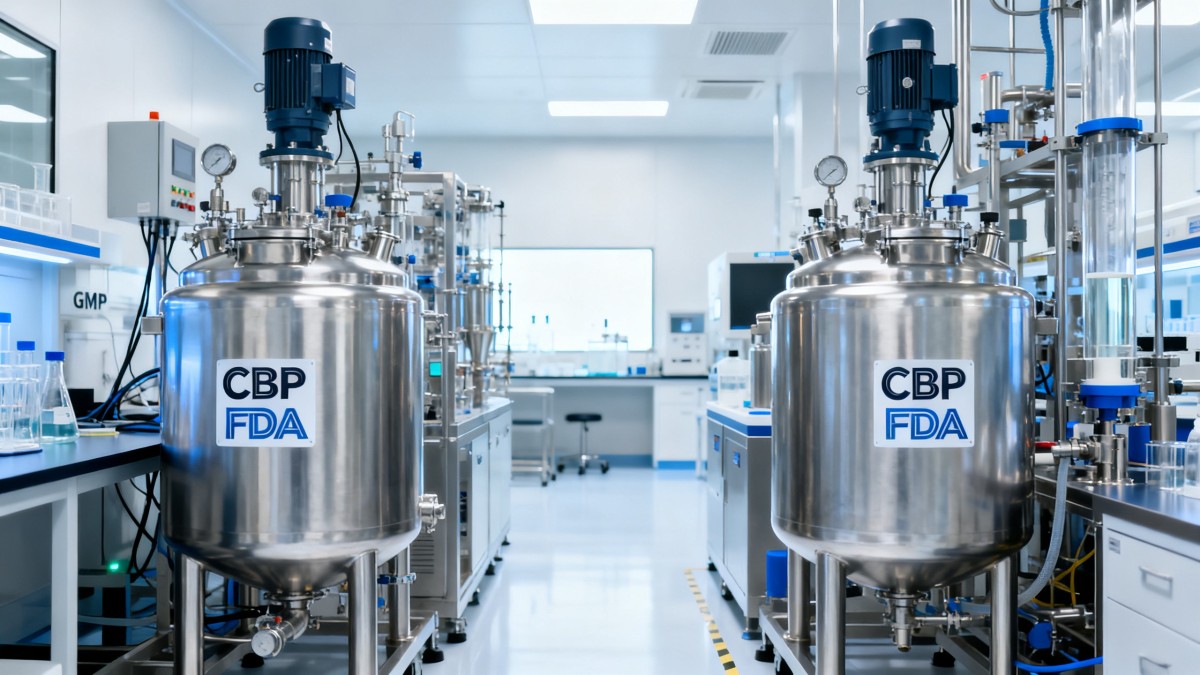
Beginning May 1, 2026, CBP requires all importers of food-grade enzymes entering the United States to submit, prior to release, both an FDA-recognized Good Manufacturing Practice (GMP) certificate and a third-party biological contamination report. The latter must specifically cover endotoxin levels, bacteriophage presence, and residual host DNA. Failure to provide both documents results in full-container detention at U.S. ports for a minimum of 14 days — with no expedited clearance pathway currently available.
Industries Affected
Direct Trading Enterprises: Export-oriented trading companies handling enzyme consignments face immediate operational friction. Their role as documentation intermediaries — rather than manufacturers — means they now bear responsibility for verifying upstream GMP compliance and commissioning independent lab testing. Delays directly impact cash flow, letter-of-credit timelines, and contractual penalty clauses tied to delivery windows.
Raw Material Procurement Firms: Entities sourcing enzymes from domestic Chinese manufacturers must now conduct pre-shipment due diligence beyond price and specification. They are increasingly required to audit supplier GMP readiness and confirm access to accredited labs capable of delivering CBP-accepted bioburden reports — adding lead time and verification cost layers previously absent from procurement workflows.
Processing & Manufacturing Companies: Domestic enzyme producers face intensified quality system scrutiny. While many already hold ISO 22000 or FSSC 22000 certifications, CBP’s mandate explicitly references FDA GMP standards — which differ in scope and enforcement rigor. Facilities without dedicated biological contaminant monitoring protocols (e.g., routine qPCR for host DNA or phage plaque assays) may require process revalidation and staff retraining.
Supply Chain Service Providers: Freight forwarders, customs brokers, and logistics platforms must now integrate dual-document validation into their pre-arrival filing systems. Some have begun deploying automated checklist tools to flag missing or expired GMP certificates or non-compliant lab report formats — but interoperability with Chinese lab reporting standards remains inconsistent, creating manual reconciliation bottlenecks.
Key Considerations and Recommended Actions
Verify GMP alignment with FDA 21 CFR Part 117
Not all GMP certificates meet CBP’s interpretation. Suppliers must ensure their certification explicitly covers preventive controls for biological hazards — not just general hygiene or facility maintenance. Certificates issued under ISO-based schemes require gap analysis against FDA requirements before submission.
Pre-select and pre-qualify accredited testing labs
Only laboratories accredited to ISO/IEC 17025 and authorized by CBP to issue bioburden reports for food enzymes will be accepted. Importers should confirm lab accreditation scope includes endotoxin (LAL assay), phage enumeration, and host DNA quantification — not just generic microbial counts.
Implement traceability enhancements upstream
CBP’s ‘High-Traceability’ criterion implies expectations for batch-level data linkage between manufacturing records, test reports, and shipping documents. Firms should map raw material lots to final enzyme batches and retain digital logs of sterilization cycles, filtration steps, and purification parameters — accessible for potential audit.
Editorial Perspective / Industry Observation
Analysis shows this is not merely a procedural update but a calibrated escalation in regulatory convergence: CBP is effectively importing FDA’s risk-based food safety logic into customs enforcement. Observably, the 5H designation reflects growing concern over enzymatic ingredients used in precision fermentation and plant-based protein production — sectors where biological purity directly affects functional performance and allergenicity profiles. From an industry perspective, the dual-verification requirement functions less as a barrier and more as a signal that U.S. regulators now treat food-grade enzymes as ‘active ingredients’ rather than inert processing aids — a conceptual shift with long-term implications for classification, labeling, and post-market surveillance.
Conclusion
This policy marks a definitive step toward harmonizing border control with food safety governance. It does not eliminate market access, but it reshapes competitive advantage: firms with embedded biological quality systems, transparent traceability, and cross-regulatory compliance literacy will gain resilience — while others face escalating friction costs. A rational interpretation is that the 5H framework serves as both a deterrent and a catalyst — discouraging low-compliance exports while accelerating quality infrastructure investment across the supply chain.
Source Attribution
U.S. Customs and Border Protection, Federal Register Notice CBP-2026-008 (published March 12, 2026); FDA Guidance for Industry: Current Good Manufacturing Practice for Food (21 CFR Part 117, updated February 2026). Note: CBP has indicated plans to publish a formal list of approved testing laboratories by Q3 2026 — this list remains pending and warrants ongoing monitoring.
Related Intelligence
- Food Grade EnzymesWhat Drives Industrial Enzyme Costs? Activity, Format, and Supply Risk ExplainedIndustrial enzyme cost factors explained: compare activity, formulation, shelf life, documentation, and supply risk to reduce process costs and improve purchasing decisions.
- Food Grade EnzymesIs There a Global Standard for Biochemical Engineering Product Quality?Is there a global standard for biochemical engineering product quality? Explore GMP, ISO, traceability, and supplier checks for confident global sourcing.
- Food Grade EnzymesHow Enzymes for Cracker Formulation Improve Texture and Shelf LifeEnzymes for cracker formulation can enhance dough handling, crisp texture, and shelf life. Explore targeted enzyme strategies for consistent, high-quality crackers.
The Morning Broadsheet
Daily chemical briefings, market shifts, and peer-reviewed summaries delivered to your terminal.
