

The Authority in Global Agricultural Chemistry & Bio-Resources
Brazil ANVISA Clears Chinese Feed Enzyme Filings
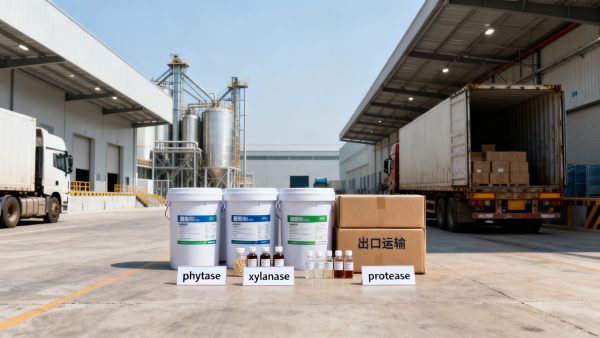
On June 19, 2026, Brazil’s National Health Surveillance Agency (ANVISA) approved Food Grade Enzymes filings for three Chinese enzyme producers, covering phytase, xylanase, and protease. For feed manufacturers, importers, procurement teams, and supply chain service providers, this is worth close attention because it marks the first time Chinese commercial feed enzymes have obtained full-category registration clearance in Brazil, creating a more direct path into local feed mill purchasing lists and changing how market access may work in practice.
What the approval confirms
According to the information provided, ANVISA formally approved the product filings on June 19, 2026 for three Chinese enzyme companies, including two ACC whitelist suppliers. The approved products fall under the Food Grade Enzymes category and include three enzyme types: phytase, xylanase, and protease.
The confirmed significance of this approval is specific: it represents the first full-category registration permission in Brazil for Chinese commercial feed enzymes. The information provided also states that the approved products can be directly included in local feed mill procurement catalogs and are exempt from batch-by-batch import inspection.
Why different market participants may pay attention
Feed mill procurement may see a change in supplier access
From an industry perspective, procurement teams at local feed mills are one of the most directly affected groups because the approved products can now enter purchasing catalogs directly. The practical point to watch is whether sourcing decisions begin to shift around approved enzyme categories rather than around case-by-case import handling.
Import and trading businesses may need to reassess process steps
Companies involved in direct trade may be affected because the information provided indicates that batch-by-batch import inspection is no longer required for the approved products. Analysis shows that this could change where time and documentation pressure sit in the transaction process, making filing status and document accuracy more important in execution.
Supply chain and compliance service providers should watch documentation flow
Service providers supporting customs, compliance, and delivery may also need to adjust their focus. What deserves closer attention is not only the approval itself, but also how clients will interpret the operational meaning of registration clearance, procurement listing, and inspection exemptions in day-to-day delivery arrangements.
What companies should monitor next
Separate formal approval from commercial rollout
What deserves closer attention is the distinction between regulatory clearance and actual business conversion. Approval confirms access conditions described in the provided information, but companies still need to track how local customers apply those conditions in procurement, supplier onboarding, and order execution.
Keep product scope and supporting documents aligned
For suppliers and trading partners, the immediate practical issue is whether internal product documentation, category descriptions, and customer-facing materials are fully aligned with the approved scope covering phytase, xylanase, and protease. Any mismatch between approved filings and commercial communication could create friction in procurement or delivery.
Prepare for customer questions on import handling
Because the provided information highlights exemption from batch-by-batch import inspection, customer-facing teams should be ready to explain what this means operationally and what it does not automatically guarantee. Analysis shows that procurement and compliance teams are likely to focus on execution details, document readiness, and consistency of supplier qualification materials.
Follow any further official wording closely
Observably, this development may trigger closer reading of future official statements or procedural clarifications. Companies active in Brazil-related business should pay attention to whether subsequent communications affect filing interpretation, purchasing eligibility, or the practical handling of approved enzyme products.
How this development is best understood for now
Analysis shows that this is more than a routine filing update because it changes the access status of Chinese commercial feed enzymes in a defined market. At the same time, it is more appropriate to understand this as a confirmed regulatory-access milestone rather than as proof of immediate market share change or a fully settled competitive outcome.
Observably, the strongest signal lies in market entry mechanics: full-category registration, direct inclusion in feed mill procurement catalogs, and removal of batch-by-batch import inspection for the approved products. The part that still requires observation is how quickly these regulatory conditions translate into stable purchasing behavior and repeat commercial execution.
A regulatory milestone with business implications still unfolding
At this stage, the news is best read as a meaningful access signal for the Brazil feed enzyme market rather than as a conclusion about broader South American expansion outcomes. The confirmed facts already matter for procurement, trade execution, and compliance workflows, but the industry still needs to watch how these approvals are used in actual supplier selection and transaction practice.
A neutral reading is that the event establishes a clearer route into Brazil for the approved product categories while leaving room for further observation on commercial adoption. For companies across the chain, the immediate task is not to overstate the result, but to translate the approval status into accurate documents, realistic customer communication, and disciplined follow-up.
Basis of this article and verification note
This article is generated from the user-provided news title, event date, and event summary. The analysis is limited to the confirmed information provided: the June 19, 2026 ANVISA approval, the number of approved Chinese producers, the inclusion of two ACC whitelist suppliers, the three enzyme categories involved, and the stated implications for procurement listing and import inspection treatment.
For this type of industry update, commonly relevant source types may include official regulatory notices, company announcements, industry association updates, authoritative media coverage, and standards-related documents. A specific official source link was not provided in the input, so further verification remains necessary. Continued attention should focus on any subsequent official clarification and on how the approval is reflected in actual procurement and import execution.
Related Intelligence
- Food Grade EnzymesIs There a Global Standard for Biochemical Engineering Product Quality?Is there a global standard for biochemical engineering product quality? Explore GMP, ISO, traceability, and supplier checks for confident global sourcing.
- Food Grade EnzymesHow Enzymes for Cracker Formulation Improve Texture and Shelf LifeEnzymes for cracker formulation can enhance dough handling, crisp texture, and shelf life. Explore targeted enzyme strategies for consistent, high-quality crackers.
- Food Grade EnzymesWhat to Look for in Enzyme Blend Ingredients for Food and Supplement FormulasExplore enzyme blend ingredients for food and supplement formulas—learn how to assess activity, stability, compliance, and performance for smarter sourcing.
The Morning Broadsheet
Daily chemical briefings, market shifts, and peer-reviewed summaries delivered to your terminal.
