

The Authority in Global Agricultural Chemistry & Bio-Resources
Southeast Asia RAS Orders Stretch Aeration Lead Times to 18 Weeks
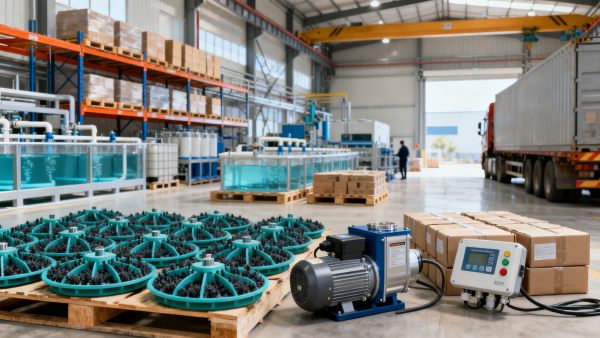
The timing of this development was not specified in the source input, but the signal is clear: concentrated RAS tender activity across Indonesia, Thailand, and Vietnam is pushing up demand for key aeration and water technology equipment, extending standard delivery times and forcing suppliers and buyers to reassess project scheduling. For aquaculture project developers, equipment suppliers, procurement teams, and regional service partners, this matters because delivery capacity is becoming a practical constraint rather than a background issue.
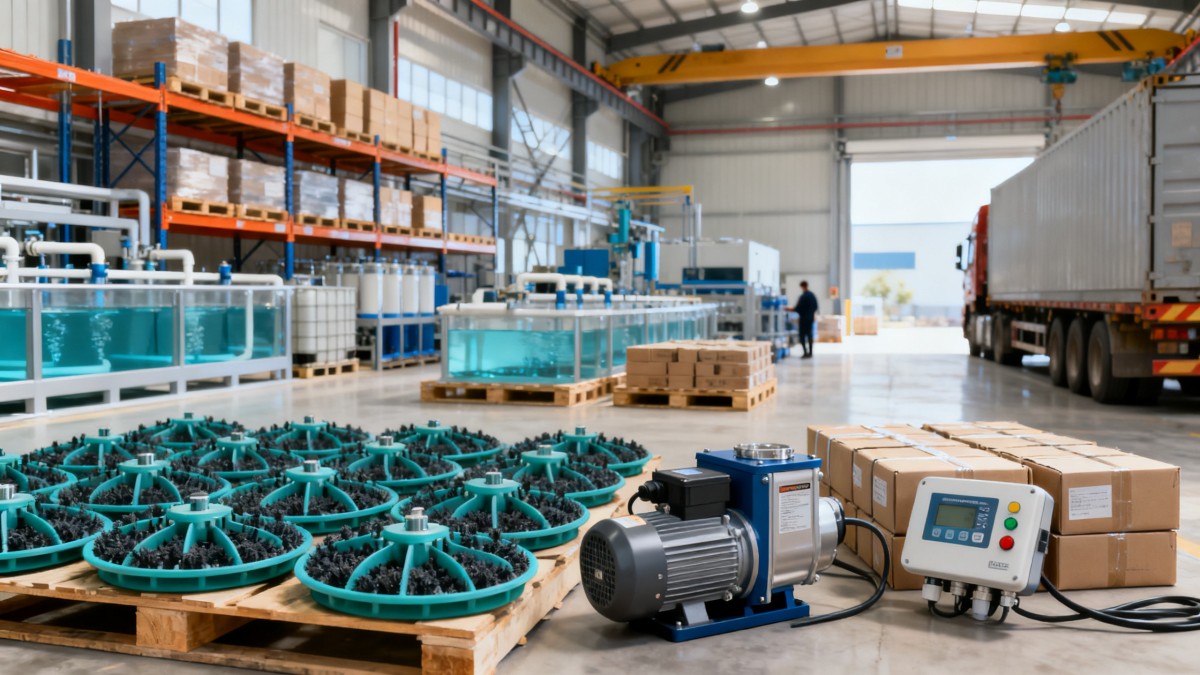
What has been confirmed so far
Based on the provided information, the recent demand increase is linked to clustered RAS tenders in Indonesia, Thailand, and Vietnam. Core Aeration & Water Tech equipment, including fine bubble diffuser discs and intelligent air pump controllers, recorded a 63% quarter-on-quarter increase in global order volume. Leading Chinese suppliers reported that lead times for standard models have extended to 16 to 18 weeks. Some companies have already launched localized assembly lines in Bac Ninh, Vietnam, and expect from Q3 to reduce delivery cycles to within six weeks in order to serve urgent delivery needs in Southeast Asia.
Where the pressure is likely to be felt first
Project procurement is moving from price focus to delivery focus
From an industry perspective, procurement teams for RAS projects may be affected first because longer lead times on standard aeration equipment can directly influence equipment matching, installation sequencing, and tender execution. What deserves closer attention is whether delivery commitments remain realistic under concentrated order intake.
Equipment suppliers face a capacity and coordination test
For manufacturers and direct trading companies, the impact is likely to center on production scheduling, component allocation, and customer communication. The reported move toward local assembly in northern Vietnam suggests that response speed is becoming a competitive operating issue, not just a manufacturing issue.
Regional service and delivery partners may see tighter timelines
Supply chain service providers and local channel partners may need to pay closer attention to handover timing, shipment coordination, and installation readiness. When standard products move from normal delivery to 16 to 18 weeks, small planning errors can create larger downstream delays.
What companies should watch now
Whether lead times continue to stabilize or remain extended
Analysis shows that the reported 16 to 18 week lead time is currently one of the most practical indicators for buyers and suppliers alike. Companies involved in bids or delivery planning should track whether this remains limited to standard models or becomes a broader pattern across related equipment categories.
How much local assembly changes actual fulfillment speed
The Bac Ninh assembly move is important to monitor in operational terms. What deserves closer attention is not only the stated target of reducing delivery to within six weeks from Q3, but also whether that translates into consistent fulfillment for urgent Southeast Asia orders.
How procurement communication is handled in active tenders
For buyers, contractors, and service providers, clear communication on lead times, model availability, and delivery windows becomes more important when tender activity is concentrated. This is less about broad management advice and more about preventing mismatches between bid commitments and supply reality.
Whether standard products remain the main bottleneck
Observably, the current information highlights standard models rather than a generalized shortage across all product lines. Companies should therefore pay attention to product-specific exposure rather than assuming that every aeration component is affected in the same way.
How this signal should be read
Analysis shows that this is best understood as a supply-demand pressure signal within the RAS equipment chain rather than a finalized long-term market outcome. The order surge and longer lead times indicate that project concentration in Southeast Asia is already affecting execution conditions. At the same time, the launch of local assembly in Vietnam suggests suppliers are actively testing a regional delivery response. It is more appropriate to understand this as a developing industry shift that still requires verification through actual Q3 delivery performance.
Why this matters beyond one shipment cycle
The immediate industry meaning is not simply that orders are up, but that delivery capability has become a key variable in RAS project execution across parts of Southeast Asia. A neutral reading is that the market is showing both demand momentum and fulfillment strain at the same time. For now, this development is better understood as a near-term operational signal with possible longer-term implications if localized assembly materially shortens lead times and becomes a stable supply arrangement.
About the basis of this article
This article is generated from the user-provided news title, the note that the event timing was not specified, and the supplied event summary. Specific official source links were not provided in the input, so the details still require ongoing verification against source types commonly used for this kind of industry update, such as official announcements, company statements, industry association releases, authoritative media coverage, and relevant standard-setting documents. Continued attention should focus on whether Q3 delivery compression to within six weeks is achieved and whether lead times for standard equipment ease in practice.
Related Intelligence
- Aeration & Water TechWhat RO water treatment systems deliver consistent 98% salt rejection at 25°C with feed TDS over 3,000 ppm?RO water treatment systems that deliver proven 98% salt rejection at 25°C with >3,000 ppm TDS—engineered for API synthesis, aquaculture & grain processing.
- Aeration & Water TechCan pond aeration systems maintain dissolved oxygen above 5 mg/L during summer stratification in catfish ponds?Pond aeration systems can sustain >5 mg/L DO during summer stratification—when engineered for mixing *and* oxygen transfer. See field-proven data & design essentials.
- Aeration & Water TechHow to Choose Alarm Water Monitoring Systems for Critical Water FacilitiesAlarm water monitoring systems: learn how to select reliable sensors, alarms, communications, and workflows to protect critical water facilities and prevent costly failures.
The Morning Broadsheet
Daily chemical briefings, market shifts, and peer-reviewed summaries delivered to your terminal.
