

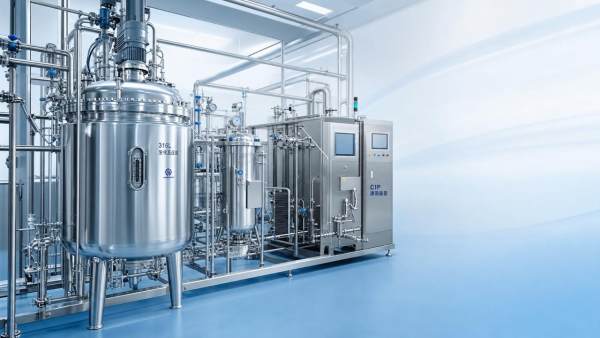
Biochemical Processing Equipment: How to Choose Reactors, Filters, and CIP Systems
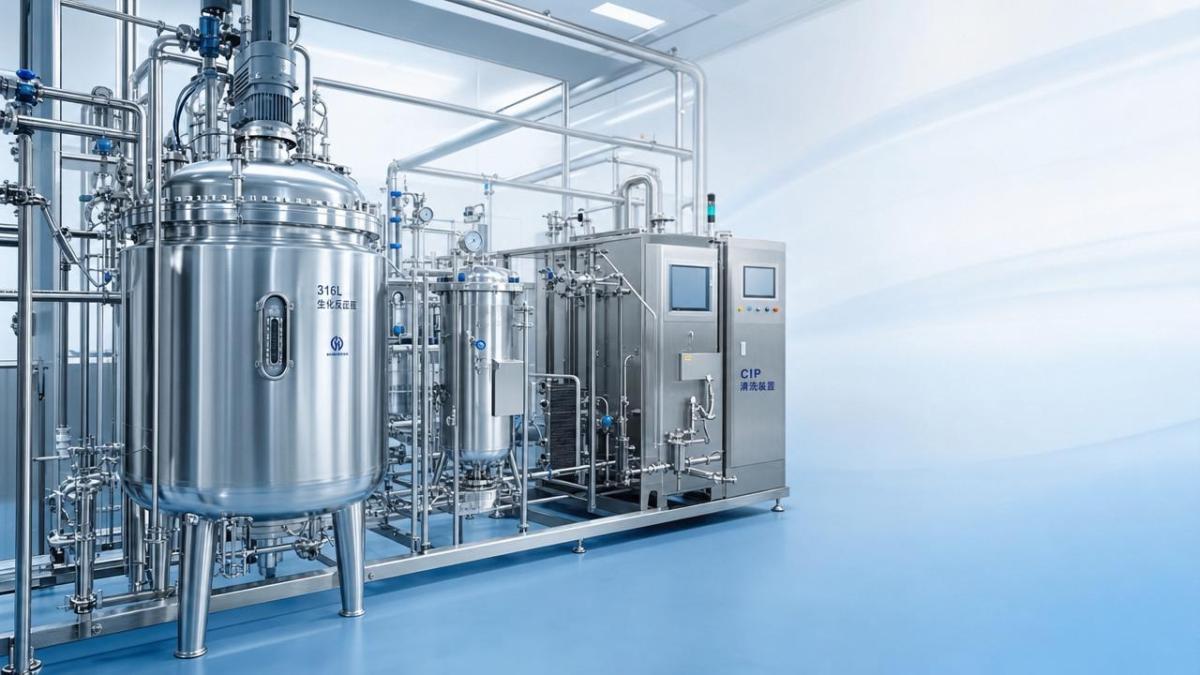
Selecting the right biochemical processing equipment is a high-stakes decision for technical evaluators balancing yield, sterility, validation, and lifecycle cost.
Reactors, filters, and CIP systems must work as an integrated process platform, not isolated assets, especially in regulated biochemical operations.
For GMP-regulated fine chemicals, bio-extracts, APIs, and agri-bioprocessing, the best choice is rarely the cheapest specification on paper.
The defensible choice is equipment that protects product quality, supports validation, scales predictably, and reduces cleaning, downtime, and contamination risk.
Start With the Process Risk, Not the Equipment Catalog
Technical evaluators should begin by mapping the process risks that the equipment must control throughout development, scale-up, and commercial production.
These risks include microbial contamination, cross-batch carryover, solvent incompatibility, thermal degradation, shear sensitivity, filtration fouling, and incomplete cleaning.
A reactor, filter, or CIP skid may appear technically adequate, but fail when exposed to real process variability and audit requirements.
The strongest equipment evaluations therefore connect every specification to a process requirement, quality attribute, or operational constraint.
For example, an extraction process for botanical actives may prioritize corrosion resistance, solids handling, and cleanability over advanced fermentation controls.
An API intermediate process may instead require tight temperature control, validated cleaning limits, and documentation aligned with GMP expectations.
Before issuing an RFQ, define product sensitivity, batch size, solvent system, viscosity, particle load, sterility requirement, and regulatory exposure.
This approach prevents overbuying sophisticated features while also avoiding hidden weaknesses that become expensive after installation.
How to Evaluate Biochemical Reactors for Yield, Control, and Scale-Up
Reactors are the center of many biochemical processing platforms, but their suitability depends on more than vessel volume and price.
Evaluators should examine mixing performance, heat transfer capacity, material compatibility, oxygen transfer, pressure rating, and control architecture.
For fermentation or enzyme-based processing, agitation design and gas transfer can directly affect yield, reproducibility, and downstream filtration load.
For chemical synthesis or extraction, jacket performance, baffle design, and solvent compatibility may be more important than biological parameters.
Materials of construction deserve careful review. 316L stainless steel is common, but not automatically sufficient for all acids, salts, or solvents.
Where chlorides, aggressive cleaners, or high-purity products are involved, duplex alloys, Hastelloy, or specialized linings may be justified.
Surface finish is another critical factor. Poor weld quality or rough internal surfaces can trap residues and compromise cleaning validation.
For GMP environments, request documented weld maps, passivation records, surface roughness data, pressure test reports, and material certificates.
Scale-up should be evaluated using engineering logic, not only proportional volume increases. Mixing time, shear rate, and heat transfer change with scale.
A supplier should explain how pilot data translates into commercial dimensions, impeller selection, motor power, and control ranges.
If the reactor supports multiple products, assess whether changeover cleaning, recipe control, and hold-time limits can be validated realistically.
A technically sound reactor supports production goals while reducing batch deviation risk, troubleshooting burden, and future validation rework.
Choosing Filters: Match Separation Performance to Real Feed Conditions
Filters often become bottlenecks because feed streams behave differently at production scale than they do in laboratory trials.
Technical evaluators should identify particle size distribution, solids concentration, viscosity, compressibility, temperature, and chemical compatibility before selecting hardware.
Common options include depth filters, membrane filters, bag filters, cartridge filters, centrifuge-assisted systems, and filter presses.
The right choice depends on whether the process prioritizes clarification, sterile filtration, product recovery, impurity removal, or solids capture.
For bio-extracts and fermentation broths, fouling behavior can dominate total cost more than nominal pore size or filter area.
For APIs or fine chemicals, extractables, leachables, chemical resistance, and validated retention performance may carry greater weight.
A supplier should provide filter media compatibility data, integrity testing options, pressure drop expectations, and cleaning or replacement procedures.
Do not rely only on clean-water flow rates. Challenge tests using representative process fluid give far more meaningful performance evidence.
Evaluate whether the filter can tolerate process upsets, such as higher solids load, temperature swings, or unexpected viscosity changes.
Also consider operator ergonomics. Filter changeout can expose personnel to solvents, allergens, bioactive materials, or contaminated residues.
Closed filter housings, sanitary connections, drainability, and clear maintenance access can reduce safety risks and downtime.
In regulated production, filtration documentation should include lot traceability, validation support, retention claims, cleaning data, and integrity test methods.
CIP Systems: The Hidden Determinant of Uptime and Audit Readiness
Clean-in-place systems are often treated as utilities, yet they strongly determine throughput, contamination control, and regulatory confidence.
A poorly designed CIP system can turn good reactors and filters into recurring sources of residue, bioburden, and failed inspections.
Evaluators should verify that the CIP system delivers sufficient flow, temperature, chemical concentration, contact time, and coverage.
The key question is not whether cleaning solution enters the equipment, but whether every product-contact surface is reliably cleaned.
Dead legs, poor drainability, undersized spray devices, and uncontrolled return flow can create residues that remain invisible until validation fails.
A robust CIP design should include validated spray coverage, hygienic piping slopes, conductivity monitoring, temperature control, and defined cleaning recipes.
For multi-product facilities, CIP flexibility matters. Different products may require alkaline cleaning, acid rinses, enzymatic steps, or solvent flushing.
The equipment should support recipe segregation, automated recording, deviation alerts, and secure operator access levels.
Water quality is also important. Purified water, WFI, or potable water may be required depending on product class and final use.
Cleaning validation support should include worst-case residue rationale, swab or rinse sampling locations, and compatibility with analytical methods.
When evaluating lifecycle cost, include chemical use, water consumption, heating energy, cleaning cycle duration, and production downtime.
A slightly more expensive CIP system may pay back quickly if it shortens changeover time and reduces manual cleaning risk.
Integration Matters More Than Individual Equipment Performance
Biochemical processing equipment should be assessed as a connected platform, because weaknesses often appear at interfaces between assets.
Reactors, filters, transfer lines, holding tanks, and CIP systems must share compatible connection standards, automation logic, and hygiene assumptions.
For example, a reactor may be cleanable, but a transfer line with poor slope can retain residues after every batch.
A filter may perform well, but frequent manual disassembly can undermine contamination control and operator safety.
Integration review should include process flow diagrams, piping and instrumentation diagrams, valve sequencing, drain paths, and cleaning boundaries.
Technical evaluators should request simulations or calculations for pressure drop, pump sizing, heat transfer, and cleaning flow velocity.
Automation is another integration concern. Recipe control, data historian functions, alarms, and batch records should align with quality requirements.
For GMP operations, consider whether the control system supports electronic records, audit trails, user permissions, and change control.
Even in non-pharmaceutical biochemical facilities, digital traceability improves root-cause analysis, supplier audits, and customer confidence.
The best equipment configuration minimizes manual interventions, uncontrolled transfers, undocumented adjustments, and ambiguous cleaning responsibility.
Documentation and Supplier Qualification Should Carry Real Weight
Technical specifications are only part of equipment selection. Supplier documentation quality often determines how difficult commissioning and validation become.
A credible supplier should provide material certificates, fabrication records, weld documentation, pressure testing data, and calibration certificates.
For regulated or export-oriented production, request FAT and SAT protocols, installation manuals, maintenance schedules, and spare parts lists.
Where GMP expectations apply, validation packages should support IQ, OQ, and, where appropriate, PQ activities.
Documentation should be clear enough for engineers, quality teams, and auditors to understand without excessive supplier intervention.
Supplier qualification should also examine manufacturing experience in similar biochemical processes, not only general equipment fabrication capability.
Ask for references from comparable applications, especially where sterility, solvent handling, aggressive cleaning, or high-viscosity feedstreams are involved.
Lead times, spare parts availability, service response, and technical support should be evaluated alongside purchase price.
A low-cost supplier without strong documentation can create higher long-term costs through delayed validation and unresolved deviations.
For institutional buyers, supplier transparency is increasingly important because supply chain risk can affect regulatory filings and customer approvals.
Lifecycle Cost: Look Beyond the Purchase Order
The true cost of biochemical processing equipment includes utilities, cleaning, downtime, consumables, maintenance, validation, and operator training.
Reactors may differ in energy use, heat-up time, batch failure risk, and cleaning duration, even when nominal capacity appears identical.
Filters may have low initial hardware cost but require expensive media, frequent changeouts, or high labor input.
CIP systems may consume significant water and chemicals, but reduce manual labor, exposure risk, and changeover delays.
A practical lifecycle analysis should estimate annual batch count, cleaning frequency, consumable usage, utility demand, and expected maintenance events.
Include the cost of lost production when equipment requires unplanned downtime or cannot meet campaign scheduling demands.
For high-value APIs or specialty bio-ingredients, one contamination event can exceed the savings from a cheaper equipment package.
Technical evaluators should present procurement recommendations using risk-adjusted economics, not just capital expenditure comparisons.
This makes the decision more defensible to finance, operations, quality assurance, and executive stakeholders.
Practical Selection Checklist for Technical Evaluators
A structured checklist helps teams compare vendors consistently and avoid decisions driven by sales claims or incomplete quotations.
For reactors, confirm process compatibility, mixing performance, heat transfer, pressure rating, surface finish, drainability, and scale-up rationale.
For filters, verify representative feed testing, retention performance, media compatibility, pressure drop, changeout safety, and validation support.
For CIP systems, examine spray coverage, flow velocity, chemical dosing, temperature control, recipe management, and cleaning verification methods.
Across all equipment, review documentation, automation readiness, maintenance access, spare parts, supplier references, and regulatory alignment.
During vendor discussions, ask how the design handles worst-case products, process deviations, cleaning failures, and future capacity expansion.
Request evidence, not only assurances. Test data, engineering calculations, drawings, and validation documents are stronger than broad claims.
Finally, involve production, engineering, quality, EHS, and maintenance teams before final selection, because each group sees different operational risks.
Final Takeaway: Choose for Control, Cleanability, and Confidence
The best biochemical processing equipment is not simply the most advanced or lowest-priced option in a supplier proposal.
It is the equipment package that controls critical process risks, cleans reliably, scales predictably, and supports audit-ready documentation.
Reactors should be judged by process control and scale-up behavior. Filters should be judged by real feed performance and validation needs.
CIP systems should be judged by repeatable cleaning effectiveness, data capture, and their impact on changeover and contamination risk.
For technical evaluators, the strongest procurement decision connects engineering performance with quality assurance and lifecycle economics.
When reactors, filters, and CIP systems are selected as one integrated platform, production becomes safer, more efficient, and easier to defend.
