

The Authority in Global Agricultural Chemistry & Bio-Resources
Botanical Extracts Draw Compliance Focus at Haining Fair

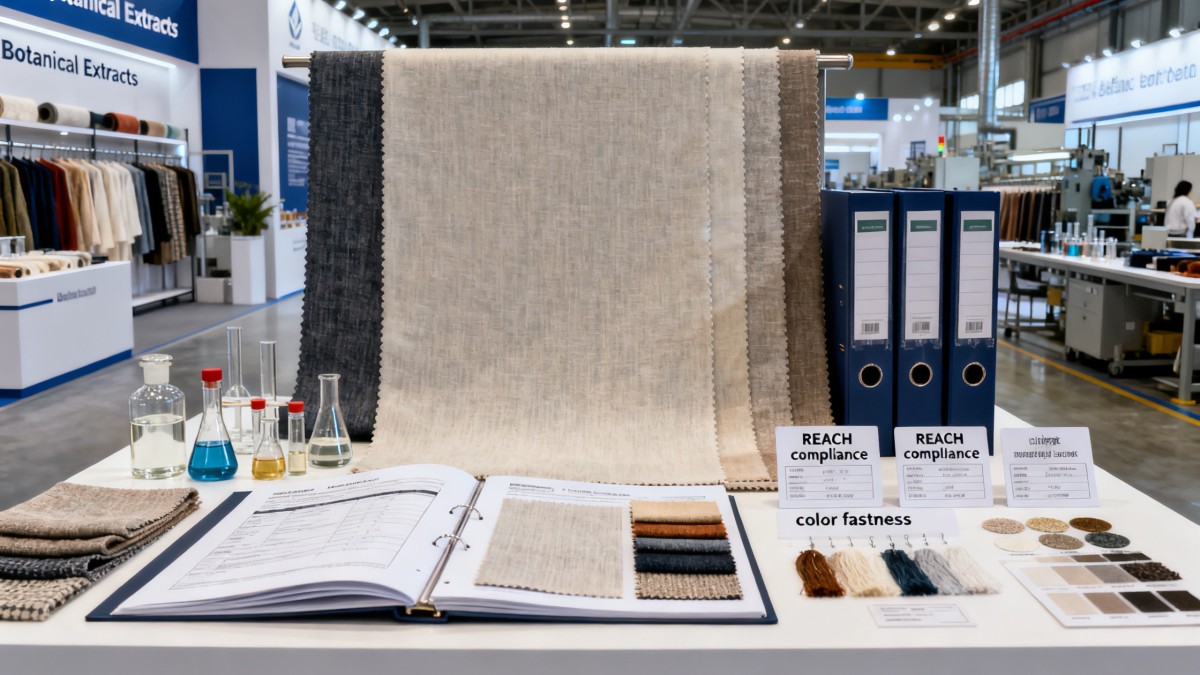
At the opening of the first international high-end sofa fabric fair in Haining on June 8, 2026, attention around fabrics dyed with Botanical Extracts pointed to a practical shift in export-facing requirements rather than a simple product trend. The signal from overseas buyers, especially their focus on REACH compliance, color fastness, and supply-chain traceability, matters for fabric exporters, textile auxiliaries suppliers, sourcing teams, testing support providers, and delivery management because it shows how market access expectations are being framed in current procurement discussions.
What the Haining Event Confirmed
From June 8 to June 10, Haining, Zhejiang hosted its first international high-end sofa fabric exhibition and attracted global home-furnishing buyers. During the event, environmentally oriented fabrics using Botanical Extracts as natural dyeing agents became a focal point. The confirmed buyer concerns highlighted in the event summary were REACH compliance, color fastness, and supply-chain traceability. The event also indicated a new export application scenario for Botanical Extracts in functional textile auxiliaries.
Why Buyer Requirements Are Becoming the Real Commercial Filter
For fabric exporters, compliance review begins earlier
Analysis shows that exporters of sofa fabrics may feel the impact first because overseas interest is not centered only on design or environmental claims, but also on whether the material can satisfy compliance review in actual transactions. In practice, this can affect pre-sale technical communication, sample approval, supporting documentation, and delivery readiness. What deserves closer attention is whether REACH-related declarations, color fastness evidence, and traceability records are ready before buyer screening becomes more detailed.
For dyeing and auxiliaries suppliers, technical claims face document-based scrutiny
From an industry perspective, suppliers connected to Botanical Extracts may be affected because the product discussion is moving beyond concept marketing into verifiable technical acceptance. The business impact may appear in specification alignment, test-related preparation, and the ability to explain how a natural dyeing agent is used within the supply chain. Companies in this part of the chain should pay attention to technical files, consistency of material descriptions, and whether supporting compliance materials can be linked clearly to exported products.
For procurement and sourcing teams, traceability becomes part of supplier qualification
Observably, sourcing teams are likely to treat traceability as part of supplier evaluation rather than as an optional sustainability narrative. This may influence supplier onboarding, document requests, and risk checks before order confirmation. The practical issue is not only whether a fabric uses Botanical Extracts, but whether the supply path and related records can support buyer due diligence and later quality review.
For testing and service partners, verification requests may become more specific
Analysis shows that service providers involved in testing, documentation support, and export coordination may face more targeted requests tied to color fastness, compliance evidence, and product traceability. The likely impact is on report preparation, document consistency, and communication between factories, exporters, and buyers. It is more appropriate to understand this as a signal that verification requirements may become more product-specific in this export scenario.
What Companies Should Watch in the Next Phase
Check whether compliance claims can be substantiated
Companies promoting fabrics dyed with Botanical Extracts should pay close attention to whether environmental positioning is matched by verifiable compliance support. The immediate point is not to assume market acceptance from buyer interest alone, but to review whether claims connected to REACH can be backed by the necessary internal and external materials.
Prepare color fastness evidence for commercial use cases
Because color fastness was explicitly highlighted by buyers, companies should watch whether existing testing, sample records, and product descriptions are sufficient for procurement review and order discussions. If execution details are not yet clear, it remains prudent to monitor how buyers frame technical requirements in subsequent inquiries, specifications, or bid documents.
Strengthen traceability records before orders scale up
Traceability is likely to matter not only at the marketing stage but also in later delivery, quality follow-up, and after-sales communication. Companies should therefore watch the completeness and consistency of batch records, source descriptions, and product-linked documentation, especially where export transactions require smoother file matching across suppliers and buyers.
Track how buyer language turns into execution requirements
Observably, the event provides a market-facing signal, but not a full rulebook. Businesses should continue watching whether buyer attention to compliance, fastness, and traceability develops into more explicit wording in procurement documents, technical appendices, qualification checklists, or delivery conditions.
How This Signal Should Be Read for Now
From an industry perspective, this development is better understood as an execution signal emerging from buyer behavior rather than as proof of a newly announced standalone regulation. The meaningful point is that export opportunities tied to Botanical Extracts are being discussed alongside compliance and traceability expectations, which suggests that commercial acceptance may increasingly depend on document readiness and verification discipline. At the same time, analysis shows that the exact pace of market adoption and the strictness of implementation still require further observation.
What the Event Means Without Overstating It
The Haining exhibition highlights that the export conversation around environmentally oriented sofa fabrics is becoming more rules-aware, especially when Botanical Extracts are positioned for overseas buyers. A neutral reading is that the market is sending a clearer requirement signal: product appeal alone is not enough if compliance, fastness, and traceability cannot be demonstrated in business execution. It is more appropriate to understand this event as an early but concrete indication of how buyer-side requirements may shape this export scenario, while the detailed standards of execution still need continued monitoring.
Basis of This Article and What Still Needs Verification
This article is generated from the user-provided news title, event date, and event summary. For events of this kind, commonly relevant source types may include official announcements, regulator releases, customs or trade authority information, industry association updates, standards documents, and reporting by authoritative media. No specific official source link was provided in the input, so further verification remains necessary. What still needs continued observation includes any later compliance interpretations, certification practices, procurement document changes, buyer feedback, and how companies implement related traceability and testing requirements in actual export business.
Related Intelligence
- Botanical ExtractsAre Botanical Extracts Classified as Agrochemicals Under New Rules?Are bio extracts considered agricultural chemicals under new rules? Learn how claims, composition, and market rules affect classification—and what to verify before launch.
- Botanical ExtractsChoosing Botanical Extracts for Pharmaceuticals: Potency, Purity, and ComplianceBotanical extracts for pharmaceuticals: learn how to assess potency, purity, traceability, and GMP compliance for confident, regulatory-ready supplier selection.
- Botanical ExtractsBotanical Extracts Market Outlook: Supply, Pricing, and Buyer RisksBotanical extracts market insights on supply, pricing, quality control, and buyer risks—compare suppliers confidently and protect your sourcing strategy.
The Morning Broadsheet
Daily chemical briefings, market shifts, and peer-reviewed summaries delivered to your terminal.
