

The Authority in Global Agricultural Chemistry & Bio-Resources
Ningxia Push Speeds Compliance Path for Agri Equipment
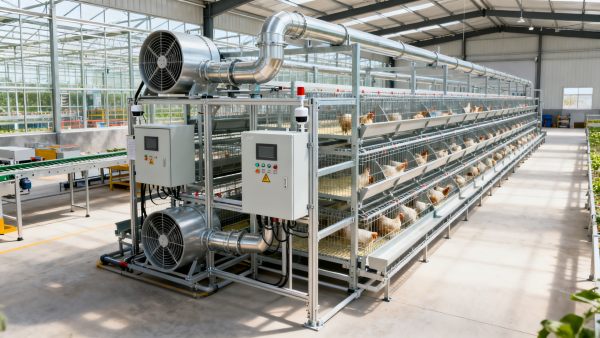
On June 3, 2026, a three-day round of on-site, company-specific support by the Ningxia industry authority signaled a practical compliance-oriented shift for green agricultural equipment makers. The focus on technical iteration and export certification preparation for Smart Greenhouse systems and Poultry Housing & Caging equipment matters not only to manufacturers, but also to exporters, certification service providers, procurement teams, and delivery planners, because faster progress toward CE, UL, and ASAE-related requirements can directly affect market-entry timing and execution readiness.
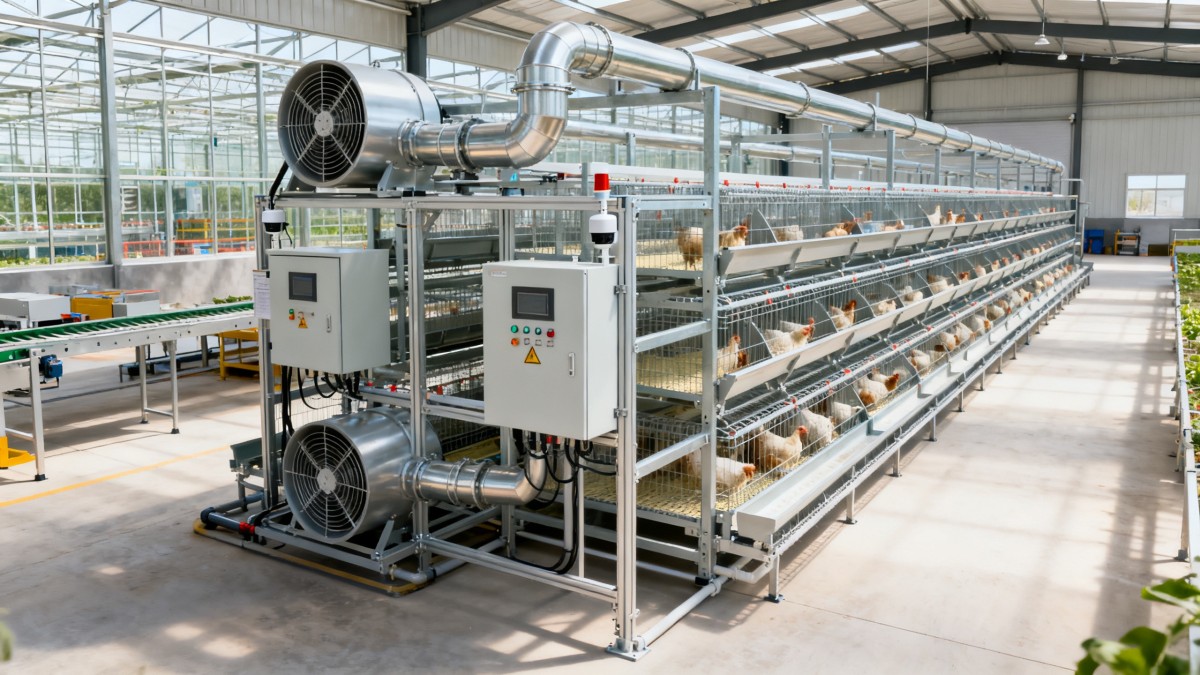
What the June 3–5 field support actually confirmed
The confirmed facts are limited but clear. From June 3 to 5, the Military-Civil Integration and Equipment Division of the Ningxia Department of Industry and Information Technology conducted on-site work with equipment manufacturing enterprises under a “one company, one policy” approach. The support specifically targeted technology upgrading and export certification preparation for green agricultural equipment, including smart greenhouse environmental control systems and automated poultry house equipment. According to the event summary, this support is expected to accelerate the progress of Smart Greenhouse and Poultry Housing & Caging products toward CE, UL, and ASAE-related international certification and shorten the cycle for overseas market access.
Where the practical effects may appear first
Export-facing manufacturers may need to align design and certification earlier
Analysis shows that manufacturers of Smart Greenhouse and Poultry Housing & Caging equipment are the most directly affected participants because the stated support is tied to technical iteration and export certification preparation. The likely impact falls on product design review, technical documentation readiness, test planning, and production scheduling. What deserves closer attention is whether internal engineering changes, certification files, and delivery commitments are being organized in the same timeline rather than treated as separate tasks.
Certification and testing service providers may see earlier engagement demands
From an industry perspective, certification-related companies and testing service institutions may be affected through earlier project involvement. If enterprises move sooner on CE, UL, and ASAE-related preparation, service providers may need to review technical files, testing paths, and application materials at an earlier stage. The operational issue to watch is not only demand volume, but also whether clients are better prepared with consistent documentation and traceable technical specifications.
Export, procurement, and delivery teams may need to reset execution assumptions
Observably, export teams, procurement managers, and supply-chain coordinators could also feel the impact because shorter overseas access cycles can change planning assumptions for components, shipment timing, and customer communication. The business effect may emerge in contract preparation, supplier qualification checks, lead-time coordination, and after-sales readiness. Companies involved in these stages should pay closer attention to certification status, supporting records, and any product-level compliance references used in commercial documents.
What companies should watch in the next stage
Keep certification preparation tied to technical iteration
Analysis shows that the key issue is not certification alone, but the linkage between product upgrading and export compliance preparation. Enterprises should closely watch whether technical changes in Smart Greenhouse and Poultry Housing & Caging products are matched by updated test materials, technical files, and application records, because a faster approval path depends on consistency across those elements.
Track official wording and execution signals carefully
It is more appropriate to understand this development as an execution signal rather than a fully disclosed rule package. For that reason, companies should continue monitoring whether later official statements, administrative guidance, or implementation language clarify the practical scope of support, the pace of certification preparation, or the standards emphasis attached to the targeted product categories.
Review trade documents and customer-facing compliance claims
From an execution perspective, exporters and sales teams should be careful with how certification progress is reflected in quotations, bidding materials, technical proposals, and delivery commitments. The current information supports attention to export certification preparation, but it does not disclose product-specific certification outcomes. That means customer-facing compliance wording should remain accurate and document-based.
Prepare for changes in lead-time and service coordination
Observably, if overseas access cycles do become shorter, procurement and after-sales teams may need to adjust component planning, spare-parts readiness, and service response arrangements. This is still a matter for follow-up observation rather than a confirmed outcome, but it is a practical area where operational friction could appear if internal coordination lags behind certification progress.
Why this reads more like an execution signal than a finished policy result
Analysis shows that this update is best read as a targeted implementation signal around industrial upgrading, export compliance preparation, and market-entry acceleration for specific agricultural equipment categories. It does not, based on the provided facts, establish a new published regulation, a disclosed certification shortcut, or a completed result for any individual enterprise. What deserves closer attention is how this kind of on-site administrative support may influence subsequent certification practice, commercial timelines, and market communication.
How the market should interpret this update for now
A rational reading is that the event points to stronger policy-backed execution around export readiness for Smart Greenhouse and Poultry Housing & Caging equipment, especially where technical upgrading and certification preparation must move together. At the current stage, it is more appropriate to understand the development as a meaningful operational cue for manufacturers and export participants, while reserving judgment on final certification outcomes, delivery acceleration, or broader market effects until more execution feedback becomes available.
Basis of this article and what still needs verification
This article is generated from the user-provided news title, event date, and event summary. For this type of development, relevant source categories usually include official government notices, regulator releases, trade or customs authority information, industry association updates, standards organization materials, and reporting by authoritative media. No specific official source link was provided in the input, so further verification remains necessary. What still needs continued observation includes later policy detail, certification execution practice, wording used in tender or procurement documents, industry feedback, and how enterprises actually implement the support in production and export workflows.
Related Intelligence
- Smart GreenhouseGreenhouse Equipment for Vertical Farming: Choosing Lighting and VentilationChoose greenhouse equipment for vertical farming with confidence. Compare lighting, airflow, and moisture control to improve crop uniformity and manage costs. Explore the guide.
- Smart GreenhouseSelecting Greenhouse Propagation Equipment for Hot, Humid Southeast Asian NurseriesGreenhouse propagation equipment Southeast Asia: discover how to select resilient irrigation, ventilation, benches, and automation for hot, humid nurseries.
- Smart GreenhouseWhat Are the Biggest Challenges in Agri-Tech Adoption in 2026?What are the biggest challenges in agri tech adoption for 2026? Explore cost, data, connectivity, skills, compliance, and ROI barriers.
The Morning Broadsheet
Daily chemical briefings, market shifts, and peer-reviewed summaries delivered to your terminal.
