

The Authority in Global Agricultural Chemistry & Bio-Resources
Sourcing Information for Greenhouses: How to Compare Suppliers, Specs, and Lead Times
Sourcing Information for Greenhouses: How to Compare Suppliers, Specs, and Lead Times
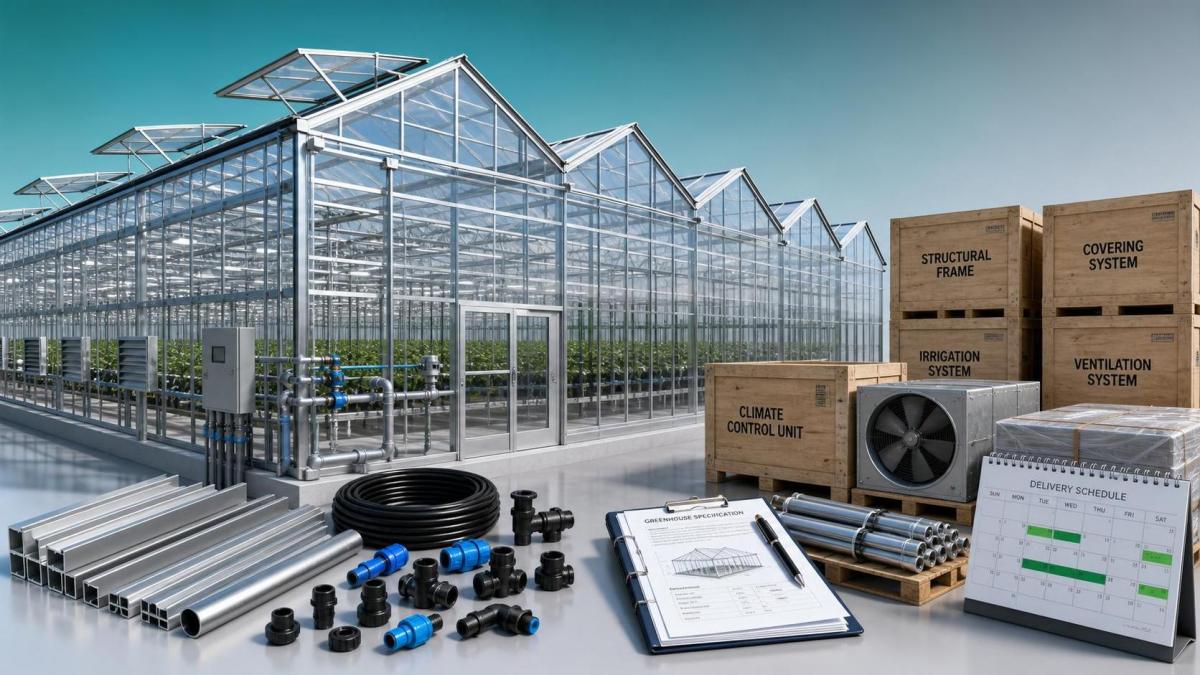
Reliable sourcing information for greenhouses matters most when cost pressure meets technical uncertainty. A low quote can look attractive early, then create expensive delays later.
That is why sourcing information for greenhouses should never be limited to brochures, price sheets, or a few product photos. Decision quality depends on what sits behind them.
In practical terms, teams need a structured way to compare suppliers, specifications, certifications, and lead times. The goal is not just supplier selection. It is delivery confidence.
For greenhouse projects, sourcing errors often show up in hidden places. Steel grade mismatches, incomplete ventilation data, and vague packing plans can all disrupt installation.
Better sourcing information for greenhouses reduces those gaps early. It helps align engineering review, procurement timing, and site execution before purchase orders are locked.
Start with a clearer sourcing framework
The first step is defining what must be compared. Many evaluations fail because teams compare prices before they compare scope, performance, and supply responsibility.
Strong sourcing information for greenhouses should cover five areas. These areas create a workable baseline for supplier assessment and internal approval.
- Structural system details, including frame material, coating, connection design, and load capacity.
- Environmental systems, such as ventilation, cooling, shading, irrigation integration, and automation compatibility.
- Compliance records, including local building codes, wind and snow calculations, and applicable quality certifications.
- Commercial terms, including Incoterms, tooling charges, spare parts, warranty scope, and payment milestones.
- Lead time detail, including production queue, component dependencies, packing sequence, and shipping assumptions.
Once these categories are visible, sourcing information for greenhouses becomes easier to evaluate consistently. It also makes supplier discussions faster and more factual.
How to compare greenhouse suppliers beyond the quotation
A quotation rarely shows the full supplier picture. Recent market changes make this even more important, especially when metal pricing and freight availability move quickly.
Good sourcing information for greenhouses includes evidence of execution, not only marketing claims. Ask each supplier to support their proposal with operational proof.
What to request from each supplier
- Project references with climate conditions similar to your target site.
- A bill of materials with part descriptions and origin information.
- Factory audit records or manufacturing capability summaries.
- Quality control checkpoints for fabrication, coating, and pre-shipment inspection.
- A draft delivery schedule showing critical path components.
This level of sourcing information for greenhouses reveals whether a supplier is a true manufacturer, an integrator, or a trading intermediary. That difference affects cost and control.
It also helps identify who owns technical coordination. If the covering system, fans, and controllers come from different partners, interface risk rises quickly.
Which specifications deserve closer scrutiny
Specifications can look comparable on the surface while performing very differently in use. This is where sourcing information for greenhouses needs more engineering discipline.
A frame dimension alone does not confirm structural suitability. Teams should check material grade, galvanization standard, joint design, and tested load assumptions together.
High-impact specification checkpoints
- Wind load and snow load basis used in calculations.
- Corrosion protection method and coating thickness.
- Cladding type, light transmission, insulation value, and service life.
- Ventilation rate, fan efficiency, and control response logic.
- Irrigation and fertigation interface points with existing utilities.
- Power demand, backup requirements, and automation protocols.
Better sourcing information for greenhouses also includes tolerance data. Assembly fit, anchor alignment, and pre-drilled component consistency all influence site productivity.
More clearly than before, buyers are asking for system-level compatibility. A cheap subsystem loses value fast if it forces custom rework during installation.
How to evaluate lead times with fewer surprises
Lead time is often presented as one number. In reality, sourcing information for greenhouses should break it into engineering release, material preparation, fabrication, packing, and shipment.
That breakdown matters because greenhouse packages include many interdependent parts. Delays in glazing profiles or drive components can hold back the entire shipment.
Questions that expose real schedule risk
- Which items are standard stock and which are made to order?
- What approvals must be completed before production starts?
- Which components rely on external subcontractors?
- Can the supplier ship in phases without harming installation logic?
- How are delays communicated and escalated?
Using sourcing information for greenhouses this way shifts the discussion from optimistic promises to schedule mechanics. That is where actual delivery confidence is built.
It also helps teams set realistic float. If customs clearance, port congestion, or inland transport are likely constraints, the plan should reflect them early.
A practical comparison table for sourcing information for greenhouses
A simple weighted matrix usually works better than long narrative notes. It keeps sourcing information for greenhouses visible and easier to defend during internal reviews.
This approach turns sourcing information for greenhouses into a decision tool, not just a file archive. It also improves consistency across multiple supplier rounds.
Common sourcing mistakes that weaken greenhouse projects
Several mistakes appear repeatedly in greenhouse procurement. Most come from incomplete sourcing information for greenhouses or from comparing offers too early.
- Selecting by unit price before finalizing technical scope.
- Accepting unclear lead times without milestone evidence.
- Ignoring installation sequence during packaging review.
- Assuming compliance in one market applies automatically in another.
- Treating accessories as minor items when they affect commissioning.
In real projects, these issues rarely stay small. They usually spread into cost variations, field modification requests, and slower handover.
More reliable sourcing information for greenhouses creates earlier visibility, which is exactly what complex projects need when timelines are tight.
Turning sourcing information for greenhouses into a stronger final decision
The strongest sourcing process is usually the simplest one that captures real risk. It should connect technical review, commercial review, and schedule review in one flow.
Before award, confirm that all sourcing information for greenhouses points in the same direction. The supplier should be technically credible, commercially clear, and operationally realistic.
A practical final check includes three questions. Can the system perform as required? Can the supplier deliver as promised? Can the project absorb remaining uncertainty?
When sourcing information for greenhouses is gathered and compared this way, decisions become easier to justify and far more resilient during execution.
That is the real value of better supplier comparison. It protects budget, supports smoother installation, and gives the project a cleaner path from purchase to operation.
Related Intelligence
- Smart GreenhouseGreenhouse Equipment for Vertical Farming: Choosing Lighting and VentilationChoose greenhouse equipment for vertical farming with confidence. Compare lighting, airflow, and moisture control to improve crop uniformity and manage costs. Explore the guide.
- Smart GreenhouseSelecting Greenhouse Propagation Equipment for Hot, Humid Southeast Asian NurseriesGreenhouse propagation equipment Southeast Asia: discover how to select resilient irrigation, ventilation, benches, and automation for hot, humid nurseries.
- Smart GreenhouseWhat Are the Biggest Challenges in Agri-Tech Adoption in 2026?What are the biggest challenges in agri tech adoption for 2026? Explore cost, data, connectivity, skills, compliance, and ROI barriers.
The Morning Broadsheet
Daily chemical briefings, market shifts, and peer-reviewed summaries delivered to your terminal.
