

The Authority in Global Agricultural Chemistry & Bio-Resources
IMO Amends Carbon Footprint Rules for Marine Aeration & Water Tech Equipment
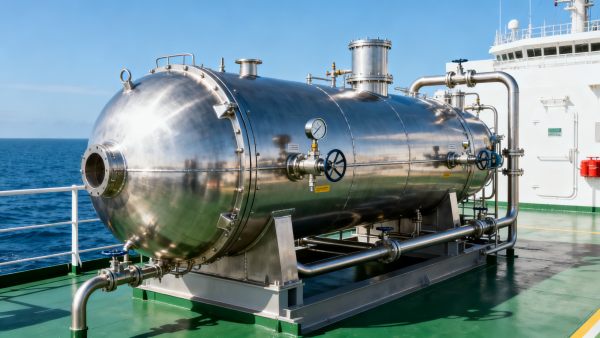
On 16 May 2026, the International Maritime Organization (IMO) adopted Resolution MEPC.387(81), amending the Guidelines for Life Cycle Carbon Footprint Assessment of Marine Aeration and Water Treatment Equipment>. This update introduces mandatory carbon footprint reporting requirements for marine aeration and water treatment systems used in ballast water management and bilge water purification on ocean-going vessels — a development directly relevant to marine equipment manufacturers, suppliers of high-performance materials, and shipowners engaged in regulatory compliance planning.
Event Overview
On 16 May 2026, the IMO issued Resolution MEPC.387(81), revising the Guidelines for Life Cycle Carbon Footprint Assessment of Marine Aeration and Water Treatment Equipment>. The amendment mandates that, effective 1 January 2027, all such equipment installed on seagoing ships must be accompanied by a third-party-verified carbon footprint report aligned with ISO 14067:2018. Notably, the upstream emissions weight — covering raw materials including titanium alloys and specialty membranes — has been increased from 35% to 52% of total life cycle impact.
Industries Affected
Marine Equipment Manufacturers
Manufacturers supplying aeration and water treatment systems for ballast water treatment plants (BWTPs) or bilge water purification units face new product certification obligations. The revised weighting places significantly greater emphasis on material sourcing decisions, meaning design choices involving titanium housings or polymer-based filtration membranes now carry heightened carbon accounting implications.
Specialty Materials Suppliers
Suppliers of titanium alloys, ceramic membranes, and engineered polymeric filtration media are directly impacted due to the 17-percentage-point increase in upstream emissions weighting. Their product-level environmental data — especially verified primary energy use, smelting emissions, and transport-related Scope 1–2 footprints — will become essential inputs for OEM LCA modeling.
Supply Chain Data Providers & LCA Service Firms
Organizations offering life cycle assessment (LCA) modeling, EPD (Environmental Product Declaration) support, or supply chain carbon data aggregation will see growing demand for sector-specific marine equipment databases and ISO 14067-compliant verification protocols — particularly those validated for high-alloy metals and membrane fabrication processes.
Key Focus Areas and Recommended Actions
Monitor official implementation guidance from IMO and flag state authorities
The resolution establishes a requirement but does not yet specify detailed procedural rules for verification body accreditation, data submission formats, or transitional arrangements. Stakeholders should track updates from the IMO’s Marine Environment Protection Committee (MEPC) and national maritime administrations — especially regarding recognition of existing LCA reports or grandfathering provisions for equipment certified pre-2027.
Prioritize upstream carbon data collection for critical materials
Given the elevated 52% upstream weighting, manufacturers should initiate immediate engagement with Tier 1 and Tier 2 suppliers of titanium, stainless steel grades, and synthetic membranes to collect verified, cradle-to-gate emission factors. Focus should be placed on obtaining primary data — rather than generic Ecoinvent averages — where feasible.
Begin internal LCA capability building ahead of 2027 deadline
Companies without in-house LCA expertise should assess readiness for ISO 14067:2018-aligned modeling, including software tools (e.g., SimaPro or OpenLCA), inventory database selection, and alignment with system boundary definitions specified in the revised guidelines. Pilot assessments on one representative product line can help identify data gaps early.
Distinguish between regulatory signal and enforceable obligation
While the 1 January 2027 date is binding for new installations, enforcement mechanisms — such as port state control inspections or type approval integration — remain subject to national adoption timelines. Companies should treat this as a firm policy signal requiring operational preparation, but avoid assuming uniform global enforcement from day one.
Editorial Perspective / Industry Observation
Observably, this amendment signals a structural shift in how IMO approaches decarbonization — moving beyond vessel operations (e.g., EEXI, CII) toward embedded emissions in marine technology infrastructure. Analysis shows it is less an isolated technical update and more a precedent-setting step toward broader life cycle regulation across marine equipment categories. From an industry perspective, it reflects growing alignment between maritime climate policy and EU-style product environmental footprint frameworks. Current relevance lies not in immediate compliance pressure, but in its role as a leading indicator: similar upstream-weighted LCA requirements may extend to other high-impact marine components — such as scrubber systems or LNG fuel gas supply units — in future MEPC cycles.
Conclusion
This resolution marks a formal institutionalization of upstream carbon accountability within marine equipment certification. Its significance lies not only in the 2027 deadline, but in the recalibration of responsibility — shifting emphasis from end-of-pipe performance to embedded material impacts. It is best understood today not as a finalized compliance regime, but as a clear directional signal requiring proactive supply chain mapping, data infrastructure investment, and cross-functional coordination between procurement, engineering, and sustainability teams.
Information Sources
Main source: IMO Resolution MEPC.387(81), adopted 16 May 2026.
Note: Implementation details — including verification body criteria, reporting templates, and enforcement protocols — remain under development and require ongoing observation.
Related Intelligence
- Aeration & Water TechHow Water Treatment Research Guides Technology Selection for Industrial Wastewater ProjectsWater treatment research guides smarter industrial wastewater technology selection. Learn how to assess variable streams, pilot risks, compare process trains, and reduce compliance costs.
- Aeration & Water TechSelecting Solids Filtration for Aquaculture: Flow Rates, Loading, and Fish WelfareSolids filtration aquaculture guide: compare flow rates, peak loading, capture performance, maintenance, and fish welfare to choose a reliable system.
- Aeration & Water TechWhat RO water treatment systems deliver consistent 98% salt rejection at 25°C with feed TDS over 3,000 ppm?RO water treatment systems that deliver proven 98% salt rejection at 25°C with >3,000 ppm TDS—engineered for API synthesis, aquaculture & grain processing.
The Morning Broadsheet
Daily chemical briefings, market shifts, and peer-reviewed summaries delivered to your terminal.
