

The Authority in Global Agricultural Chemistry & Bio-Resources
How to Choose Certified Fish Aerators for Stable Oxygen Levels in Aquaculture Ponds
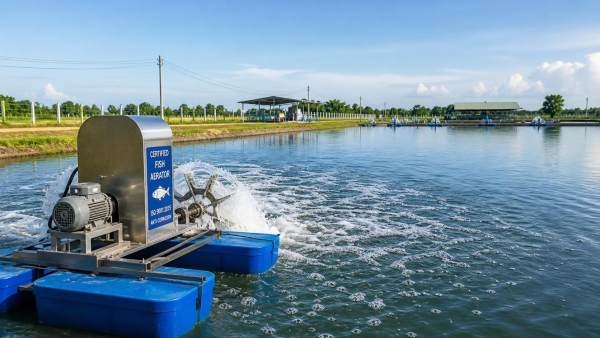
How to Choose Certified Fish Aerators for Stable Oxygen Levels in Aquaculture Ponds
For pond-based aquaculture, oxygen is one of those variables that looks simple on paper and becomes unforgiving in the field. A pond can run “fine” for weeks, then a warm night, heavier feeding, or a sudden algae shift pushes dissolved oxygen into a dangerous range. That is usually when procurement teams discover that not every aerator that looks robust will deliver stable results. Choosing certified fish aerators is less about buying the highest horsepower unit and more about matching verified performance, energy use, build quality, and serviceability to the actual pond condition.
In practice, certification matters because it gives buyers a starting point for trust. It does not eliminate due diligence, and it does not replace site-specific design, but it does help narrow the field. For teams managing risk across multiple ponds or farms, that initial filter can save a lot of trouble later, especially when power costs, maintenance access, and compliance expectations all sit in the same purchase decision.
What “certified” should mean in a real purchasing review
The word certified can be used loosely in the market, so procurement teams need to be careful. Sometimes it refers to product testing against a specific electrical, safety, or performance standard. Sometimes it simply means a supplier claims compliance without making the underlying test report easy to verify. Those are not the same thing.
A practical review usually starts with three questions: who issued the certification, what exactly was tested, and whether the test conditions resemble your use case. An aerator tested in clean water under ideal conditions may still behave differently in a pond with high organic load, variable depth, or frequent sludge buildup. That is why procurement teams should ask for the scope of certification, not just the badge on the brochure.
For larger buyers, the most useful documents are often the least glamorous ones: technical datasheets, test summaries, motor efficiency details, material declarations, and maintenance guidance. If those documents are inconsistent, certification alone should not close the deal.
Start with oxygen demand, not with equipment size
A common mistake is to buy based on pond area alone. Two ponds of the same size can behave very differently if one has higher stocking density, more feeding, shallower water, or stronger temperature swings. Stable oxygen levels depend on demand as much as on output.
That is why the first procurement conversation should be about the production system: species sensitivity, biomass density, feeding pattern, pond depth, and whether emergency aeration is needed during critical periods. In some farms, the real need is continuous mixing. In others, the priority is fast oxygen recovery during night-time dips or after weather changes. A certified fish aerator that is perfect for one scenario may be a poor fit for the other.
This is also where buyers should resist overspecifying. Bigger is not always better. An oversized unit can waste power, create excessive turbulence, and disturb feeding behavior. Underpowered equipment is worse, but “more horsepower” is not a substitute for proper system design.
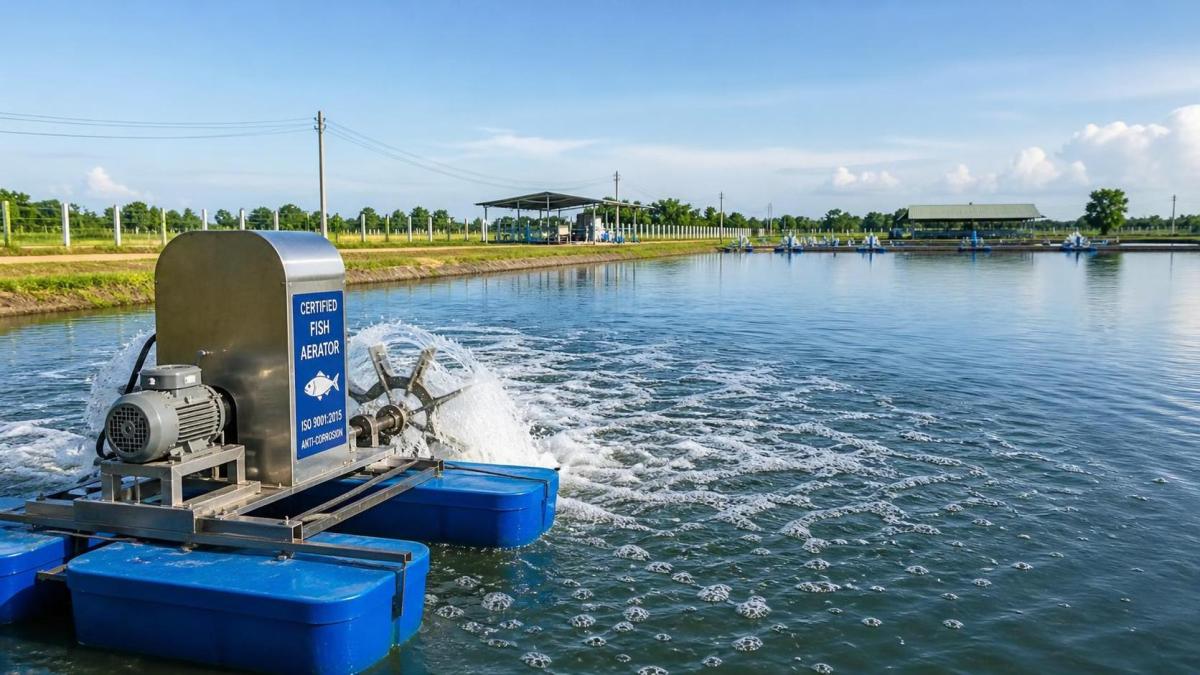
Performance verification: what to check beyond the sales claim
When a supplier says an aerator improves oxygen transfer, the useful question is: under what conditions? The answer should ideally include test methodology, operating depth, power input, and the water conditions used in evaluation. If the supplier cannot explain how performance was measured, the procurement team is buying a promise, not a verified result.
For stable pond operation, the evaluation should focus on consistency. A unit that performs well for a short demo but loses efficiency after fouling, voltage fluctuation, or extended runtime can create hidden operating costs. Buyers should ask about long-duration performance, startup behavior, and whether output stays predictable during real field conditions.
In many cases, the most meaningful comparison is not peak aeration output but oxygen support per unit of energy consumed. Energy cost is not the only factor, but over a full production cycle it often becomes one of the biggest. This is why procurement teams in aquaculture increasingly look for a balanced profile: enough oxygen support, reasonable power draw, and parts that can be maintained without specialist intervention every time something wears out.
Material durability and corrosion resistance are not optional
Aquaculture ponds are hard on equipment. Water chemistry, sun exposure, fertilizer residues, humidity, and constant vibration all take a toll. A machine can look solid in a warehouse and still fail too early if the housing, fasteners, motor protection, or cable entries are not designed for field use.
For certified fish aerators, procurement teams should inspect the exposed materials with a skeptical eye. Which parts are metal, which are polymer, and which components are most likely to wear first? If a supplier cannot identify the serviceable parts clearly, that is a warning sign. The real cost of ownership often shows up in seals, bearings, impellers, cables, and downtime—not in the purchase price alone.
This is especially important for farms that run long operating windows or cannot easily stop production for repairs. A lower-priced aerator with weak corrosion resistance can become expensive very quickly once replacement cycles, labor, and pond disruption are counted.
Supplier credibility matters as much as the equipment itself
In industrial procurement, the supplier is part of the product. If the vendor cannot explain spare part availability, warranty boundaries, lead times, or installation support, the buying team is carrying too much risk. That may be acceptable for a small trial order, but it is rarely acceptable for a full pond program.
This is where ACC’s broader editorial lens is relevant: in regulated and supply-sensitive industries, transparency is not a branding exercise. Buyers in aquaculture, like buyers in fine chemicals or processing equipment, need enough documentation to make a defensible decision. For aerators, that means traceable specifications, clear manufacturing origin, and realistic maintenance commitments. If a supplier is vague on any of those points, procurement should slow down rather than rush to close.
It is also worth checking whether the supplier can support multiple deployment conditions. A vendor that only performs well in a single climate or pond configuration may not be a safe long-term partner if your operation expands or shifts.
A simple shortlist that works in the field
Before issuing a purchase order, procurement teams can pressure-test the options with a short, practical checklist:
- Does the certification document clearly identify the tested model and scope?
- Is the performance claim relevant to your pond depth, biomass load, and operating schedule?
- Can the supplier explain energy consumption in operational terms, not just nameplate power?
- Are wear parts, cables, and seals accessible for replacement?
- Is the equipment suitable for local electrical conditions and maintenance capability?
- Does the vendor provide enough technical detail to support internal approval and audit review?
If several answers are vague, the safest move is usually to keep comparing. Procurement pressure can make a “good enough” choice look attractive, but unstable oxygen levels are not a good place to accept uncertainty.
The trade-off procurement teams should not ignore
Every aerator purchase is a trade-off between upfront cost, operating cost, and operational risk. Certified fish aerators can reduce that risk, but only if the certification is real, the sizing is appropriate, and the supplier can support the unit after delivery. A cheaper machine with unclear verification often ends up costing more once power use, maintenance, and oxygen instability are included.
The better question is not “Which unit is cheapest?” It is “Which unit will keep oxygen levels stable with the least surprise over the life of the pond cycle?” That question forces buyers to weigh performance evidence, not just price tags.
For aquaculture ponds, the right decision is usually the one that can be defended on technical grounds six months later, not just approved quickly today. If the certification is clear, the fit is right, and the supplier can stand behind the equipment, procurement has a much better chance of protecting both production and budget.
Related Intelligence
- Aeration & Water TechHow Water Treatment Research Guides Technology Selection for Industrial Wastewater ProjectsWater treatment research guides smarter industrial wastewater technology selection. Learn how to assess variable streams, pilot risks, compare process trains, and reduce compliance costs.
- Aeration & Water TechSelecting Solids Filtration for Aquaculture: Flow Rates, Loading, and Fish WelfareSolids filtration aquaculture guide: compare flow rates, peak loading, capture performance, maintenance, and fish welfare to choose a reliable system.
- Aeration & Water TechWhat RO water treatment systems deliver consistent 98% salt rejection at 25°C with feed TDS over 3,000 ppm?RO water treatment systems that deliver proven 98% salt rejection at 25°C with >3,000 ppm TDS—engineered for API synthesis, aquaculture & grain processing.
The Morning Broadsheet
Daily chemical briefings, market shifts, and peer-reviewed summaries delivered to your terminal.
