

The Authority in Global Agricultural Chemistry & Bio-Resources
Aquaculture Water Test Kits: What to Measure Daily for Stable Fish and Shrimp Health
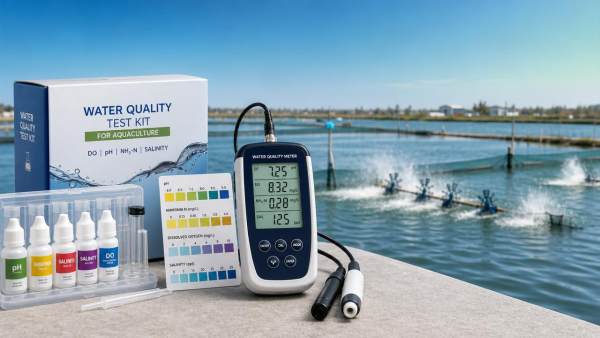
Daily testing matters most when stock is stable on the surface
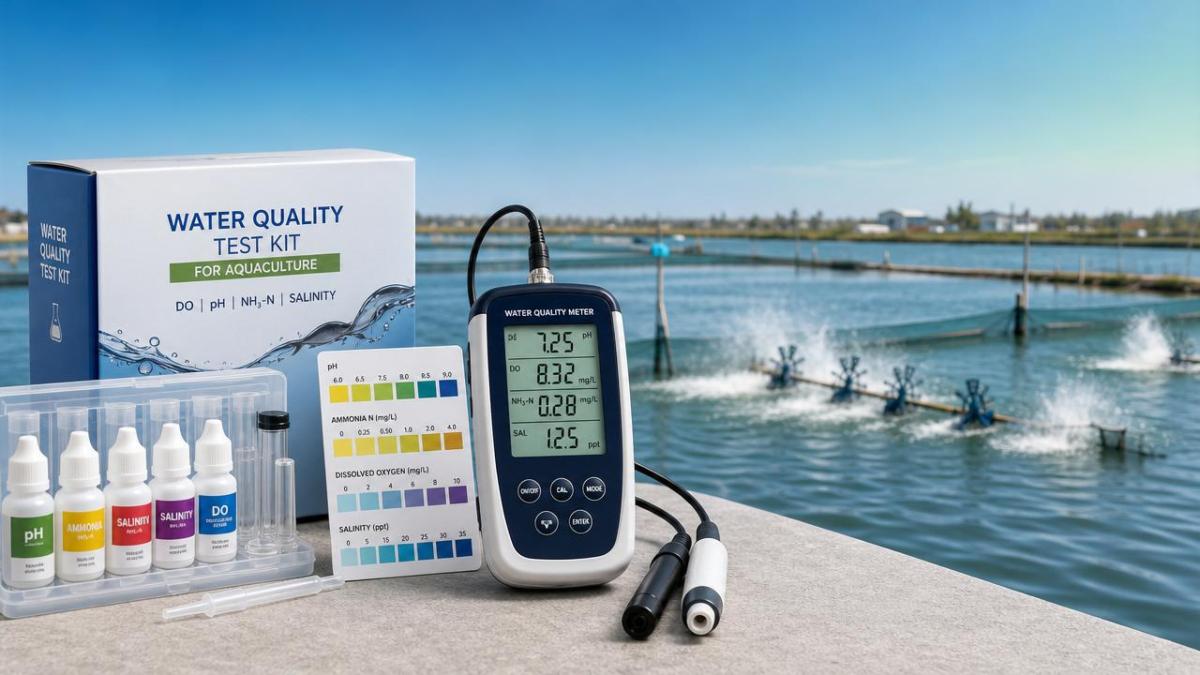
Stable fish and shrimp health rarely depends on one dramatic intervention. It usually comes from small daily checks that catch water shifts before feeding, growth, or survival start to slide.
That is why aquaculture water test kits remain practical tools across ponds, tanks, hatcheries, and recirculating systems. They turn routine monitoring into decisions that can be made the same day.
In real farm conditions, losses often begin with invisible stress. Oxygen drops before dawn, ammonia rises after stronger feeding, or alkalinity weakens after rainfall. Stock may still look normal for a short period.
For a publication environment shaped by technical verification and compliance thinking, the useful question is not whether to test. It is what to measure daily, and why one site differs from another.
The best use of aquaculture water test kits is not to chase every number. It is to build a daily testing routine around the parameters that move fastest and damage performance first.
The right daily checklist changes with system pressure
Different aquaculture settings create different risk patterns. A shrimp pond after heavy feed input behaves differently from a trout raceway, and both differ from a nursery tank with dense juvenile stocking.
More common mistakes come from treating those systems as equivalent. The same aquaculture water test kits may be used, but the decision points behind the readings are not identical.
Daily monitoring usually needs to focus on fast-moving parameters first. Slower parameters still matter, but many of them can be checked less often unless the system is under transition.
This is where aquaculture water test kits become more than a basic farm accessory. They support different operating judgments, depending on load, species, water source, and production stage.
For fish tanks and raceways, oxygen and nitrogen tell the story first
In intensive fish culture, dissolved oxygen deserves first place on the daily sheet. Fish often show stress only after oxygen has already limited feed conversion and weakened immune response.
Morning and late afternoon readings both matter. A single mid-day measurement can look acceptable while hiding a low pre-dawn minimum or an evening decline linked to higher biomass.
Ammonia should be checked with the same discipline. Total ammonia nitrogen may appear manageable, yet toxicity rises when pH and temperature climb. That interaction is more useful than any isolated reading.
Nitrite follows close behind in systems with heavier feeding or incomplete biofiltration. Brown blood disease risk in fish is not theoretical when turnover slows or filter media performance starts slipping.
In this setting, aquaculture water test kits should support frequent oxygen checks and dependable nitrogen tracking. A kit that is easy to use at the same times every day is often more valuable than a broader kit used inconsistently.
Useful daily fish parameters
- Dissolved oxygen for respiration load and aeration timing.
- pH for toxicity shifts and feeding stability.
- Ammonia for waste loading and biofilter stress.
- Nitrite where flow, filtration, or density create risk.
- Temperature because most readings change meaning with it.
For shrimp ponds, pH swings and alkalinity usually deserve closer attention
Shrimp systems often look calm until molting problems, soft shells, slow feeding response, or erratic survival begin to appear. By then, water balance has usually been unstable for several days.
Daily pH measurement matters because shrimp ponds can swing sharply between dawn and afternoon. That swing often reveals more about phytoplankton pressure than a single average value.
Alkalinity is not always measured daily in low-pressure conditions, yet it becomes a daily checkpoint when lime demand is changing, rainfall is frequent, or carbon management is active.
Salinity also deserves daily review in nursery and low-salinity culture. Small changes can affect osmoregulation, feed behavior, and mineral uptake, especially when post-larvae are still adapting.
Aquaculture water test kits for shrimp operations should therefore handle pH, alkalinity, ammonia, nitrite, and salinity reliably. The practical value comes from reading trends, not recording numbers without context.
Where daily shrimp checks often differ
A lined pond with strong aeration may tolerate higher feed input, but it can still show fast pH movement. An earthen pond may buffer differently, yet organic accumulation can push ammonia and nitrite upward.
That is why identical aquaculture water test kits can support different routines. One farm may test salinity twice daily after water exchange, while another gives more attention to alkalinity recovery after rain.
Hatcheries and nurseries need tighter readings, not just more readings
Early life stages tolerate less variation. In hatcheries, water that appears acceptable for grow-out can still cause reduced vigor, weaker feeding response, or higher susceptibility to opportunistic infection.
Here, the main issue is precision and consistency. If aquaculture water test kits are difficult to interpret, different staff may make different corrections from the same sample.
Daily checks should cover temperature, salinity where relevant, pH, dissolved oxygen, and nitrogen compounds. In larval systems, even modest nitrite or ammonia shifts deserve rapid action.
Sampling point matters as much as the parameter. Water from an inlet, a larval tank, and a drain line may tell three different stories about the same system.
Different conditions call for different testing emphasis
A useful daily workflow is usually built around fewer parameters than many expect. The goal is to monitor the variables that move quickly enough to alter stock condition before the next feeding cycle.
This approach keeps aquaculture water test kits tied to operational choices. It also fits the broader industry need for traceable, defensible monitoring rather than informal observation alone.
Where farms often misread the data
One common error is testing after symptoms appear instead of before routine stress windows. Another is recording values without noting time, weather, feeding load, or water exchange events.
A second misjudgment is choosing aquaculture water test kits only by parameter count. A larger kit is not automatically better if reagents expire quickly or field interpretation is inconsistent.
Some sites also overreact to one unusual reading. Single values matter, but trend lines usually tell the stronger operational story. Repeated movement in the wrong direction deserves more attention than one isolated spike.
There is also a cost mistake. Daily testing is sometimes compared only by kit price, while the real comparison should include stock loss risk, labor efficiency, retest frequency, and corrective delays.
A practical testing routine is easier to sustain than a perfect one
A workable routine usually starts with fixed sampling times, fixed sampling points, and a short parameter list that reflects the actual production risk of the site.
- Test oxygen and temperature during the most stressful daily window.
- Pair ammonia readings with pH for better toxicity judgment.
- Check alkalinity or salinity more often during rainfall, exchange, or transition.
- Keep the same units, record format, and action thresholds.
- Review weekly trends to refine what aquaculture water test kits are used for daily.
For sites handling fish and shrimp under changing environmental or regulatory expectations, disciplined monitoring supports more than stock performance. It strengthens process credibility and operational transparency as well.
The next step is straightforward. Map the culture system, identify the fastest-moving risks, and align aquaculture water test kits with those daily decisions before adding less urgent measurements.
Related Intelligence
- Aeration & Water TechHow Water Treatment Research Guides Technology Selection for Industrial Wastewater ProjectsWater treatment research guides smarter industrial wastewater technology selection. Learn how to assess variable streams, pilot risks, compare process trains, and reduce compliance costs.
- Aeration & Water TechSelecting Solids Filtration for Aquaculture: Flow Rates, Loading, and Fish WelfareSolids filtration aquaculture guide: compare flow rates, peak loading, capture performance, maintenance, and fish welfare to choose a reliable system.
- Aeration & Water TechWhat RO water treatment systems deliver consistent 98% salt rejection at 25°C with feed TDS over 3,000 ppm?RO water treatment systems that deliver proven 98% salt rejection at 25°C with >3,000 ppm TDS—engineered for API synthesis, aquaculture & grain processing.
The Morning Broadsheet
Daily chemical briefings, market shifts, and peer-reviewed summaries delivered to your terminal.
