

The Authority in Global Agricultural Chemistry & Bio-Resources
Agri & Forestry Drone Applications: Best Use Cases for Mapping, Spraying, and Crop Monitoring
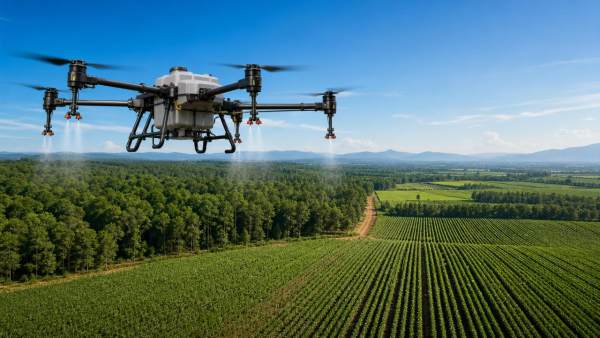
Agri & Forestry drone applications are moving from pilot projects to operational infrastructure. In large farms and managed woodland, they now support planning, field execution, traceability, and faster response to changing conditions.
That shift matters because land-intensive operations face tighter input margins, stricter environmental oversight, and more fragmented data streams. Aerial intelligence helps connect agronomy, machinery, compliance, and resource management in a practical way.
For a publication context like AgriChem Chronicle, the topic sits at the intersection of agricultural machinery, regulated input use, and supply-chain discipline. Drone data is no longer just visual evidence; it increasingly informs treatment timing, asset deployment, and reporting confidence.
Why drone adoption is accelerating across land-based operations
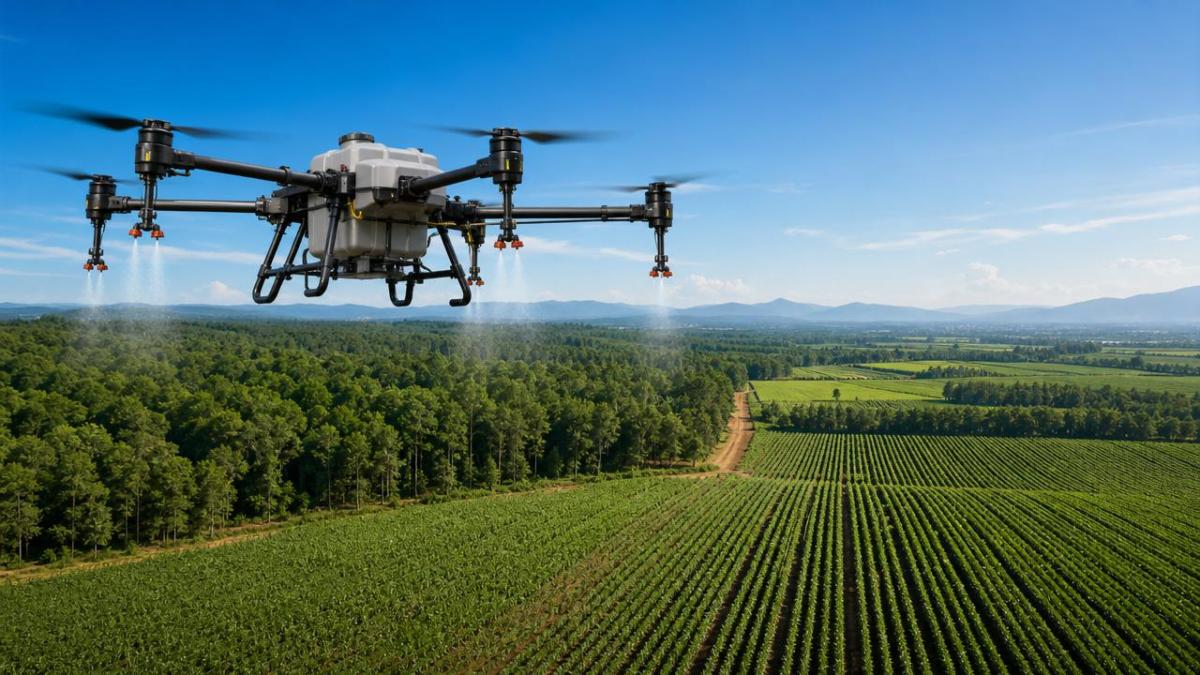
The strongest driver is not novelty. It is operational pressure. Managers need faster visibility across dispersed acreage without waiting for manual scouting cycles or incomplete satellite coverage.
Agri & Forestry drone applications fit this need because they combine mobility, repeatability, and increasingly useful sensors. They can document conditions at the right moment, then feed decisions into spraying plans, harvest timing, or forest maintenance schedules.
Another reason is compliance. Input application, water protection, drift management, and land-use reporting all demand clearer records. Drone workflows can improve audit readiness when images, flight logs, and treatment maps are stored correctly.
In forestry, the appeal is similar but the terrain is different. Steep slopes, variable canopy density, and difficult access make ground inspection expensive. Drones reduce that friction while improving coverage and operator safety.
What Agri & Forestry drone applications actually include
The phrase covers more than one type of aircraft or mission. In practice, it refers to several linked operating models with different payloads, flight plans, and outputs.
Mapping and terrain intelligence
Mapping missions generate orthomosaics, elevation models, drainage views, stand counts, and boundary verification. These outputs are useful before planting, during infrastructure planning, and after weather events.
Targeted spraying and spreading
Spray drones apply crop protection products, foliar nutrients, seed, or biologicals in zones where full-field treatment is inefficient or inaccessible. They are especially valuable in wet ground, high-value crops, and difficult topography.
Crop and canopy monitoring
Monitoring missions use RGB, multispectral, thermal, or LiDAR payloads to detect stress patterns. These may include emergence gaps, waterlogging, pest pressure, nutrient imbalance, disease spread, or storm damage.
Simple imagery can be enough for many decisions. The real value comes from matching the sensor to the agronomic or silvicultural question rather than collecting more data than the operation can interpret.
Best use cases for mapping
Mapping is often the first successful entry point because it creates visible operational value without changing chemical handling protocols.
On farms, drone mapping supports land leveling checks, irrigation planning, drainage redesign, replanting decisions, and machinery route optimization. It can also reveal where compaction or runoff repeatedly undermines field performance.
In forestry, mapping helps with road condition assessment, harvest block planning, erosion monitoring, inventory sampling, and post-fire or post-storm evaluation. Rapid aerial review is often more useful than delayed ground reports.
Agri & Forestry drone applications become especially valuable when mapping is tied to action. A beautiful map without thresholds, priorities, or work orders adds little operational benefit.
Where spray drones deliver measurable value
Spraying attracts the most attention, but it also demands the most discipline. Not every field, chemistry, or weather pattern is suitable for aerial application by drone.
The best use cases are narrow enough to justify precision. These include spot treatment for weed escapes, late-season foliar feeding, disease pressure in sensitive zones, and operations where ground equipment would damage crop or soil structure.
In forestry, drones can support localized treatment in young stands, hard-to-reach strips, and areas where manual access raises safety or cost concerns. The advantage is not only speed. It is controlled coverage in awkward terrain.
Because ACC covers regulated sectors, one point deserves emphasis. Chemical compatibility, droplet size, buffer zones, and local aviation rules cannot be treated as secondary details. They define whether the workflow is scalable or risky.
- Use drones where treatment zones are spatially distinct and economically meaningful.
- Check whether tank volume and refill logistics match the intended daily workload.
- Confirm that product labels and local regulations allow the planned application method.
- Build drift, weather, and documentation controls into the operating routine.
Crop monitoring is becoming a management system, not a scouting add-on
Many operations start with images and end with files no one reuses. That is changing. Better software integration means crop monitoring can now trigger tasks, not just observations.
Agri & Forestry drone applications support routine monitoring when flights are timed around growth stages and likely risk periods. Emergence checks, canopy uniformity, irrigation stress, lodging, and disease spread are common examples.
In tree crops and managed forests, canopy analysis can reveal density shifts, mortality pockets, storm breakage, and moisture stress earlier than manual inspection. That earlier visibility often changes the economics of intervention.
The strongest programs define alert thresholds before the flight. If no decision rule exists, monitoring may still look impressive while delivering little business value.
How to judge operational fit before scaling
The right question is rarely whether drones are useful. It is where they outperform existing methods and where they do not.
Look at the constraint, not the technology first
If the main issue is delayed inspection, mapping may matter most. If the issue is access after rain, spraying may lead. If the problem is poor treatment timing, monitoring may create the best return.
Check data pathways early
Drone outputs should connect with GIS platforms, farm management systems, compliance records, and machinery planning tools. Otherwise, useful data remains trapped in isolated reports.
Treat regulation as part of project design
Aviation permissions, pesticide rules, worker safety, and environmental reporting need alignment from the start. This is particularly relevant in businesses already working under GMP, EPA, FDA, or adjacent documentation cultures.
Measure against clear field metrics
Useful indicators include hectares covered per day, reduction in input waste, fewer missed hotspots, lower soil damage, and faster closeout after weather events or treatment cycles.
What the next phase looks like
Agri & Forestry drone applications are heading toward integrated workflows rather than isolated flights. The leading pattern is simple: collect targeted data, validate it quickly, and push it into operational decisions without delay.
That matters across the broader primary industries landscape covered by AgriChem Chronicle. More transparent land management, better treatment traceability, and stronger links between field evidence and procurement planning all support more resilient operations.
A practical next step is to rank use cases by urgency, terrain difficulty, regulatory sensitivity, and measurable economic impact. From there, compare mapping, spraying, and monitoring workflows against existing bottlenecks rather than chasing maximum feature lists.
When that evaluation is done well, drone adoption becomes easier to justify. It stops being a technology experiment and starts functioning as a disciplined tool for land performance, compliance, and operational control.
Related Intelligence
- Forestry EquipmentChoosing Compact Forestry Machinery for Small Woodlots and Narrow AccessChoose compact forestry machinery that fits small woodlots and narrow access. Compare payload, turning clearance, safety, and running costs to find the right machine for your site.
- Forestry EquipmentAre PTO driven wood chipper vibration levels within ISO 5349-1 hand-arm exposure limits for forestry crews?PTO driven wood chipper vibration often exceeds ISO 5349-1 limits—discover real-world data, actionable mitigation strategies, and how to protect forestry crews now.
- Forestry EquipmentSelecting Timber Processing Equipment for Middle East Heat, Dust, and Wood SpeciesTimber processing equipment for Middle East operations: discover how to select heat-resistant, dust-protected, species-matched systems for reliable output and lower downtime.
The Morning Broadsheet
Daily chemical briefings, market shifts, and peer-reviewed summaries delivered to your terminal.
