

The Authority in Global Agricultural Chemistry & Bio-Resources
Suez Transit Curbs Extend RAS Module Lead Times

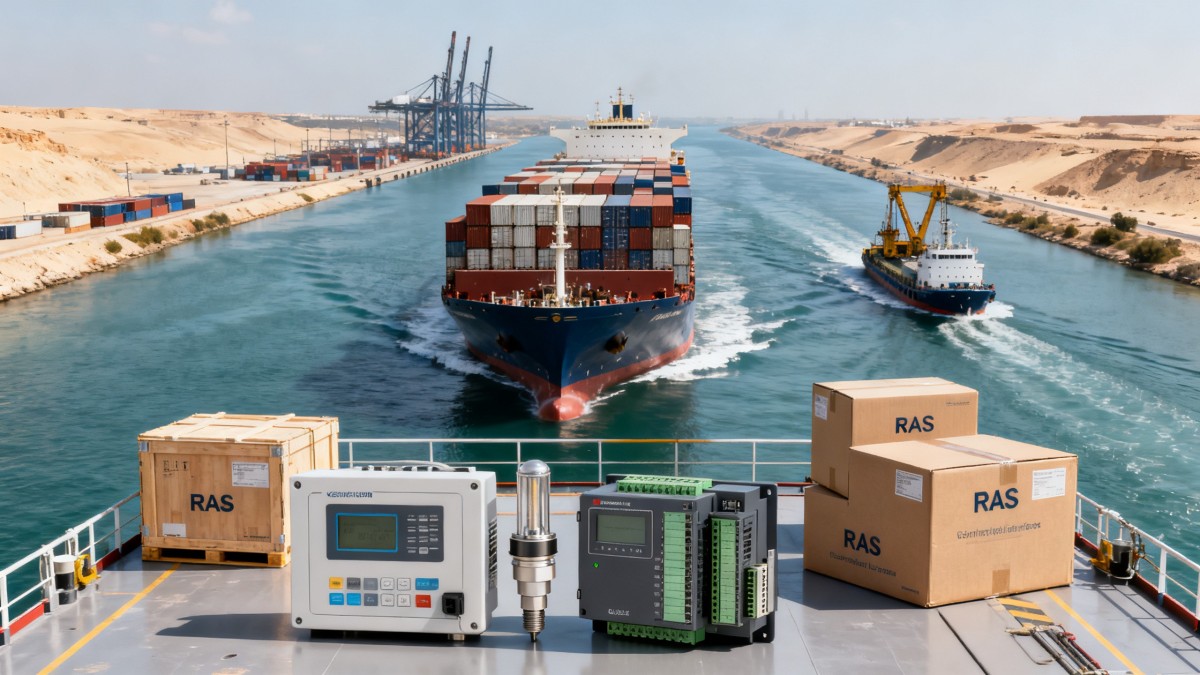
On June 27, 2026, a new Suez Canal Authority transit restriction took immediate effect, tightening daily passage access for priority cargo vessels and directly affecting the delivery rhythm of RAS Systems core modules shipped from China. For exporters, buyers, manufacturers, and supply chain coordinators handling central control units, dissolved oxygen sensors, and PLC modules, this is not just a shipping delay story; it is a rules change with practical consequences for routing, delivery commitments, and procurement timing.
What the new canal measure changes
According to the provided event information, the Suez Canal Authority announced on June 27, 2026 that it would immediately apply a new transit limit. Under the measure, only three daily passages are allowed for high-priority cargo vessels, and each convoy is limited to no more than 120 TEU. The measure is focused on safeguarding medical and food equipment cargo.
The same information states that, as a result, the average sea transit cycle for China export containers carrying RAS Systems central control units, dissolved oxygen sensors, and PLC modules has been extended from 12 days to 18 days. It also states that some urgent orders have already started contingency routing around the Cape of Good Hope.
Where the pressure is likely to show first
Export scheduling is becoming a rule-sensitive issue
From an industry perspective, exporters handling the affected RAS Systems modules may feel the impact first because the new canal rule changes available passage capacity and priority access conditions. The operational pressure is likely to appear in shipment scheduling, delivery date commitments, and coordination with carriers. What deserves closer attention is whether contract timelines, shipping documents, and dispatch arrangements still match the revised transit reality.
Procurement teams may need to reassess delivery assumptions
For procurement-side participants, the issue is not limited to freight duration. Analysis shows that longer average transit times can affect reorder timing, installation planning, and replacement-part availability where central control units, dissolved oxygen sensors, or PLC modules are involved. Buyers should pay closer attention to updated delivery windows, supplier communication records, and any tender or purchase documents that assume shorter ocean transit cycles.
Manufacturing and integration workflows could face timing friction
Manufacturers and system integrators relying on these modules may face disruption where assembly, testing, commissioning, or project sequencing depends on inbound delivery certainty. Observably, the main concern is not a change in product specification or certification status, but a change in logistics conditions that may affect production planning and handover schedules. In practice, firms should watch for knock-on effects in internal scheduling and external project commitments.
Supply chain service providers will need tighter exception handling
Freight coordinators, logistics partners, and after-sales support teams may also be affected because urgent shipments are already shifting to a Cape of Good Hope contingency route in some cases. That raises the importance of route confirmation, shipment tracking, handoff visibility, and downstream customer notice procedures. Where delivery timing is tied to service obligations, documentation discipline and traceability may become more important.
What companies should watch in the near term
Review delivery terms against the new transit condition
Analysis shows that companies shipping or buying the affected modules should review whether existing delivery promises, replenishment cycles, and order release timing still reflect current transit conditions. The confirmed change from an average of 12 days to 18 days is material enough to justify immediate internal review.
Track how the rule is applied in practice
What deserves closer attention is the execution of the SCA measure, especially how the daily passage cap and convoy limit are applied in operating practice. The provided information confirms the rule change itself, but does not provide detailed implementation guidance beyond the announced restriction. That means companies should continue monitoring official wording and real-world execution before treating current arrangements as stable.
Check documents tied to delivery and service obligations
Where tenders, purchase orders, service commitments, or technical project files depend on specific lead times, companies should recheck whether those documents still align with current logistics conditions. This is particularly relevant for businesses managing project milestones, replacement modules, or urgent outbound orders.
Prepare for routing exceptions without assuming permanence
The event summary confirms that some urgent orders have already moved to Cape of Good Hope contingency planning. Observably, that should be treated as an active response signal rather than proof of a settled new normal. Companies should therefore prepare for exceptions in routing and customer communication while avoiding assumptions that one temporary operating pattern will necessarily become standard.
Why this reads as an execution signal
Analysis shows that this development is more appropriately understood as an immediate execution-level change in trade logistics rather than a distant policy headline. The rule is already stated as effective immediately, and the shipment impact on relevant RAS Systems modules is already reflected in longer average ocean transit times. At the same time, it remains too early to draw broader conclusions about longer-term normalization, because the provided information does not include further implementation detail, duration guidance, or downstream regulatory follow-up.
From an industry perspective, the practical importance lies in how quickly this kind of transit restriction can move from a canal operating rule into procurement risk, delivery exposure, and project coordination pressure. That is why continued attention to execution language, shipper response, and buyer-side document updates matters more than broad market speculation.
How the market may need to frame this development
At this stage, the most balanced reading is that the Suez transit restriction has already become a concrete logistics constraint for shipments involving RAS Systems central control units, dissolved oxygen sensors, and PLC modules. It should not be treated as a general market conclusion beyond the facts provided, but it is clearly more than a symbolic announcement.
Observably, the immediate industry significance is operational: longer delivery cycles, tighter passage rules, and the need for closer alignment between shipping plans and procurement or project expectations. It is more appropriate to understand this as a live execution signal with ongoing implications that still require further observation.
Basis of this article and what still needs verification
This article is based on the user-provided news title, event date, and event summary. For events of this kind, source types usually relevant to later verification may include official notices, regulator releases, trade or customs information, industry association updates, standards-related documents, and reporting by authoritative media. No specific official source link was provided in the input, so the exact official reference still needs continued verification.
Further observation should focus on any subsequent policy detail, implementation language, tender document adjustments, buyer-side delivery requirement changes, industry feedback, and how companies are actually executing shipment and routing decisions under the new restriction.
Related Intelligence
- RAS SystemsHow to Vet Middle East Oxygenation System Suppliers for RAS ProjectsOxygenation system suppliers Middle East: learn how to vet RAS partners for proven performance, resilience, local service, and lifecycle value.
- RAS SystemsRAS System Cost Model: What Investors Should Budget Beyond Initial EquipmentRAS system cost model guide for investors: budget beyond equipment for energy, compliance, working capital, resilience, and sustainable returns.
- RAS SystemsRAS Technology Explained: How Biofiltration and Oxygen Control Work TogetherRAS technology explained: discover how biofiltration and oxygen control work together to maintain stable water quality, protect fish health, and improve aquaculture performance.
The Morning Broadsheet
Daily chemical briefings, market shifts, and peer-reviewed summaries delivered to your terminal.
