

The Authority in Global Agricultural Chemistry & Bio-Resources
EU RAS Sensor Rule Ties Market Access to EN 62061

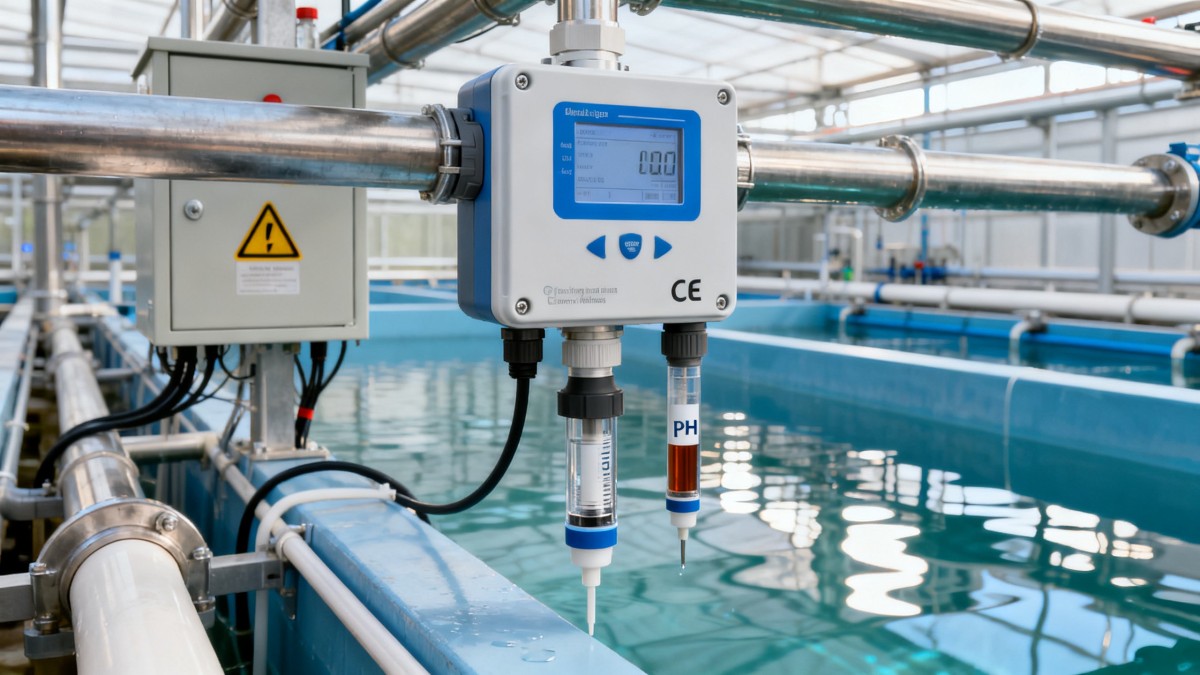
On August 3, 2026, the European Commission issued Regulation EC 2026/1547, introducing a new compliance condition for safety-related sensors integrated into recirculating aquaculture systems (RAS) imported into the EU. The rule links market access to EN 62061 functional safety compliance and CE marking for modules including dissolved oxygen, pH, and ammonia nitrogen real-time monitoring. For exporters, distributors, and aquaculture operators, the development deserves attention because it shifts sensor compliance from a technical preference to a clearance requirement, with direct implications for certification pathways, procurement timing, and delivery planning.
What the regulation now requires
According to the provided information, Regulation EC 2026/1547 was released by the European Commission on August 3, 2026. It requires all safety-related sensors integrated into RAS imported into the EU to comply with EN 62061 and to bear the CE mark. The scope specifically includes real-time monitoring modules for dissolved oxygen, pH, and ammonia nitrogen. The rule is set to become mandatory from October 2026. Products that do not obtain the required certification will not be able to clear customs. The change directly affects the compliance route and delivery cycle of Chinese RAS equipment exporters, and it places immediate constraints on procurement decisions by European distributors and aquaculture operators. The requirement is described as covering 83% of global core RAS component suppliers.
Where the pressure will show up first
Export shipments now depend on sensor compliance status
For RAS equipment exporters, the main impact is that sensor conformity becomes part of the condition for entry into the EU market. The immediate business exposure lies in customs clearance, shipment readiness, and project delivery scheduling. What deserves closer attention is whether the relevant sensor modules in an exported system already align with EN 62061 and CE marking requirements, because non-certified products are stated to be unable to clear customs.
Procurement decisions face a new screening threshold
For European distributors and aquaculture operators, the rule changes supplier evaluation from a performance-only review to a compliance-plus-performance review. From an industry perspective, procurement teams will need to pay closer attention to whether safety-related sensor modules in RAS packages can support the required certification and marking status. This may affect purchase timing, model selection, and acceptance of delivery schedules where compliance documentation is still incomplete.
Component supply and technical documentation become more important
For core component suppliers and related service providers, the change raises the importance of technical files, certification materials, and product traceability around safety-related sensing modules. Analysis shows that where a large share of core suppliers is covered by the requirement, requests for conformity evidence, supporting documents, and specification alignment are likely to move earlier in the transaction process. Even where the final system is sold by an integrator, the supporting sensor chain becomes more relevant to trade execution.
What companies should check now
Review certification pathways for covered modules
Companies involved in RAS exports should first identify whether their dissolved oxygen, pH, and ammonia nitrogen real-time monitoring modules fall within the safety-related scope described in the regulation. Observably, the practical issue is no longer only product function, but whether the compliance route to EN 62061 and CE marking is already in place or still pending.
Recheck delivery schedules against the October 2026 deadline
Because the rule becomes mandatory from October 2026, exporters, buyers, and distributors should pay attention to whether existing delivery commitments, pending shipments, and bid timelines depend on products that have not yet completed the required certification process. The provided information confirms an impact on delivery cycles, so schedule risk deserves immediate review.
Prepare documents that may be requested in trade and procurement
From a transaction perspective, companies should closely examine the technical and compliance materials attached to covered products. This includes certification-related records, CE marking status, and supporting technical documentation linked to the relevant sensor modules. The input does not provide detailed enforcement paperwork requirements, so this should be treated as a compliance watchpoint rather than a confirmed document checklist.
Track changes in purchasing language and acceptance conditions
What deserves closer attention is how the new rule may begin appearing in procurement specifications, contract conditions, and supplier qualification reviews. The summary indicates immediate constraints on distributor and operator purchasing decisions, which suggests that commercial acceptance may tighten before all implementation details are fully visible in market practice.
Why this reads as an execution signal
Analysis shows that this development is more than a general policy direction because the rule sets a defined regulatory requirement, ties it to CE marking and EN 62061, and links non-compliance to customs clearance failure. At the same time, it is still appropriate to keep part of the market response under observation. The provided information does not describe detailed enforcement mechanics, certification interpretation, or transaction-level implementation language, so companies should distinguish between the confirmed rule itself and the still-developing way it will be applied in procurement, documentation review, and shipment control.
How the market is likely to read it for now
At this stage, the regulation is best understood as a concrete market-access requirement with immediate relevance for compliance planning, sourcing decisions, and delivery management in the RAS supply chain. It should not be treated as a background standards update. Equally, it should not be overstated beyond the facts provided. The most rational reading is that the rule has already created a clear compliance threshold, while the detailed market response and operating practice still require continued observation.
Basis of this article
This article is generated from the user-provided news title, event date, and event summary. For developments of this kind, relevant source types typically include official regulatory notices, releases from supervisory authorities, customs or trade administration information, industry association updates, standards organization documents, and reporting by authoritative trade media. A specific official source link was not provided in the input, so the exact original publication path still needs to be verified on an ongoing basis. Continued monitoring should focus on implementation details, certification interpretation, changes in procurement documents, market feedback, and how affected companies execute compliance in practice.
Related Intelligence
- RAS SystemsHow to Vet Middle East Oxygenation System Suppliers for RAS ProjectsOxygenation system suppliers Middle East: learn how to vet RAS partners for proven performance, resilience, local service, and lifecycle value.
- RAS SystemsHow to Select an Ammonia Water Quality Sensor for Aquaculture SystemsAmmonia water quality sensor selection guide for aquaculture: compare technologies, accuracy, salinity compatibility, maintenance, and integration for reliable monitoring.
- RAS SystemsDo UV water treatment systems eliminate chlorine-resistant pathogens in aquaculture recirculation?UV water treatment systems can inactivate chlorine-resistant pathogens like Cryptosporidium in aquaculture RAS—when properly engineered, validated, and maintained.
The Morning Broadsheet
Daily chemical briefings, market shifts, and peer-reviewed summaries delivered to your terminal.
