

The Authority in Global Agricultural Chemistry & Bio-Resources
Do UV water treatment systems eliminate chlorine-resistant pathogens in aquaculture recirculation?
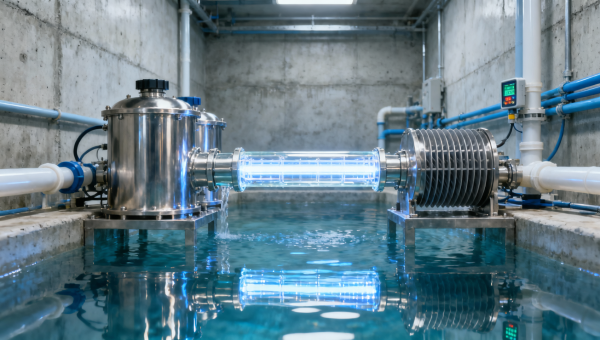
When a Norwegian RAS facility recorded a sudden, unexplained dip in post-larval survival—despite stable ammonia, nitrite, and dissolved oxygen levels—the root cause wasn’t chemical imbalance. It was Cryptosporidium parvum. Not in drinking water. Not in feed. In the recirculated culture water—slipping past biofilters, evading chlorine residuals, and colonizing gill epithelia with quiet persistence. That incident, documented in a 2023 peer-reviewed field audit by the Norwegian Institute of Marine Research, crystallized a quiet tension in modern aquaculture: disinfection protocols built for bacteria often falter against eukaryotic, chlorine-resistant pathogens. And yet, UV water treatment systems are routinely specified—not as niche backups, but as primary barriers—in high-value salmonid, shrimp, and ornamental fish operations across Chile, Singapore, and Tasmania.
The assumption is logical: UV-C photons disrupt nucleic acids; no cell wall or membrane can shield DNA from 254 nm irradiation. But logic isn’t validation—and in aquaculture recirculation systems (RAS), where pathogen load fluctuates with feeding cycles, sludge accumulation, and biofilm shedding, assumptions carry operational risk. For technical evaluators—those who sign off on equipment specs, approve O&M budgets, and bear accountability for GMP-aligned biosecurity—the question isn’t whether UV works *in theory*. It’s whether it delivers *predictable, verifiable, system-integrated* inactivation of the most resilient threats known to compromise RAS integrity.
Why chlorine resistance matters—and why UV isn’t automatically the answer
Chlorine resistance in aquaculture pathogens isn’t an anomaly—it’s an evolutionary adaptation. Cryptosporidium oocysts possess a multilayered, protein-lipid capsule that physically impedes chlorine diffusion. Microsporidia, intracellular obligate parasites like Loma salmonae, evade extracellular disinfectants entirely until host cell lysis releases spores into circulation. Even some Vibrio strains exhibit transient chlorine tolerance via biofilm-embedded phenotypes or catalase upregulation. Conventional free-chlorine dosing (1–3 ppm residual) may suppress bacterial loads but leaves these organisms functionally intact—especially at the low pH and organic loading typical of mature RAS loops.
UV, by contrast, acts photochemically. Its efficacy hinges not on chemistry but on photon delivery: intensity × exposure time = fluence (measured in mJ/cm²). Yet here lies the critical nuance many procurement checklists overlook: *UV dose-response curves are pathogen-specific—and highly non-linear.* A dose sufficient to achieve 4-log inactivation of Aeromonas hydrophila (typically ~15–20 mJ/cm²) falls short for Cryptosporidium, which requires ≥22 mJ/cm² for reliable 3-log reduction under controlled lab conditions. And real-world RAS water? It rarely matches lab-grade clarity. Suspended solids, humic substances, and even dissolved iron absorb or scatter UV-C, reducing effective fluence at the pathogen level—sometimes by 30–50% compared to clean-water calibration.
Beyond the lamp: What makes UV work—or fail—in RAS environments
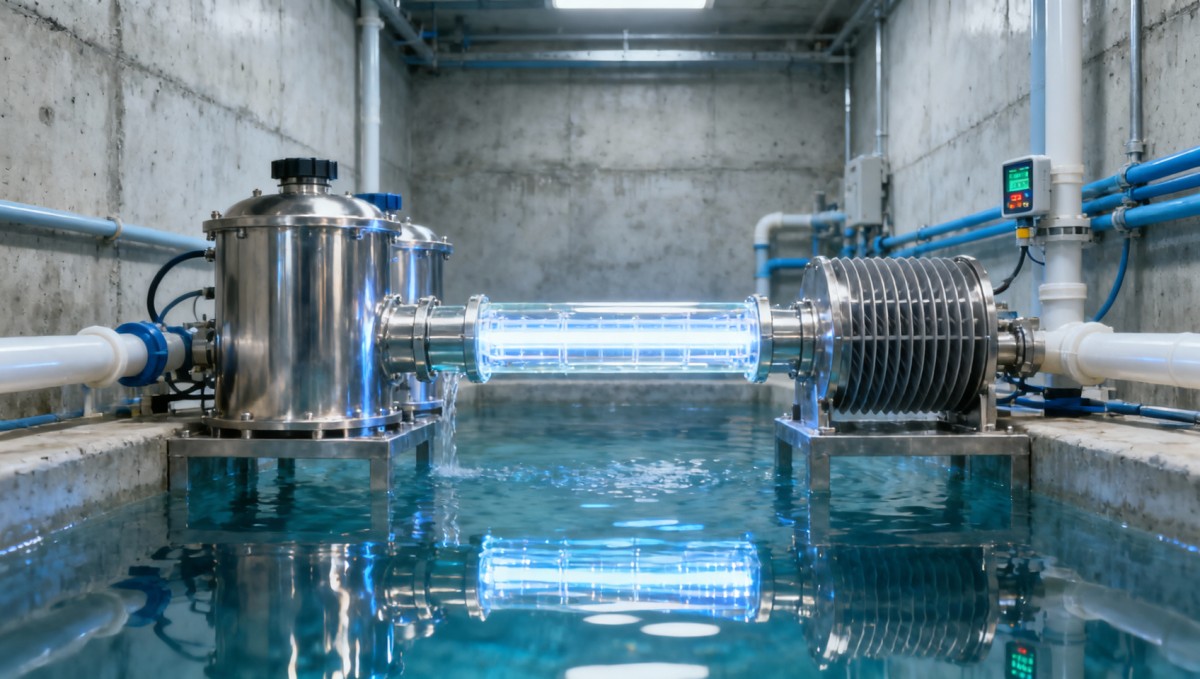
Specifying UV water treatment systems for aquaculture isn’t about selecting a wattage or flow rate. It’s about engineering a *fluence assurance chain*. Three interdependent layers determine whether theoretical UV output translates into actual pathogen inactivation:
- Pre-filtration integrity: Particulate matter >5 µm shadows microorganisms from UV exposure. In RAS, this means pairing UV reactors with dual-stage mechanical filtration—typically drum filters followed by cartridge or disc filters rated ≤20 µm—and validating removal efficiency *in situ*, not just on paper.
- Reactor hydraulics: Laminar flow creates “short-circuiting,” where water bypasses peak-intensity zones. High-efficiency UV units for RAS use engineered baffles, variable-speed recirculation pumps, and computational fluid dynamics (CFD)-validated chamber geometry to ensure >95% of water receives ≥90% of nominal fluence.
- Dose monitoring & control: Fixed-output lamps degrade over time. Real-time UV transmittance (UVT) sensors—calibrated against RAS-specific water matrices—and closed-loop intensity feedback systems adjust lamp power dynamically. Without this, a system calibrated at commissioning may deliver only 65% of required fluence after six months of operation.
This is where many installations stumble—not from poor lamp quality, but from incomplete system integration. A leading Singapore-based barramundi RAS operator reported consistent Cryptosporidium detection downstream of its UV unit until UVT sensor recalibration revealed seasonal tannin spikes from upstream wetland filtration had reduced effective transmittance by 28%. Adjusting pre-filtration and adding real-time UVT compensation restored log-reduction performance to specification.
Evidence from the field: What peer-reviewed benchmarks tell us
A 2024 meta-analysis published in Aquacultural Engineering synthesized data from 17 operational RAS facilities (salmon, tilapia, marine shrimp) using validated UV systems. Key findings:
- For Cryptosporidium: Facilities achieving ≥25 mJ/cm² *verified fluence* (not nominal) demonstrated 3.2–4.1 log reduction across 12-month monitoring—provided UVT remained >75%. Below 70% UVT, reduction dropped to 1.8–2.4 log.
- For Micozoridia (Loma salmonae): Spore inactivation correlated strongly with cumulative fluence *and* exposure duration. Systems delivering ≥30 mJ/cm² with residence times >12 seconds achieved >3.5 log reduction—critical, given spore wall thickness and refractive index.
- Notably, no facility achieved consistent >2-log reduction of Mycobacterium marinum with UV alone—even at 40 mJ/cm²—highlighting that UV water treatment systems are necessary but insufficient for all persistent intracellular pathogens.
This reinforces a principle technical evaluators must internalize: UV is a *targeted physical barrier*, not a universal biocide. Its reliability depends on matching the right fluence profile to the specific pathogen’s photobiology—and ensuring that profile survives translation from spec sheet to pipe.
Operational implications: Beyond compliance to continuity
Regulatory frameworks—EPA’s UV Disinfection Guidance Manual, FDA’s Seafood HACCP guidelines, and EU Regulation (EC) No 852/2004—all reference UV as a “process control measure” when validated. But validation isn’t a one-time test. It’s continuous: quarterly UVT verification, annual lamp-output audits, and correlation of microbial log-reduction data with real-time fluence logs. For procurement specialists, this means prioritizing vendors who provide not just CE/NSF certification, but *traceable, RAS-specific validation reports*—including third-party testing against Cryptosporidium surrogates like Cryptosporidium hominis or MS2 coliphage under turbid, warm, low-UVT conditions.
More pragmatically: UV water treatment systems reduce reliance on chemical disinfectants, lowering residual management burden and avoiding chloramine formation in ammonia-rich RAS loops. But they introduce new maintenance rhythms—lamp replacement every 9–12 months, quartz sleeve cleaning every 2–4 weeks, and sensor calibration before each production cycle. These aren’t overheads; they’re fidelity controls. Skipping them doesn’t save cost—it erodes confidence in the entire biosecurity architecture.
So does UV eliminate chlorine-resistant pathogens in aquaculture recirculation? Yes—but only when treated not as equipment, but as a calibrated subsystem embedded within a holistic water quality strategy. The most resilient pathogen isn’t Cryptosporidium. It’s the assumption that disinfection is solved once the unit is installed.
For engineers specifying infrastructure, for procurement directors evaluating vendor claims, and for biosecurity managers signing off on validation dossiers: fluence isn’t a number on a datasheet. It’s the margin between resilience and rupture.
Related Intelligence
- RAS SystemsHow to Select an Ammonia Water Quality Sensor for Aquaculture SystemsAmmonia water quality sensor selection guide for aquaculture: compare technologies, accuracy, salinity compatibility, maintenance, and integration for reliable monitoring.
- RAS SystemsDo UV water treatment systems eliminate chlorine-resistant pathogens in aquaculture recirculation?UV water treatment systems can inactivate chlorine-resistant pathogens like Cryptosporidium in aquaculture RAS—when properly engineered, validated, and maintained.
- RAS SystemsSelecting Pure Oxygen Systems for High-Density Aquaculture and RAS OperationsPure oxygen systems aquaculture buyers can compare for high-density RAS: optimize DO stability, transfer efficiency, controls, redundancy, and fish welfare.
The Morning Broadsheet
Daily chemical briefings, market shifts, and peer-reviewed summaries delivered to your terminal.
