

The Authority in Global Agricultural Chemistry & Bio-Resources
What makes insulated fish tubs worth the extra cost
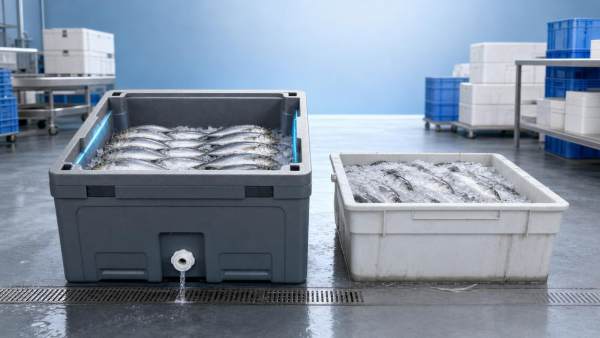
For procurement and operations evaluators, the higher upfront price of insulated fish tubs often raises a practical question: do they deliver measurable value over standard containers? In commercial fisheries and aquaculture logistics, insulated fish tubs can reduce temperature fluctuation, protect product quality, and lower spoilage-related losses. Understanding these cost-to-performance advantages is essential when assessing long-term efficiency, compliance, and return on investment.
Understanding insulated fish tubs in commercial handling
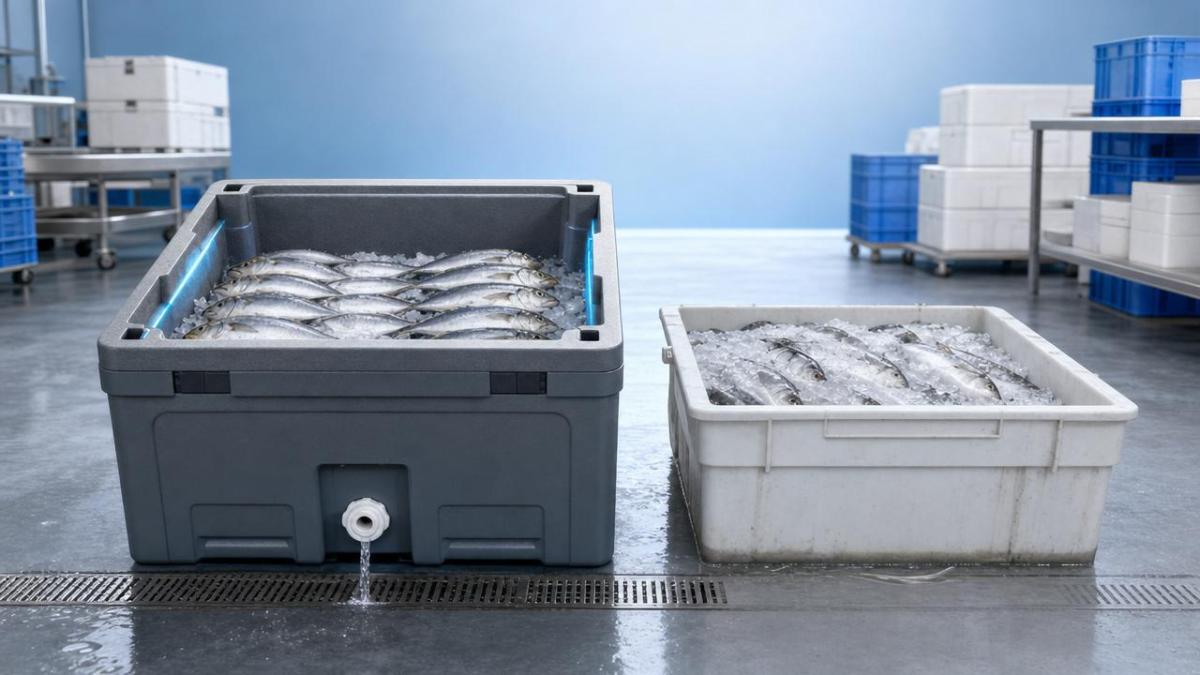
Insulated fish tubs are heavy-duty containers designed to slow heat transfer during storage, landing, grading, and transport.
They are commonly made from food-grade polyethylene with foam-filled walls or double-shell insulated construction.
Compared with standard tubs, insulated fish tubs better maintain low internal temperatures after icing or chilling.
This matters because harvested fish begin losing freshness quickly when exposed to unstable temperatures.
In many operations, temperature control is not only a quality issue but also a compliance issue.
Where HACCP plans, FDA expectations, or export standards apply, container performance affects product integrity.
The extra cost reflects materials, insulation density, structural strength, drainage design, and service life.
As a result, insulated fish tubs should be evaluated as operational assets, not simple plastic bins.
Core design features that influence value
- Thermal insulation that reduces warming during loading delays and transport.
- Smooth, food-safe surfaces that support easier cleaning and sanitation.
- Robust walls and reinforced bases for repeated industrial use.
- Drainage and meltwater control that limit fish contact with contaminated fluids.
- Stackable geometry that supports handling efficiency and space utilization.
Why temperature stability changes the cost equation
The main reason insulated fish tubs cost more is the thermal protection they provide throughout the cold chain.
Fish quality declines when muscle temperature rises, even for short periods during unloading or transfer.
Standard containers can allow faster heat gain from ambient air, decks, truck beds, or direct sunlight.
Insulated fish tubs reduce these swings, making icing systems work more effectively and predictably.
That improvement may appear small per batch, but it compounds across daily volume and seasonal throughput.
Better temperature retention can also reduce the amount of ice needed to maintain target conditions.
Lower ice consumption influences transport weight, replenishment frequency, and onboard storage planning.
For live or highly sensitive species, stable handling conditions can directly affect saleable yield.
Operational signals worth tracking
Business value beyond the purchase price
The strongest case for insulated fish tubs is rarely the container alone.
The case comes from reduced waste, preserved grade, cleaner handling, and smoother compliance records.
A small reduction in downgraded product can offset the premium over time.
This is especially true when product value is high or transport legs are long.
Insulated fish tubs also support more consistent presentation at processing or market arrival.
That consistency can improve receiving efficiency and reduce disputes over condition on delivery.
Another overlooked factor is labor rhythm.
When tubs hold temperature longer, staff spend less time replacing ice or responding to quality drift.
Durability also matters.
Well-built insulated fish tubs often last through repeated impacts, washdowns, and stacking cycles.
That spreads acquisition cost over a longer service period than cheaper alternatives.
Where savings usually appear
- Lower spoilage and drip loss.
- Reduced quality downgrades.
- Less emergency icing and rehandling.
- Longer container replacement cycles.
- Better hygiene control and cleaning efficiency.
Typical use cases across fisheries and aquaculture
Not every workflow needs the same level of insulation performance.
The value of insulated fish tubs increases with exposure time, climate stress, and product sensitivity.
The following scenarios show where the premium is often justified.
When standard tubs may still be acceptable
Short handling windows in cool climates may not require full insulation performance.
Operations with immediate processing beside harvest areas may also see a weaker payback case.
Even then, sanitation, durability, and stacking design still deserve close review.
Practical evaluation criteria before purchase
A useful assessment should compare life-cycle performance, not just invoice price.
Insulated fish tubs vary widely in insulation quality, wall thickness, and hygiene design.
A low-cost insulated unit may underperform if foam density or structural integrity is poor.
Field testing under real loading conditions is often more revealing than brochure claims.
Checklist for informed selection
- Measure internal temperature retention over a defined time window.
- Review food-contact compliance and cleaning compatibility.
- Inspect drain design, corners, and surfaces for residue traps.
- Confirm stackability, forklift handling, and deck or truck fit.
- Estimate ice savings and reduced rehandling labor.
- Compare expected service life against standard tubs.
- Check supplier traceability, replacement support, and manufacturing consistency.
It is also wise to connect container choice with broader cold-chain procedures.
Insulated fish tubs work best when paired with correct icing ratios, fast loading, and disciplined sanitation.
Without those controls, even premium tubs cannot fully protect quality outcomes.
A grounded view of return on investment
The extra cost of insulated fish tubs is worth it when product quality has measurable financial consequences.
That usually includes chilled seafood, longer transport routes, warm environments, and strict buyer specifications.
Their value becomes clearer when losses are calculated across spoilage, downgrades, labor, and replacement frequency.
In many operations, insulated fish tubs function as a control point within a larger quality assurance system.
A practical next step is to trial insulated fish tubs on one route, one species, or one harvest cycle.
Track temperature stability, ice use, rejection rates, and container wear against standard tubs.
That evidence-based comparison will show whether the premium supports stronger long-term efficiency and product protection.
Related Intelligence
- Commercial FishingWhat Should You Check in a Fishery Equipment Maintenance Contract?What should I look for in a fishery equipment maintenance contract? Explore coverage, response times, costs, records, safety, and biosecurity essentials.
- Commercial FishingDo commercial fishing vessels with hybrid diesel-electric propulsion reduce fuel cost per kg landed by more than 12%?Commercial fishing vessels with hybrid diesel-electric propulsion *can* cut fuel cost per kg landed by >12%—but only under precise operational and infrastructure conditions. Discover the real ROI.
- Commercial FishingHow to Choose Oyster Processing Equipment for Capacity, Hygiene, and Labor EfficiencyOyster processing equipment guide: compare capacity, hygienic design, and labor efficiency to build a reliable, scalable line and make smarter buying decisions.
The Morning Broadsheet
Daily chemical briefings, market shifts, and peer-reviewed summaries delivered to your terminal.
