

The Authority in Global Agricultural Chemistry & Bio-Resources
Peru IMARPE Tightens Eco-Entanglement Standards for Fishing Gear
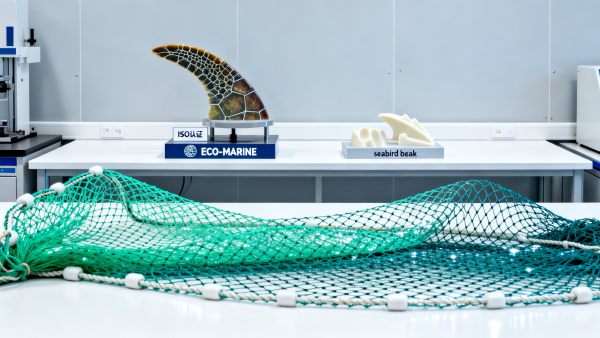
On May 15, 2026, the Peruvian Institute of Marine Research (IMARPE) announced new regulatory requirements for imported commercial fishing gear—specifically bottom trawls and purse seines—set to take effect on August 1, 2026. The move introduces mandatory ‘Eco-Entanglement Compatibility Certification’, targeting physical avoidance rates for sea turtles, seabirds, and juvenile fish. As China remains the largest exporter of such gear to Peru, the policy signals a significant shift in market access conditions for Chinese manufacturers and exporters.
Event Overview
IMARPE announced on May 15, 2026, that all imported commercial fishing nets—including bottom trawls and purse seines—must obtain Eco-Entanglement Certification effective August 1, 2026. Certification assesses net mesh structure design against standardized entanglement risk thresholds for protected marine species. Initial certification must be conducted exclusively at Spain’s ECO-MARINE Laboratory, with appointments required three months in advance. No domestic or third-country labs are currently authorized.
Industries Affected
Direct Export Trading Enterprises: Face immediate compliance risk, as current export documentation does not include ecological entanglement verification. Non-compliant shipments after August 1 may be rejected at Peruvian ports, triggering delays, re-export costs, or contract penalties—particularly under FOB or CIF terms where sellers bear certification responsibility.
Raw Material Procurement Enterprises: Must reassess supplier qualification criteria. Traditional nylon monofilament and polyethylene yarn suppliers lack entanglement-performance data; procurement teams now need material-level test reports aligned with ECO-MARINE’s mesh deformation and recovery protocols—not just tensile strength or UV resistance.
Manufacturing Enterprises: Are directly responsible for structural redesign: mesh geometry, knot type, and buoyancy distribution affect entanglement metrics. Most Chinese factories lack in-house hydrodynamic simulation capacity or species-specific avoidance modeling expertise—making iterative prototyping time- and cost-intensive without external technical support.
Supply Chain Service Providers: Including logistics intermediaries, certification consultants, and customs brokers, face rising demand for coordinated lab scheduling, bilingual technical dossier preparation (Spanish/English), and pre-shipment conformity assessments. Current service offerings rarely cover ecological gear certification—creating a capability gap ahead of the August deadline.
Key Focus Areas and Response Measures
Prioritize Lab Access and Timeline Management
Given the mandatory three-month lead time for ECO-MARINE appointments—and limited annual testing capacity—exporters should secure slots by early June 2026. Delayed booking risks missing the August 1 cutoff, especially for first-time applicants requiring pilot batch submissions.
Conduct Pre-Certification Mesh Performance Screening
Before formal submission, manufacturers should commission preliminary mesh deformation tests using standardized sea turtle flipper and seabird beak simulators (per ISO/IEC 17025-accredited labs). While not substituting ECO-MARINE certification, such screening identifies high-risk design features—e.g., overly tight knots or rigid mesh panels—that reduce avoidance probability.
Review Contract Terms with Peruvian Importers
Exporters should revisit Incoterms® usage: shifting from EXW or FCA to DAP (Delivered at Place) clauses allows clearer allocation of certification costs and responsibilities. Contracts signed before May 2026 rarely address ecological compliance—making renegotiation essential where certification burden falls unilaterally on the seller.
Editorial Perspective / Industry Observation
Analysis shows this is not an isolated environmental measure but part of a broader trend: Latin American fisheries agencies are increasingly adopting EU-aligned ecological gear standards—not through harmonized regulation, but via unilateral import conditions. Observably, Peru’s choice of Spanish lab exclusivity suggests strategic alignment with EU marine governance frameworks, potentially foreshadowing future mutual recognition pathways. From an industry perspective, the certification threshold focuses narrowly on physical structure—not biodegradability or chemical leaching—indicating near-term adaptation is feasible, but long-term R&D investment in dynamic mesh systems (e.g., shape-memory polymers) remains underexplored among Chinese suppliers.
Conclusion
This policy marks a pivotal step toward embedding ecological performance into international fishing gear trade—not as voluntary ESG reporting, but as enforceable market entry condition. It underscores that sustainability compliance is no longer confined to production processes, but extends to functional design outcomes. A rational interpretation is that the regulation accelerates consolidation among mid-tier Chinese manufacturers lacking certification agility, while creating niche opportunities for firms partnering with marine ecology engineers early.
Source Attribution
Official notice published by IMARPE on May 15, 2026 (IMARPE Resolution No. 087-2026-IMARPE/DC); ECO-MARINE Laboratory’s certification scope document (v.4.1, updated April 2026); Peruvian Customs Tariff Annex 2026-III (pending finalization of enforcement protocols). Note: IMARPE has indicated potential expansion to gillnets and longlines in Q1 2027—subject to stakeholder consultation results, currently under observation.
Related Intelligence
- Commercial FishingWhat Should You Check in a Fishery Equipment Maintenance Contract?What should I look for in a fishery equipment maintenance contract? Explore coverage, response times, costs, records, safety, and biosecurity essentials.
- Commercial FishingDo commercial fishing vessels with hybrid diesel-electric propulsion reduce fuel cost per kg landed by more than 12%?Commercial fishing vessels with hybrid diesel-electric propulsion *can* cut fuel cost per kg landed by >12%—but only under precise operational and infrastructure conditions. Discover the real ROI.
- Commercial FishingHow to Choose Oyster Processing Equipment for Capacity, Hygiene, and Labor EfficiencyOyster processing equipment guide: compare capacity, hygienic design, and labor efficiency to build a reliable, scalable line and make smarter buying decisions.
The Morning Broadsheet
Daily chemical briefings, market shifts, and peer-reviewed summaries delivered to your terminal.
