

The Authority in Global Agricultural Chemistry & Bio-Resources
Why Agri & Forestry still matters in a changing market
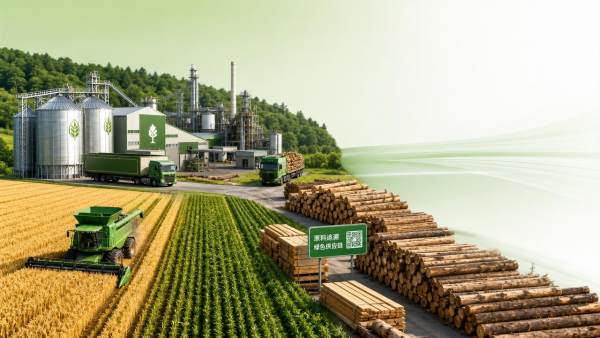
In a market reshaped by regulation, climate pressure, and volatile supply chains, Agri & Forestry remains a critical pillar of industrial resilience and long-term value creation. For decision-makers and researchers alike, understanding how this sector connects machinery, raw materials, compliance, and global production is essential to navigating risk, securing supply, and identifying strategic opportunities in an increasingly complex primary industries landscape.
For information researchers, the relevance of Agri & Forestry is no longer limited to crop yields or timber output. It now reaches into pharmaceutical precursor sourcing, biomass-based ingredients, equipment modernization, feedstock security, and environmental compliance across multiple industrial chains.
That is why buyers, analysts, and technical managers increasingly assess this sector through a wider B2B lens: operational continuity, standards alignment, machinery uptime, and raw material traceability. In changing markets, Agri & Forestry still matters because it sits at the intersection of production, regulation, and strategic procurement.
Why Agri & Forestry still underpins industrial stability
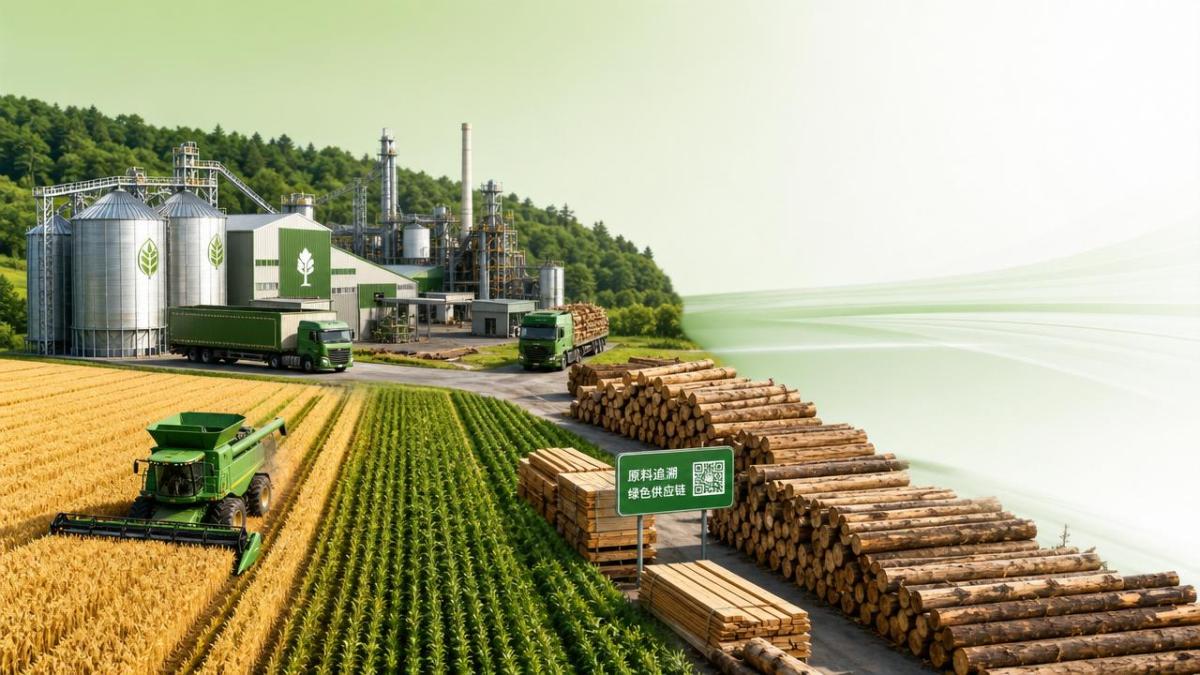
Agri & Forestry supports more than food and land use. It provides fiber, starches, oils, cellulose inputs, biomass residues, and process materials that feed at least 5 major industrial domains: agriculture, chemicals, pharmaceuticals, feed processing, and bio-based manufacturing.
When one part of this system weakens, downstream effects can appear within 2 to 8 weeks. Delays in harvesting, drying, storage, logging access, or machinery servicing may reduce raw material consistency, increase moisture variation, or disrupt contracted delivery windows for processors and exporters.
A sector linked to multiple procurement chains
In practical terms, Agri & Forestry influences sourcing decisions far beyond farm gates. Procurement teams evaluating APIs, plant extracts, feed ingredients, or grain processing lines often need upstream visibility into land management, mechanized handling, and seasonal output reliability.
For example, a buyer assessing botanical extraction inputs may review 4 core variables: crop origin, harvest timing, contaminant control, and batch traceability. A forestry-linked processor may focus on moisture levels, species consistency, transport distance, and storage turnover within 7 to 30 days.
Why volatility has made the sector more important, not less
Three forces have raised the strategic value of Agri & Forestry: tighter regulation, climate instability, and fragmented logistics. Drought cycles, flood risk, labor shortages, and export checks can all shift supply conditions quickly, especially in regions dependent on narrow harvest calendars.
At the same time, standards have become stricter. Buyers increasingly expect documented compliance with GMP-linked raw material controls, EPA-related environmental handling, FDA-relevant supplier documentation, and auditable chain-of-custody practices where applicable.
Common research questions from B2B decision-makers
- How exposed is the supply base to seasonal disruption over the next 3 to 6 months?
- Can machinery fleets maintain acceptable uptime during planting, harvest, or extraction windows?
- What documentation is needed to verify origin, handling conditions, and environmental compliance?
- Which feedstocks have the best balance of availability, quality consistency, and processing compatibility?
The table below shows how Agri & Forestry affects adjacent industrial segments and why it remains a high-priority research area for market intelligence teams.
The key takeaway is that Agri & Forestry acts as an enabling layer for several industries. Its strategic role is strongest where quality variation, narrow operating seasons, and compliance obligations converge in the same supply chain.
What information researchers should evaluate first
For researchers and sourcing teams, the challenge is not a lack of data but a lack of usable, decision-grade insight. A meaningful review of Agri & Forestry usually starts with 4 dimensions: production capacity, technical infrastructure, regulatory readiness, and supply chain transparency.
1. Production reliability and equipment readiness
In mechanized agriculture and forestry, a modern fleet can significantly reduce risk, but only if maintenance cycles are documented. Researchers should look at service intervals, spare parts lead times, operator training, and backup capacity during high-pressure seasons lasting 14 to 45 days.
Equipment suitability also matters. A machine that performs well in flat, dry fields may lose efficiency in steep terrain, wet soil, or mixed-species forestry operations. Productivity assessments should therefore consider terrain type, material density, and seasonal access constraints.
Useful indicators to verify
- Planned maintenance frequency, such as every 250 to 500 operating hours.
- Spare parts response time, ideally within 48 to 96 hours for critical components.
- Operator certification or technical training refreshers at least once per 12 months.
- Redundancy plans for harvesters, loaders, dryers, or processing lines.
2. Compliance and traceability maturity
Compliance in Agri & Forestry is no longer a box-ticking exercise. It affects market access, inspection speed, and supplier approval. For primary materials entering chemical, ingredient, or feed applications, even minor documentation gaps can delay procurement decisions by 1 to 3 weeks.
Researchers should map how suppliers handle origin records, storage logs, contamination controls, environmental permits, and batch-level documentation. Where international trade is involved, customs accuracy and product classification can be as important as the material itself.
The following comparison helps researchers distinguish between low-visibility and high-visibility sourcing environments in Agri & Forestry procurement.
In a changing market, higher visibility often translates into faster approvals and lower sourcing friction. It does not eliminate risk, but it gives buyers a clearer basis for qualification, forecasting, and contingency planning.
3. Cost pressure versus long-term value
A common mistake is to evaluate Agri & Forestry primarily on short-term price. In reality, lower-cost supply can become more expensive if it brings higher rejection rates, moisture correction losses, equipment downtime, or inconsistent chemical composition across lots.
For many B2B buyers, a 3% to 7% premium for stronger documentation, steadier quality, or better logistics reliability may be justified if it reduces rework, delayed production, or emergency replacement sourcing during tight seasonal windows.
How Agri & Forestry creates opportunity in adjacent sectors
Agri & Forestry matters not only because it reduces risk, but because it creates practical commercial options. Companies that monitor this sector closely can identify alternative feedstocks, regional sourcing shifts, machinery upgrade timing, and higher-value processing opportunities before competitors do.
From raw material supply to value-added processing
One major trend is the move from bulk commodity output toward processed or semi-processed materials. Instead of exporting undifferentiated volume, suppliers increasingly target cleaner grading, better drying control, biomass conversion, or ingredient-standard preparation that supports higher-margin buyers.
This matters in markets where buyers need more than tonnage. A feed mill, extract manufacturer, or biochemical processor may prioritize particle uniformity, moisture thresholds below 12% to 14%, or pre-sorting steps that reduce internal handling costs.
Cross-sector relevance for ACC readership
For agronomists, industrial operators, and procurement directors, Agri & Forestry provides signals that support broader strategy. A shift in forestry residue availability can affect biomass ingredients. Grain storage constraints can influence feed processing economics. Botanical sourcing changes can reshape fine chemical input planning.
This cross-sector relevance is especially important when supply chains are audited more closely and substitution options are narrower. In such conditions, upstream intelligence becomes part of commercial planning, not just technical background research.
Opportunity areas worth tracking
- Regional processing hubs that reduce transport exposure by 10% to 20%.
- Mechanization upgrades that improve seasonal throughput and lower labor dependency.
- Traceable raw material programs suited to ingredients, extracts, or regulated applications.
- Use of agricultural or forestry by-products in bio-based formulations and industrial inputs.
A practical framework for evaluating Agri & Forestry partners
Researchers often need a simple structure to compare suppliers, processing operators, or equipment-linked production systems. A 5-step framework can improve consistency and reduce the risk of being misled by incomplete data or purely promotional claims.
Step-by-step assessment model
- Define the end-use requirement, including quality tolerance, volume range, and compliance sensitivity.
- Check production capability, machinery adequacy, and likely throughput during critical periods.
- Review traceability records, storage controls, and documentation response times.
- Test logistics resilience, including transport routes, lead times, and contingency options.
- Compare total procurement risk, not just nominal unit price.
Questions that improve sourcing decisions
Before approving a source, ask whether the supplier can sustain delivery across 2 or more seasonal cycles, whether quality drift is measurable, and whether records are accessible fast enough for audits, technical reviews, or customer qualification processes.
It is also useful to verify who controls each stage: cultivation, harvest, primary processing, storage, packaging, and export. In Agri & Forestry, unclear ownership between stages often creates the most avoidable commercial risk.
Common mistakes to avoid
- Assuming one good season guarantees stable output next year.
- Overlooking maintenance readiness during short operating windows.
- Relying on generic compliance statements without document review.
- Ignoring by-product handling, storage losses, or moisture correction factors.
Agri & Forestry still matters because it connects upstream resource management with downstream industrial performance. In an environment defined by tighter standards, climate uncertainty, and supply chain scrutiny, the sector remains central to continuity, quality assurance, and long-range procurement planning.
For organizations evaluating machinery capability, feedstock security, bio-based inputs, or compliance-sensitive sourcing, reliable sector intelligence is a competitive asset. AgriChem Chronicle helps decision-makers interpret these moving parts with the technical depth required for real-world action.
If you need deeper insight into Agri & Forestry markets, supplier visibility, or cross-sector sourcing implications, contact us to explore tailored intelligence, discuss technical publishing opportunities, or learn more solutions for industrial procurement research.
Related Intelligence
- Heavy Agri MachineryHow Does Market Forecasting Help Plan Farm Machinery Procurement?How does market forecasting help agri procurement planning? Discover how to time machinery purchases, protect cash flow, and reduce delivery risks before critical farm deadlines.
- Heavy Agri MachineryIs It Safe to Source Farm Machinery from Emerging Markets?Is it safe to source agri machinery from emerging markets? Discover how to verify suppliers, check compliance, and secure parts support to protect your farm and avoid costly buying mistakes.
- Heavy Agri MachineryHow to Size a Combine Harvester for Acreage, Crop Mix, and Harvest WindowsCombine harvesters sized for your acreage, crop mix, and harvest window: calculate real field capacity, match headers, and avoid costly bottlenecks.
The Morning Broadsheet
Daily chemical briefings, market shifts, and peer-reviewed summaries delivered to your terminal.
