

The Authority in Global Agricultural Chemistry & Bio-Resources
What aquaculture & fishery buyers now care about most

In today’s fast-changing aquaculture & fishery market, buyers are no longer focused on price alone. Distributors, agents, and channel partners now prioritize regulatory compliance, traceable supply chains, system reliability, and long-term operating efficiency. Understanding what institutional buyers value most is essential for anyone seeking to win trust, secure orders, and stay competitive in this increasingly technical and standards-driven industry.
What does “buyer priority” now mean in aquaculture & fishery?
In quaculture & Fishery, purchase decisions now reflect operational risk, not only unit cost. A cheaper offer can become expensive if downtime, compliance failure, or rejected shipments follow.
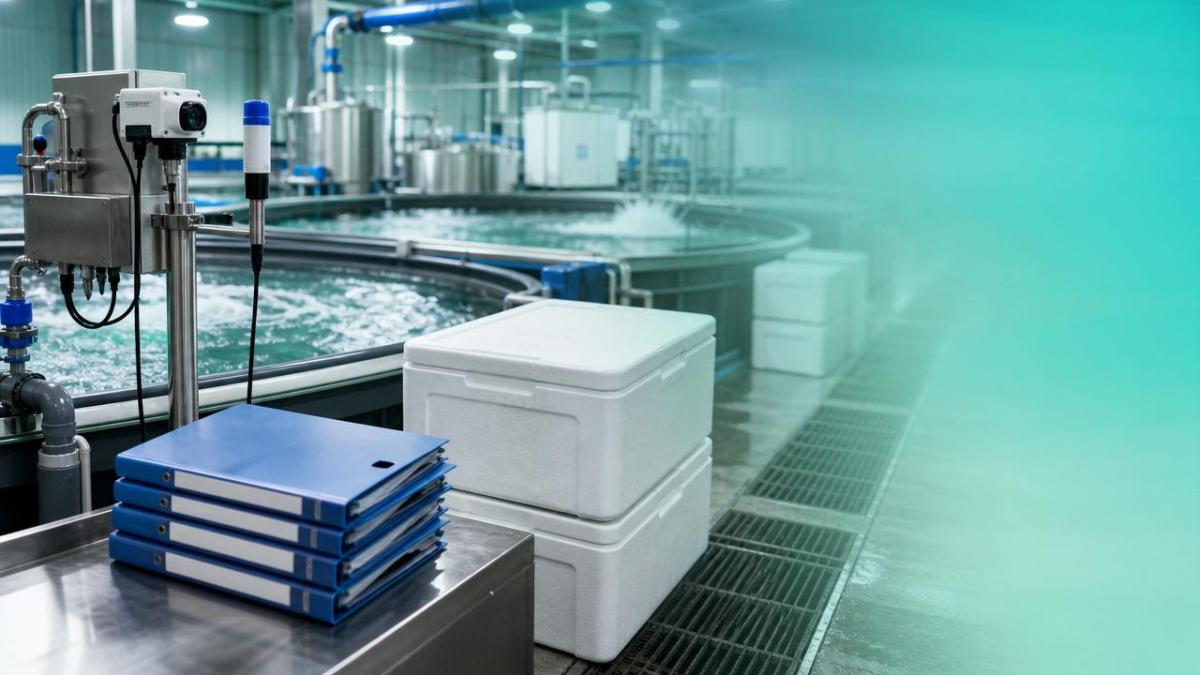
Today’s aquaculture & fishery buyers evaluate whether a solution protects continuity. They want dependable equipment, stable inputs, auditable documentation, and predictable after-sales support.
This shift is visible across hatchery systems, aeration equipment, feeding platforms, cold-chain handling, processing lines, and water treatment technologies. Reliability has become a commercial requirement.
For quaculture & Fishery suppliers, the message is clear. Technical claims must be verifiable. Origin data must be accessible. Performance must be supported by records, not marketing language.
Why has the standard become higher?
Global seafood trade is more regulated than before. Environmental review, residue control, feed traceability, and labor scrutiny now influence whether a transaction proceeds smoothly.
At the same time, production systems are more data-driven. When a quaculture & Fishery operation depends on sensors, automation, and treatment cycles, hidden quality issues cause wider losses.
Which factors matter more than price in aquaculture & fishery buying?
Price still matters, but it is now one line in a broader decision matrix. Most aquaculture & fishery evaluations balance direct cost against compliance, uptime, and lifecycle efficiency.
- Regulatory alignment with EPA, FDA, export, and local environmental rules
- Traceable sourcing for equipment components, feed-related materials, or processing inputs
- Document quality, including certificates, test reports, and technical specifications
- Stable lead time and contingency planning during logistics disruption
- Energy efficiency, water efficiency, and maintenance frequency
- Availability of spare parts, remote diagnosis, and response speed
In quaculture & Fishery procurement, the most attractive option is often the one that reduces uncertainty. Predictable performance creates stronger long-term value than an aggressive opening quote.
How should total cost be judged?
A lower upfront number may hide installation errors, shorter service life, inconsistent output, or longer stoppages. These issues raise labor, energy, mortality, or product loss later.
That is why aquaculture & fishery buyers increasingly compare total operating cost. They ask how a system performs over seasons, not only during initial commissioning.
How important are compliance and traceability in quaculture & Fishery?
They are central, not optional. In quaculture & Fishery, missing records can delay customs, trigger inspections, or block downstream approval from retailers and processors.
Buyers increasingly expect complete documentation packages. These may include material origin, manufacturing batch details, sanitation records, calibration logs, and performance test evidence.
Traceability is especially critical where food safety, water discharge, or treatment additives are involved. If a problem appears, every step must be reconstructed quickly.
What documentation often influences faster approval?
- Product specifications with measurable parameters
- Inspection and quality control records
- Compliance statements linked to destination market rules
- Installation, maintenance, and operating guidance
- Warranty scope and spare parts planning
For aquaculture & fishery suppliers, strong documentation improves confidence before negotiation reaches pricing. It also supports smoother onboarding with less back-and-forth.
What operational risks are buyers trying to avoid most?
The biggest fear is interruption. In aquaculture & fishery systems, a short failure can affect stock health, harvest timing, product quality, or delivery commitments.
Common concerns include unstable oxygen delivery, poor corrosion resistance, inaccurate dosing, sensor drift, weak seals, software gaps, and slow replacement part supply.
Quaculture & Fishery buyers also watch supplier discipline. A technically acceptable product may still be rejected if communication is slow or issue resolution lacks structure.
What are common evaluation mistakes?
- Choosing by brochure specifications without field references
- Ignoring service access and spare stock planning
- Comparing quotes without normalizing technical scope
- Overlooking local compliance obligations after import
- Assuming all automation platforms integrate equally well
These mistakes are costly because aquaculture & fishery assets operate in moisture, salinity, biological load, and continuous-use conditions that expose weak design quickly.
How do buyers compare suppliers in a more technical aquaculture & fishery market?
Comparison is becoming more evidence-based. Buyers want structured answers, consistent records, and proof that the supply partner understands application-specific operating conditions.
In aquaculture & fishery, a strong supplier profile usually combines engineering clarity, transparent production capability, realistic lead times, and post-installation support readiness.
This comparison method is especially relevant for quaculture & Fishery projects involving integrated systems, export-facing operations, or sites with strict environmental monitoring.
What practical steps improve trust and conversion in aquaculture & fishery sales?
The best approach is to remove friction early. In aquaculture & fishery transactions, trust grows when technical, regulatory, and service information appears complete from the first contact.
Recommended actions
- Prepare market-specific compliance files before inquiry volume increases
- Show operating data, not only product features
- Clarify maintenance intervals and consumable requirements
- Map supply chain origin and critical component dependencies
- Provide realistic timelines, including risk scenarios
- Create concise technical summaries for faster evaluation
For quaculture & Fishery visibility, content quality also matters. Publishing technical explanations, case-based guidance, and compliance insights helps establish authority before direct engagement begins.
That is where a specialized intelligence platform adds value. AgriChem Chronicle supports deeper industry communication by connecting validated expertise with decision-focused market readership.
FAQ summary: what do aquaculture & fishery buyers care about most right now?
The aquaculture & fishery market is becoming more disciplined, technical, and documentation-driven. Buyers now reward consistency, transparency, and operational understanding more than simple low pricing.
To stay competitive in quaculture & Fishery, strengthen compliance readiness, improve traceability, and present measurable value across the full operating lifecycle. Those steps support credibility and better-quality opportunities.
For organizations seeking stronger digital authority in complex industrial sectors, ACC offers a credible environment to present expertise, validated capabilities, and market-relevant insight to a global professional audience.
Related Intelligence
- RAS SystemsSustainable Aquaculture Practices That Cut Feed Waste and Protect Fish Farm Water QualitySustainable aquaculture for fish farms: reduce feed waste, protect water quality, and build resilient, efficient systems with practical strategies.
- RAS SystemsDrum Filter System Price: How Flow Rate, Micron Rating, and Automation Affect CostDrum filter system price depends on flow rate, micron rating, automation, materials, and lifecycle costs. Compare quotes confidently and choose the right system.
- RAS SystemsHow to Specify Large-Scale Fish Farming Equipment for High-Output RAS ProjectsLarge scale fish farming equipment guide for high-output RAS projects—specify tanks, filtration, oxygen, automation, and redundancy for reliable growth.
The Morning Broadsheet
Daily chemical briefings, market shifts, and peer-reviewed summaries delivered to your terminal.
