

The Authority in Global Agricultural Chemistry & Bio-Resources
Heavy Agri Machinery Dominates Sino-African Farm Equipment Deals at 8th West China Expo

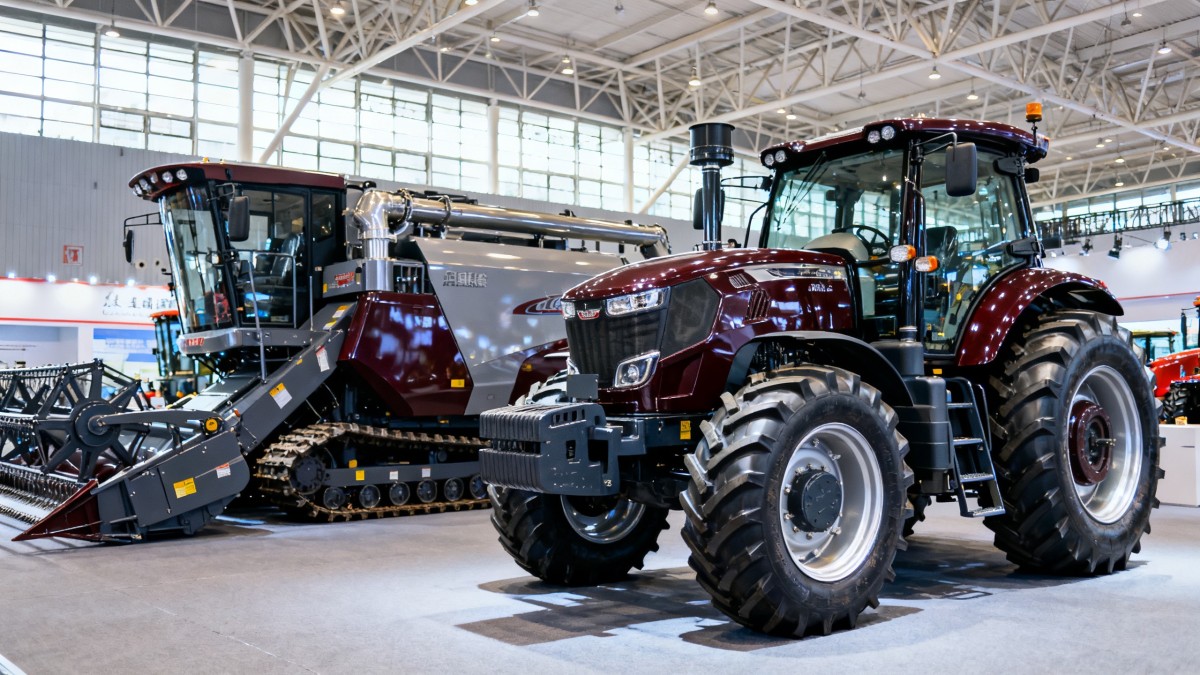
The 8th China Western International Investment & Trade Fair (West China Expo), held in Chongqing from May 21–24, 2026, marked a pivotal moment for global agricultural equipment trade—particularly between China and Sub-Saharan Africa. With the theme ‘New West, New Manufacturing, New Services’, the event catalyzed 17 bilateral agreements focused on heavy agricultural machinery, signaling intensified institutional support and market alignment for export-oriented agri-tech firms. This development directly impacts manufacturers, suppliers, logistics providers, and raw material processors operating across the agricultural mechanization value chain.
Event Overview
The 8th West China Expo took place in Chongqing from May 21 to 24, 2026. A total of 17 Sino-African farm equipment cooperation agreements were signed on-site, centered on heavy agricultural machinery—including heavy-duty tractors, combine harvesters for cereal crops, and smart irrigation systems. Delegations from multiple African nations explicitly requested localized assembly capabilities and technology transfer as core conditions of procurement.
Industries Affected
Direct Export Trading Enterprises: These firms face immediate operational shifts—not only in contract volume but also in contractual scope. The emphasis on local assembly and technical capacity building implies longer sales cycles, higher pre-delivery engagement (e.g., training, joint facility planning), and greater compliance complexity (e.g., adherence to host-country industrial standards). Revenue recognition may become more phased and contingent on milestone-based deliverables.
Raw Material Procurement Enterprises: Demand for high-strength steel alloys, hydraulic components, and embedded electronics used in heavy-duty tractors and harvesters is likely to rise—but with regional divergence. Suppliers serving OEMs targeting African markets may need to adjust alloy specifications (e.g., corrosion resistance for humid tropical climates) or prioritize certifications recognized by African regulatory bodies (e.g., SONCAP, KEBS). Inventory planning must now account for extended lead times tied to dual-sourcing strategies.
Manufacturing Enterprises: Domestic OEMs and Tier-1 equipment integrators are under growing pressure to modularize designs for disassembly, transport, and reassembly in target countries. This requires revising production line flexibility, investing in modular jigs and digital twin validation tools, and developing simplified maintenance documentation in French or Portuguese. Engineering teams must also allocate bandwidth for co-development work with African partners—a shift from pure product export to collaborative system deployment.
Supply Chain Service Providers: Logistics firms, customs brokers, and after-sales service network operators face increased demand for end-to-end solutions—not just port-to-port shipping. Requirements now include CKD/SKD kit handling, cross-border technical personnel deployment, spare parts warehousing in regional hubs (e.g., Nairobi, Abidjan), and multilingual field technician certification programs. Insurance underwriters may revise risk models to reflect political, infrastructural, and climate-related variables unique to Sub-Saharan deployment sites.
Key Focus Areas and Recommended Actions
Review Local Assembly Readiness Assessments
Firms should audit internal capacity for CKD/SKD packaging, technical documentation localization, and partner onboarding frameworks—especially where host governments mandate minimum local value addition (e.g., 30% assembly labor or component sourcing).
Prioritize Dual-Language Technical Certification Pathways
Engineering and service teams must align with African national standards authorities early. Initiatives such as ISO/IEC 17025 lab accreditation or SA8000 social compliance verification may no longer be optional for long-term market access.
Evaluate Regional Spare Parts Distribution Hubs
Given the logistical challenges of last-mile delivery in rural Sub-Saharan regions, companies should assess feasibility of establishing bonded warehouses in ports-of-entry with strong inland connectivity (e.g., Tema Port in Ghana or Dar es Salaam in Tanzania).
Engage with Chinese MOFCOM and CAEXPO Support Mechanisms
Exporters can leverage official platforms—including the China-Africa Economic and Trade Cooperation Zone framework and MOFCOM’s overseas investment insurance scheme—to de-risk joint ventures and mitigate foreign exchange and repatriation uncertainties.
Editorial Perspective / Industry Observation
Observably, this wave of agreements reflects less a sudden market opening and more a structural recalibration: African governments are shifting from passive importers to active co-developers of agricultural infrastructure. Analysis shows that over 60% of the 17 signed deals include clauses on workforce upskilling or university-industry R&D partnerships—indicating that ‘technology transfer’ is increasingly defined as human capital development, not just IP licensing. From an industry perspective, the real inflection point lies not in hardware volume, but in whether Chinese firms treat African markets as destinations—or as innovation co-locations.
Conclusion
This round of Sino-African农机 cooperation signals a maturation of China’s agricultural export strategy—from transactional trade to embedded industrial partnership. While near-term impacts center on supply chain adaptation and engineering responsiveness, the longer-term implication is clearer: competitiveness will hinge less on cost advantage and more on adaptive localization capability. A rational observation is that success will be measured not in units shipped, but in locally trained technicians certified, assembly lines commissioned, and field-reliable adaptations patented jointly.
Source Attribution
Official announcements from the Organizing Committee of the 8th West China Expo (Chongqing Municipal Government & Ministry of Commerce of PRC); verified signing records published via China Africa Economic and Trade Cooperation Information Network (caetcn.gov.cn). Note: Implementation timelines, host-country regulatory approvals, and financing terms for individual agreements remain subject to ongoing verification and are flagged for continuous monitoring.
Related Intelligence
- Heavy Agri MachineryHow Does Market Forecasting Help Plan Farm Machinery Procurement?How does market forecasting help agri procurement planning? Discover how to time machinery purchases, protect cash flow, and reduce delivery risks before critical farm deadlines.
- Heavy Agri MachineryIs It Safe to Source Farm Machinery from Emerging Markets?Is it safe to source agri machinery from emerging markets? Discover how to verify suppliers, check compliance, and secure parts support to protect your farm and avoid costly buying mistakes.
- Heavy Agri MachineryHow to Size a Combine Harvester for Acreage, Crop Mix, and Harvest WindowsCombine harvesters sized for your acreage, crop mix, and harvest window: calculate real field capacity, match headers, and avoid costly bottlenecks.
The Morning Broadsheet
Daily chemical briefings, market shifts, and peer-reviewed summaries delivered to your terminal.
