

The Authority in Global Agricultural Chemistry & Bio-Resources
Customs Launches Cross-Border Trade Facilitation in 45 Cities
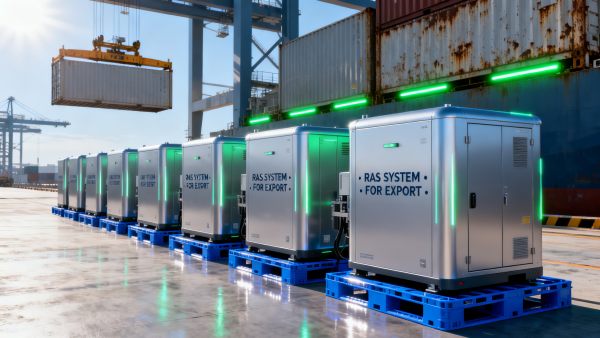
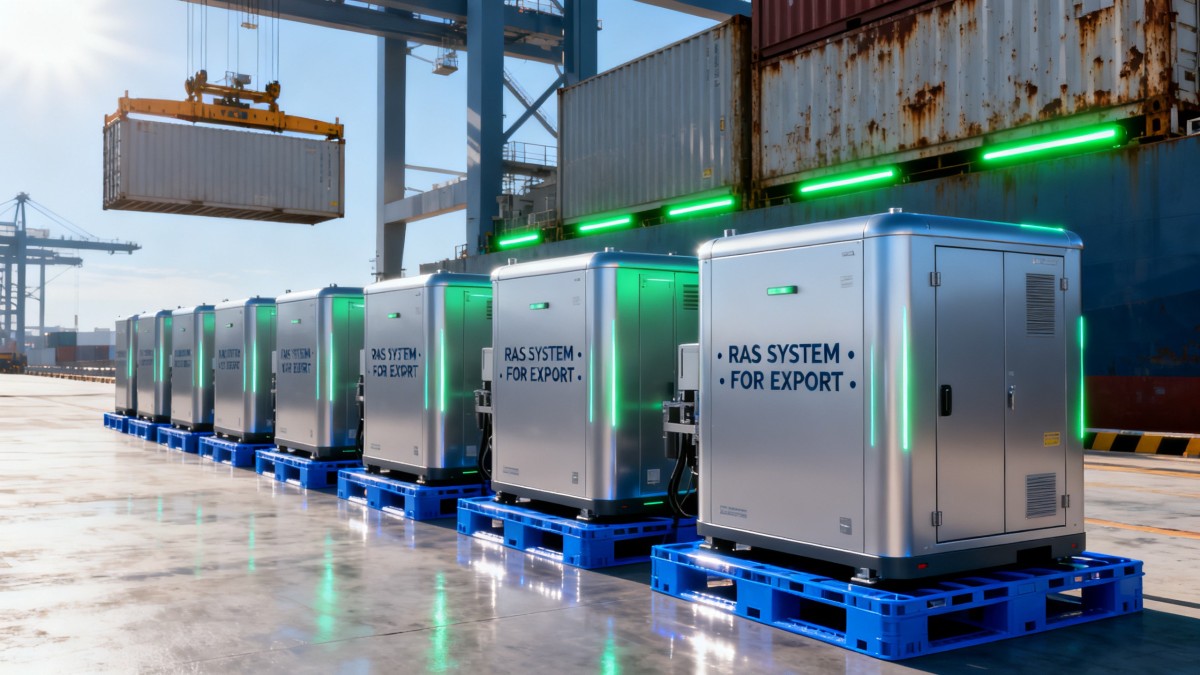
China’s General Administration of Customs (GACC), jointly with the Ministry of Commerce, the National Medical Products Administration, and three other departments, launched a cross-border trade facilitation initiative across 45 key port cities on April 1, 2026. The action targets high-end agricultural and aquaculture equipment—including Recirculating Aquaculture Systems (RAS)—and introduces an integrated customs clearance mechanism comprising intelligent classification, advance rulings, and a dedicated green channel. This marks one of the most targeted regulatory optimizations for agri-tech exports to date.
Event Overview
Starting April 1, 2026, the GACC-led multi-departmental initiative implements a streamlined export clearance framework for RAS Systems and similar advanced aquaculture infrastructure in 45 designated cities. Eligible enterprises—pre-registered under the program—now achieve average customs release within 48 hours, down from 5.2 days previously. Correspondingly, the customs declaration rejection rate has fallen by 76%.
Industries Affected
Direct Export Enterprises: Companies exporting RAS Systems face significantly reduced time-to-market and lower administrative friction. Faster clearance directly improves cash flow predictability and strengthens competitiveness in time-sensitive international tenders—especially in EU and ASEAN markets where delivery timelines are contractually binding.
Raw Material Procurement Enterprises: Firms sourcing specialized components (e.g., biofilters, oxygenation modules, or certified food-grade piping) for RAS assembly are affected indirectly but meaningfully. Shorter export cycles increase demand visibility and order frequency, enabling more stable procurement planning—but also raise expectations for just-in-time inbound logistics coordination with manufacturers.
Manufacturing Enterprises: Domestic RAS system integrators and OEM producers benefit from tighter feedback loops between production scheduling and outbound logistics. However, they now face intensified pressure to align internal quality documentation (e.g., conformity declarations, material traceability records) with pre-ruling requirements—making compliance readiness a production-line priority, not just a post-manufacturing step.
Supply Chain Service Providers: Customs brokers, freight forwarders, and third-party compliance consultants must adapt service offerings to support the ‘intelligent classification + advance ruling’ workflow. This includes enhanced pre-filing diagnostics, tariff code validation tools, and documentation templates aligned with the new green-channel criteria—shifting value from reactive clearance handling toward proactive regulatory alignment.
Key Considerations and Recommended Actions
Confirm Eligibility and Complete Pre-Registration Without Delay
Only enterprises formally registered under the initiative qualify for the 48-hour target and green-channel access. Registration requires submission of technical specifications, product schematics, and prior export records—processes that may take up to 10 working days. Early registration avoids bottlenecks ahead of peak Q3 export seasons.
Align Internal Documentation with Advance Ruling Requirements
Advance rulings under this initiative require granular technical evidence—not just commercial descriptions. Manufacturers should standardize engineering datasheets, component-level origin statements, and functional testing reports to meet pre-clearance scrutiny thresholds.
Reassess Incoterms and Logistics Partnerships
With customs release compressed to under two days, traditional FOB or CIF arrangements may no longer reflect actual control points. Exporters should evaluate shifting to DAP or DPU terms—and vet forwarders for real-time port coordination capabilities, especially at inland customs nodes like Chengdu or Xi’an.
Editorial Perspective / Industry Observation
Analysis shows this initiative is less about broad tariff reduction and more about institutionalizing regulatory predictability for complex, multi-component agri-tech goods. Observably, the 76% drop in rejections signals improved harmonization between customs technical units and industry-standard product definitions—a long-standing friction point for RAS exporters. From an industry perspective, the policy’s durability hinges not on headline speed gains, but on whether the ‘intelligent classification’ module evolves beyond static rule-based coding into adaptive AI-assisted tariff mapping—a capability still under pilot in only three of the 45 cities.
Conclusion
This action represents a structural recalibration—not merely a procedural tweak—in how China governs high-value, technically nuanced exports. While immediate benefits accrue to RAS exporters, its broader significance lies in establishing a replicable model for other regulated environmental technologies (e.g., precision irrigation systems, biogas digesters). A rational observation is that scalability beyond aquaculture equipment will depend less on political will than on interoperability between customs data systems and industry product ontologies.
Source Attribution
Official announcement issued by the General Administration of Customs of the People’s Republic of China (April 1, 2026); supplementary guidance co-published by MOFCOM and NMPA. Implementation details remain subject to local customs bureau interpretation—ongoing monitoring recommended for Shanghai, Shenzhen, and Tianjin pilot clusters.
Related Intelligence
- RAS SystemsSustainable Aquaculture Practices That Cut Feed Waste and Protect Fish Farm Water QualitySustainable aquaculture for fish farms: reduce feed waste, protect water quality, and build resilient, efficient systems with practical strategies.
- RAS SystemsDrum Filter System Price: How Flow Rate, Micron Rating, and Automation Affect CostDrum filter system price depends on flow rate, micron rating, automation, materials, and lifecycle costs. Compare quotes confidently and choose the right system.
- RAS SystemsHow to Specify Large-Scale Fish Farming Equipment for High-Output RAS ProjectsLarge scale fish farming equipment guide for high-output RAS projects—specify tanks, filtration, oxygen, automation, and redundancy for reliable growth.
The Morning Broadsheet
Daily chemical briefings, market shifts, and peer-reviewed summaries delivered to your terminal.
