

The Authority in Global Agricultural Chemistry & Bio-Resources
Are boom sprayers for tractors worth the upgrade?
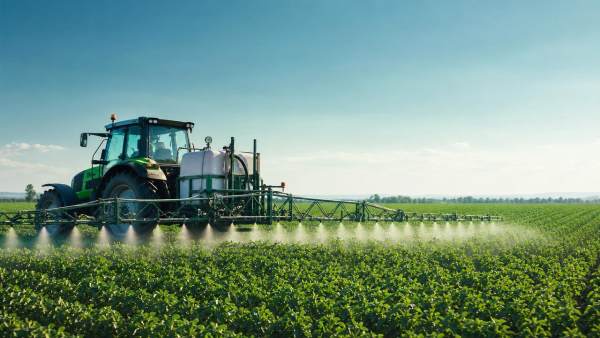
For tractor operators balancing coverage, chemical accuracy, and field efficiency, boom sprayers for tractors can look like a major step up from handheld or small spot-spraying systems. But the real value depends on acreage, crop type, terrain, nozzle control, maintenance capacity, and labor costs. This article examines whether the upgrade delivers measurable gains in productivity, application consistency, and input savings—while also highlighting the practical considerations operators should review before investing in a tractor-mounted boom spraying system.
For operators in broadacre farming, orchards, pasture renovation, roadside vegetation control, and primary production estates, spraying is no longer just a routine field task. It is a chemical application process with measurable consequences for crop protection, labor planning, compliance, and input cost control.
The question is not whether boom sprayers for tractors are more capable than handheld units. In most production settings, they are. The more practical question is whether the acreage, application frequency, operator skill, and chemical program justify the upgrade.
When Boom Sprayers for Tractors Deliver Real Operational Value
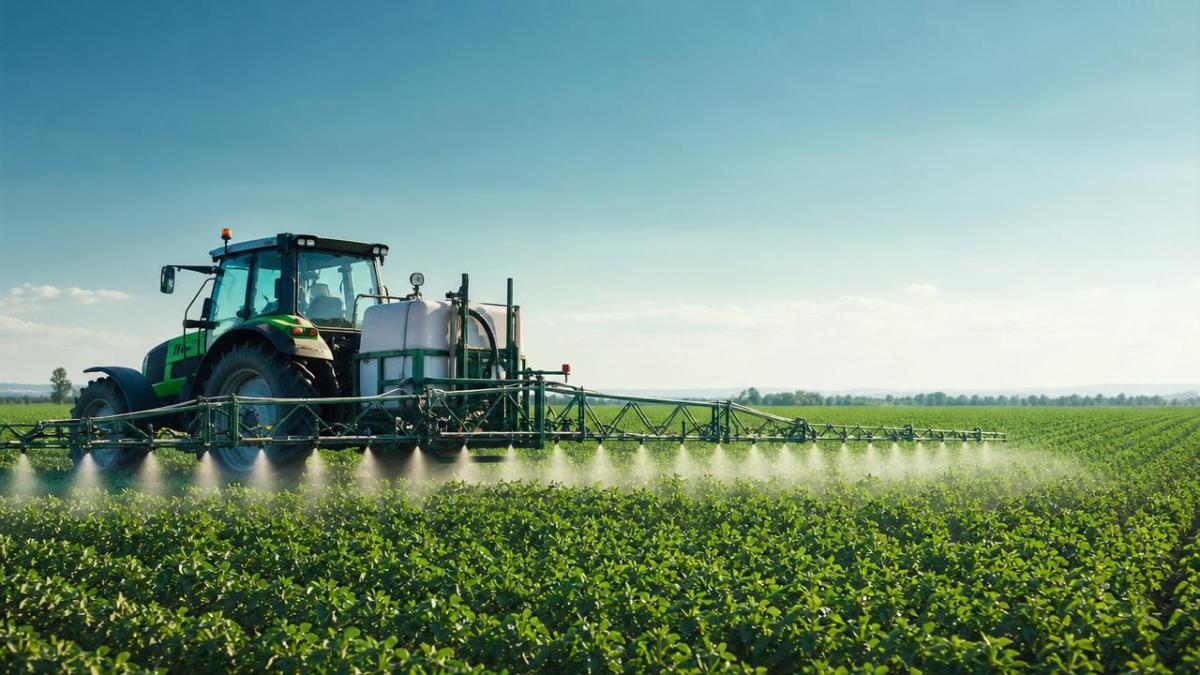
The clearest value appears when spraying becomes repetitive, time-sensitive, and coverage-dependent. If an operator treats 20 to 50 hectares several times per season, manual or small tank spraying often becomes a bottleneck.
Boom sprayers for tractors help convert chemical application from a slow spot task into a controlled field operation. A typical tractor-mounted system may use a 200 to 1,000 liter tank and a 6 to 18 meter boom, depending on tractor size and terrain.
The Productivity Difference
Handheld spraying suits boundary work, small vegetable plots, and isolated weed patches. Once the job involves full-field herbicide, fungicide, liquid fertilizer, or pest control, the limits become obvious within 2 to 3 hours of operation.
A boom system applies liquid across a fixed swath. At 8 km/h with a 12 meter boom, theoretical coverage can approach 9 hectares per hour before accounting for turning, refilling, calibration, and field shape.
In real operating conditions, operators may achieve 60% to 80% of theoretical capacity. Even with that adjustment, the labor reduction compared with backpack or ATV sprayers can be substantial.
The table below compares practical spraying options across typical agricultural and estate management scenarios. It is not a brand ranking; it is a decision framework for matching equipment scale to field demand.
The key conclusion is that boom sprayers for tractors become attractive when field coverage, labor hours, and timing risk converge. They are rarely necessary for occasional spot work, but often justified for repeated acreage-based applications.
Where the Upgrade Pays Back
The financial case depends on 3 measurable factors: operator time, chemical use efficiency, and treatment timing. Missing a spray window by 48 hours can matter when weed pressure, fungal disease, or pest movement accelerates.
A tractor-mounted boom sprayer also reduces overlap when properly calibrated. Even a 5% to 10% reduction in repeated application can be meaningful across multiple chemical passes in a season.
- Suitable acreage: commonly 10 hectares and above for recurring field treatment.
- Typical work rate: often 3 to 9 hectares per hour depending on boom width and speed.
- Practical tank range: approximately 200 to 1,000 liters for mounted or linkage sprayers.
- Common spray pressure: usually 2 to 5 bar, depending on nozzle type and target droplet size.
Application Accuracy, Chemical Control, and Field Consistency
The strongest technical argument for boom sprayers for tractors is not speed alone. It is the ability to deliver a repeatable volume per hectare through stable pressure, nozzle spacing, and forward speed.
Operators handling herbicides, insecticides, fungicides, micronutrients, or liquid biological inputs need predictable deposition. Under-application can leave untreated strips; over-application can waste product and increase crop stress or residue concerns.
Nozzles, Pressure, and Droplet Size
Most field boom systems use nozzle spacing around 50 cm, though specialty configurations may vary. Flat-fan nozzles are common for broadcast herbicide, while air-induction nozzles may help reduce drift under moderate wind conditions.
The operator must match nozzle output, ground speed, and target water volume. Many broadacre applications fall between 80 and 200 liters per hectare, although product labels and crop stages should govern final settings.
A Simple Calibration Sequence
- Confirm boom height, nozzle type, nozzle spacing, and target application rate.
- Measure actual tractor speed over 100 meters in field conditions.
- Collect nozzle output for 1 minute at the planned operating pressure.
- Compare flow variation between nozzles; replace worn nozzles above about 10% deviation.
- Run a clean-water test before loading chemical to check leaks, blocked filters, and spray pattern.
This 5-step routine may take 20 to 40 minutes, but it protects the entire spray job. Calibration should be repeated when nozzles, pressure, speed, formulation, or target rate changes.
Why Consistency Matters to Operators
Consistent boom height is especially important. If the boom runs too low, spray patterns may not overlap correctly. If it runs too high, drift potential increases and target coverage becomes less predictable.
Many operators also overlook agitation. Suspensions, wettable powders, and some biological products need continuous mixing. A tank with weak agitation can create concentration variation between the first 100 liters and the final 100 liters.
For farms using multiple chemical groups, documentation is part of accuracy. Recording date, field, weather, rate, operator, nozzle, pressure, and batch details supports internal control and helps resolve application disputes.
How to Choose the Right Tractor-Mounted Boom Sprayer
Buying the largest affordable unit is not always the smartest decision. Boom sprayers for tractors should match hydraulic capacity, PTO availability, tractor horsepower, field access, headland size, and the operator’s service capability.
A 25 hp compact tractor may handle a small linkage sprayer, while larger farms may require a heavier mounted or trailed unit. Tank size should be chosen around refill logistics, not only rated capacity.
Core Selection Criteria
Before purchasing, operators should compare at least 6 criteria: tank volume, boom width, pump flow, nozzle control, frame strength, and parts availability. Service access can matter as much as the purchase price.
The following table gives a practical checklist for evaluating boom sprayers for tractors in mixed-use agricultural operations, including crop fields, pasture systems, nurseries, and managed industrial landscapes.
The main lesson is compatibility. A well-matched 400 liter sprayer can outperform an oversized 1,000 liter unit if the larger machine causes poor balance, slow turning, or unsafe transport.
Mounted, Trailed, or Three-Point Linkage?
Three-point linkage sprayers are compact and maneuverable, making them useful for smaller farms and mixed operations. However, filled tank weight affects steering, braking, and rear axle loading.
Trailed units reduce lift demand and often support larger tanks, but they require more turning room. Operators working in narrow orchards, terraces, or tight field entrances should test access before purchasing.
Operational Risks, Maintenance, and Compliance Practices
The upgrade is worth less if the sprayer is poorly maintained. Boom sprayers for tractors rely on simple components, but those components must remain clean, calibrated, and mechanically sound.
Common problems include blocked nozzles, cracked hoses, worn diaphragms, leaking seals, corroded fittings, and inconsistent pressure. Many failures are preventable through short inspections before and after each spray job.
Maintenance Routine for Reliable Spraying
- Before each use: inspect hoses, clamps, filters, nozzle caps, boom hinges, and pressure gauge.
- After each use: flush tank, pump, lines, boom sections, and nozzles with clean water.
- Every 25 to 50 operating hours: check pump oil or diaphragm condition where applicable.
- At season end: drain water, protect from frost, lubricate moving points, and store nozzles properly.
Operators should avoid clearing blocked nozzles by mouth or wire. Use a soft brush, compressed air, or replacement parts. Small scratches can alter spray output and create application errors.
Drift, Weather, and Operator Safety
Spraying should be avoided during strong wind, thermal inversion risk, or imminent rain, unless the product label permits otherwise. Many operators use 3 to 15 km/h wind as a practical assessment range.
Personal protective equipment should match the chemical label and local regulation. Gloves, eye protection, coveralls, respirators, and wash facilities are not optional when handling concentrated crop protection products.
Documentation That Protects the Operation
Keep spray records for at least the period required by local law or buyer programs. A practical record includes 10 fields: date, operator, field, area, product, rate, water volume, weather, nozzle, and equipment notes.
This is particularly relevant for operations supplying regulated food, feed, fiber, or botanical raw materials. Transparent chemical application records support traceability across agricultural and primary processing supply chains.
Are They Worth It for Your Operation?
Boom sprayers for tractors are worth the upgrade when spraying is frequent, acreage is meaningful, labor is limited, and application accuracy affects crop results. They are less compelling for occasional spot work or very small holdings.
A practical purchase threshold is not a single acreage number. Instead, consider annual treated hectares, number of spray passes, refill distance, product cost, available tractor capacity, and the operator’s ability to calibrate equipment.
Best-Fit Operators
- Field crop operators managing herbicide, fungicide, or foliar nutrition programs over repeated passes.
- Livestock and pasture managers treating weeds, forage stands, and boundary areas.
- Estate, forestry, and roadside teams needing controlled vegetation treatment across large areas.
- Industrial farming operators seeking better documentation, application uniformity, and labor planning.
For these users, the upgrade can improve timeliness, reduce repeated passes, and make spraying easier to supervise. The benefits are strongest when the machine is correctly specified before purchase.
Questions to Ask Before Buying
- How many hectares will be sprayed in a normal 12-month cycle?
- What products require precise application rates or drift management?
- Can the existing tractor safely lift, power, and control the sprayer?
- Are spare nozzles, seals, filters, pumps, and hoses locally available?
- Will operators receive calibration and chemical handling training before use?
If the answers are clear, boom sprayers for tractors can be a disciplined investment rather than a speculative equipment purchase. If the answers are uncertain, a smaller system or contractor service may be safer.
The best upgrade is not simply the sprayer with the widest boom or largest tank. It is the system that fits the tractor, field pattern, chemical program, maintenance routine, and operator skill level.
For operators comparing equipment options, AgriChem Chronicle provides technical context, procurement guidance, and industry-focused analysis across agricultural machinery and primary production systems. To evaluate boom sprayers for tractors for your acreage, application targets, and compliance needs, contact us to discuss product details, request a tailored configuration checklist, or learn more solutions for efficient field application.
Related Intelligence
- Heavy Agri MachineryHow Does Market Forecasting Help Plan Farm Machinery Procurement?How does market forecasting help agri procurement planning? Discover how to time machinery purchases, protect cash flow, and reduce delivery risks before critical farm deadlines.
- Heavy Agri MachineryIs It Safe to Source Farm Machinery from Emerging Markets?Is it safe to source agri machinery from emerging markets? Discover how to verify suppliers, check compliance, and secure parts support to protect your farm and avoid costly buying mistakes.
- Heavy Agri MachineryHow to Size a Combine Harvester for Acreage, Crop Mix, and Harvest WindowsCombine harvesters sized for your acreage, crop mix, and harvest window: calculate real field capacity, match headers, and avoid costly bottlenecks.
The Morning Broadsheet
Daily chemical briefings, market shifts, and peer-reviewed summaries delivered to your terminal.
