

The Authority in Global Agricultural Chemistry & Bio-Resources
Agri & Forestry machinery manufacturers: what signals quality
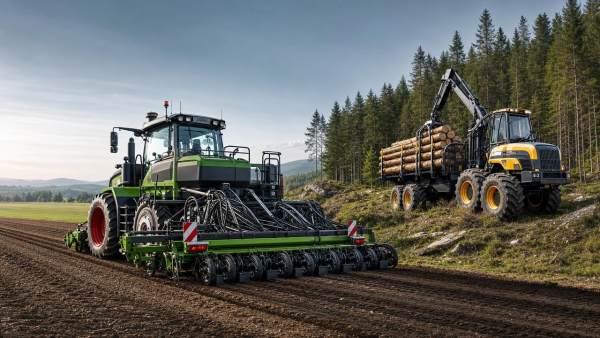
For business evaluators, identifying reliable Agri & Forestry machinery manufacturers means looking beyond product catalogs to the signals that reflect true quality.
From engineering consistency and compliance standards to supply chain transparency and after-sales support, the right indicators reveal long-term value and procurement confidence.
In global primary industries, machinery failure affects yield, labor efficiency, fuel use, and regulatory exposure. Quality signals must therefore be judged within real operating scenarios.
Why scenario-based evaluation matters for Agri & Forestry machinery manufacturers
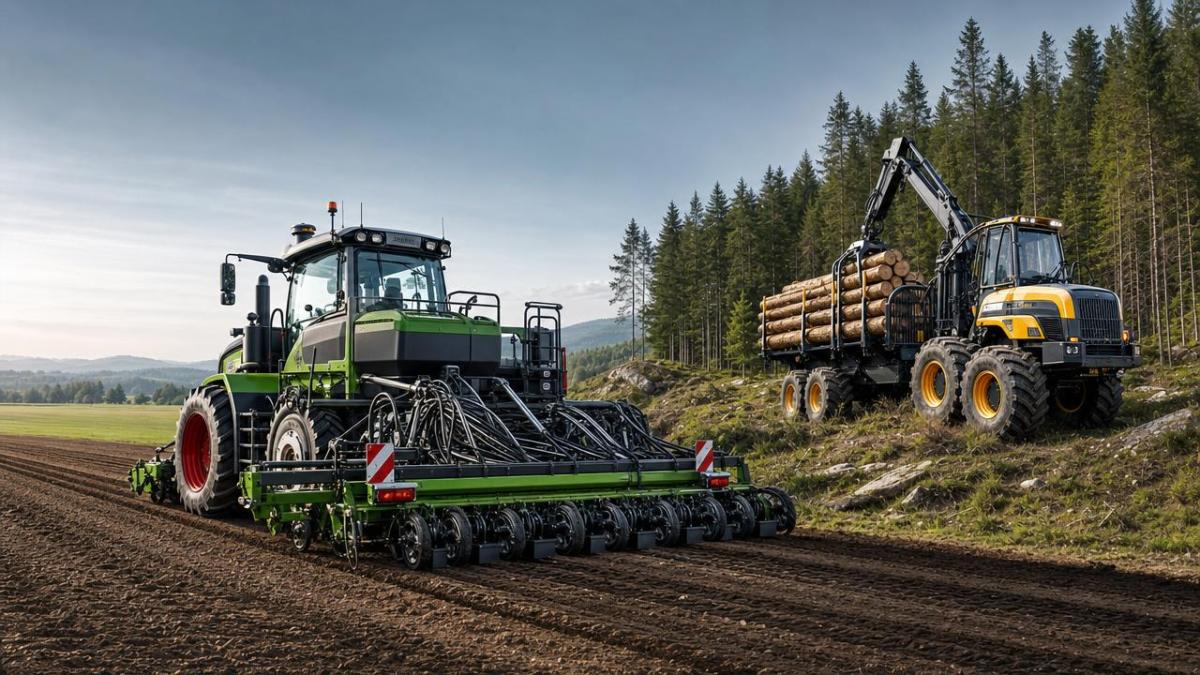
Not every machine faces the same pressure. A forestry loader in steep terrain requires different quality proof than a sprayer used across large, flat fields.
This is why strong Agri & Forestry machinery manufacturers are evaluated by application fit, not marketing claims alone.
The most useful signals appear where equipment meets soil, timber, weather, operators, spare parts, and compliance documentation.
A machine can look advanced on paper yet underperform if hydraulic tolerances drift, replacement parts vary, or local service coverage is weak.
Scenario-based review reduces these blind spots and helps separate capable OEMs from volume-driven suppliers.
Field crop operations: signals that indicate dependable quality
In broadacre farming, uptime and repeatability matter more than visual design. Equipment must perform across long hours, changing loads, and seasonal peaks.
For this scenario, reliable Agri & Forestry machinery manufacturers usually show several measurable indicators.
Engineering consistency under continuous use
Look for stable engine performance curves, documented fuel consumption ranges, and transmission durability records under commercial operating conditions.
Weld quality, frame fatigue testing, and corrosion treatment also matter because seasonal storage and fertilizer exposure accelerate material stress.
Precision and calibration support
Seed drills, sprayers, and harvest systems need calibration accuracy. Quality manufacturers provide test reports, software update procedures, and clear tolerance guidance.
- Repeatable application rates across field sections
- Sensor compatibility with modern farm data systems
- Clear maintenance intervals for wear components
- Documented spare part interchangeability
Forestry and rugged terrain: where build integrity becomes the main signal
Forestry operations expose machines to shock loads, mud, debris, inclines, and remote maintenance conditions. Product brochures reveal little in this setting.
The best Agri & Forestry machinery manufacturers prove quality through structural durability and serviceability in harsh terrain.
Frame, hydraulics, and protection systems
Quality signals include reinforced booms, guarded hoses, contamination-resistant hydraulic systems, and cab protection designed for branch and debris impact.
Also review axle ratings, articulation design, and brake performance on slopes. These are practical indicators of engineering seriousness.
Remote repair readiness
Forestry downtime becomes expensive when sites are isolated. High-quality manufacturers simplify diagnostics and reduce dependence on specialized tools.
Parts manuals, multilingual technical documentation, and modular component replacement are strong signals in this scenario.
Export and regulated markets: compliance signals that separate serious suppliers
When equipment crosses borders, quality is no longer only mechanical. Documentation quality becomes part of product quality.
Leading Agri & Forestry machinery manufacturers demonstrate traceability, emissions compliance, safety conformity, and controlled production records.
What to verify before shortlisting
- CE, EPA, or market-specific emissions documentation
- Quality management evidence such as ISO-aligned systems
- Serial-level traceability for major assemblies
- Material and component sourcing transparency
- Operator safety manuals and warning label consistency
Suppliers that hesitate on technical files often create downstream risks in customs clearance, warranty disputes, and local registration processes.
How scenario needs differ across agricultural and forestry equipment applications
Different operating environments require different evaluation priorities. The table below helps compare what quality means in practice.
Practical signals to use when comparing Agri & Forestry machinery manufacturers
A good comparison process uses objective checks rather than subjective impressions. These signals are practical across most equipment categories.
- Review factory process control, not only finished machines.
- Ask for test data from real operating loads.
- Check lead times for critical components and consumables.
- Evaluate the quality of manuals, diagrams, and fault codes.
- Confirm whether service support exists in target regions.
- Validate consistency across production batches.
The strongest Agri & Forestry machinery manufacturers usually perform well across engineering, compliance, and support at the same time.
Scenario-fit recommendations before making a final decision
Selection becomes easier when evaluation steps are tied to the intended use case rather than generalized brand reputation.
- For high-hour farming use, prioritize drivetrain endurance and calibration service.
- For forestry use, prioritize guarding, hydraulic cleanliness, and field repair design.
- For regulated markets, prioritize documentation depth and serial traceability.
- For multi-site operations, prioritize parts availability and training materials.
This approach improves comparison accuracy and lowers the chance of selecting machines that fit one test condition but fail in daily use.
Common mistakes when judging quality signals
One common error is overvaluing visible features while ignoring manufacturing discipline. Paint finish does not confirm steel treatment or component reliability.
Another mistake is focusing only on purchase price. Lower initial cost may hide weak spare part networks or inconsistent assembly quality.
A third error is treating all Agri & Forestry machinery manufacturers as comparable across every application. Many suppliers are strong only in specific use environments.
Ignoring documentation quality is also risky. In modern industrial procurement, traceability and support records are operational assets, not administrative extras.
What to do next when evaluating Agri & Forestry machinery manufacturers
Start with the operating scenario, then define the critical failure points for that environment. This creates a clear shortlist framework.
Next, request technical evidence that matches those risks, including test data, compliance files, service coverage, and replacement part plans.
Finally, compare Agri & Forestry machinery manufacturers using a weighted scorecard based on durability, documentation, support, and total operating impact.
In a market shaped by regulation, climate pressure, and tighter margins, the best quality signal is consistent performance supported by verifiable proof.
Related Intelligence
- Heavy Agri MachineryMachinery Supplier Verification: A Due-Diligence Checklist for Overseas BuyersMachinery supplier verification made practical: use this due-diligence checklist to assess quality, compliance, export readiness, and after-sales support before buying overseas.
- Heavy Agri MachineryHow to Assess Heavy Agricultural Machinery Producers for Dealer Support and Parts AvailabilityHeavy agricultural machinery producers: learn how to assess dealer expertise, critical parts availability, service response, and downtime risk before you buy.
- Heavy Agri MachineryCan Agricultural Equipment Be Retrofitted for Precision Agriculture?Can agricultural equipment be retrofitted for precision agriculture? Discover practical upgrades, compatibility checks, costs, and smarter ways to boost farm efficiency.
The Morning Broadsheet
Daily chemical briefings, market shifts, and peer-reviewed summaries delivered to your terminal.
