

The Authority in Global Agricultural Chemistry & Bio-Resources
Agri & Forestry market shifts affecting equipment sourcing
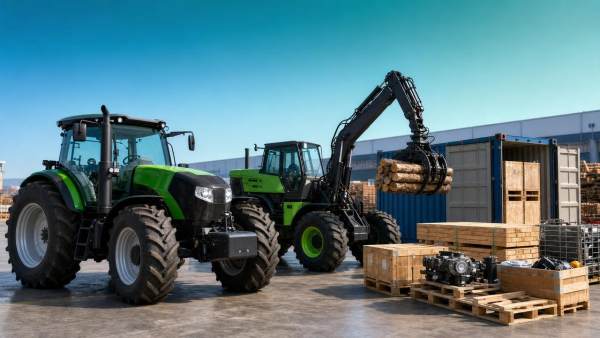
Agri & Forestry market shifts are reshaping how dealers, distributors, and agents source machinery, parts, and supplier partnerships across global supply chains. From pricing volatility and regulatory pressure to changing demand in primary industries, understanding these movements is essential for protecting margins and securing reliable inventory. This article examines the key sourcing challenges and emerging opportunities influencing equipment procurement decisions today.
Why are Agri & Forestry sourcing decisions becoming more complex?
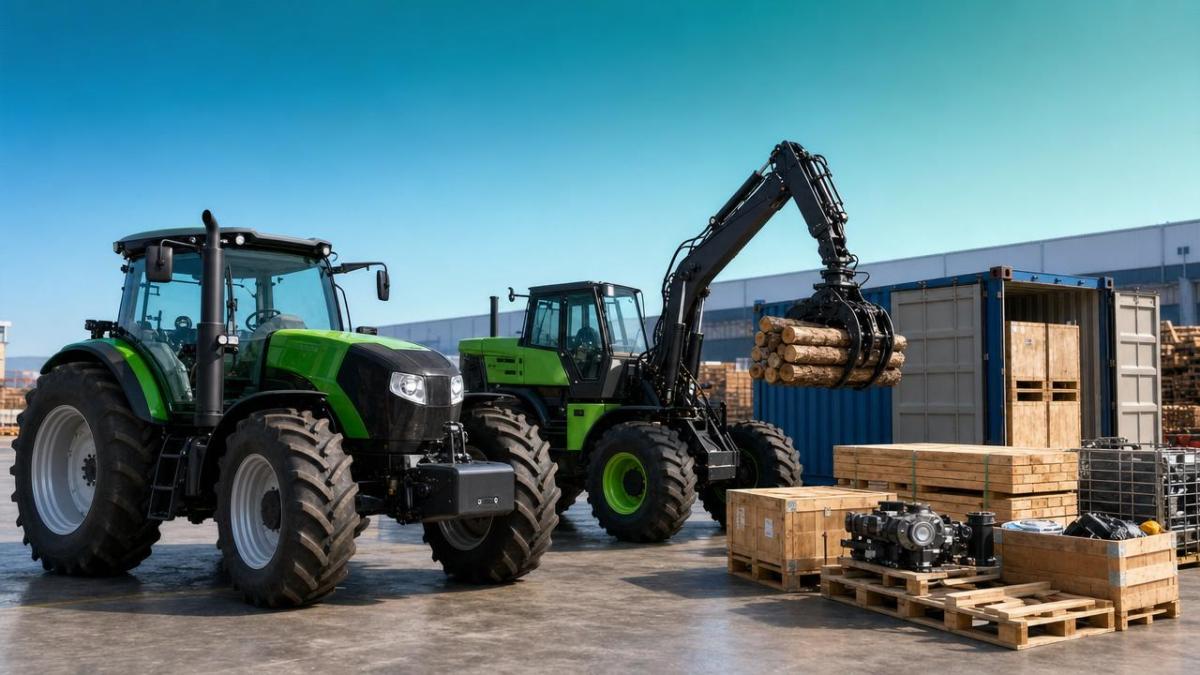
For distributors in the Agri & Forestry space, sourcing is no longer a simple price-and-delivery exercise. Inventory planning now sits at the intersection of commodity cycles, rural infrastructure investment, emissions policy, labor shortages, and shifting farm economics.
A dealer may face rising demand for compact forestry equipment in one region, while another market delays purchases because financing costs remain high. At the same time, spare parts lead times can widen because upstream castings, hydraulics, electronics, or transport capacity tighten unexpectedly.
These conditions matter because channel partners carry the operational risk. If they buy too early, capital is trapped. If they buy too late, customers turn to faster suppliers. In Agri & Forestry distribution, timing often matters as much as unit cost.
- Seasonality compresses the selling window, especially for planting, harvesting, land clearing, irrigation support, and timber handling equipment.
- Equipment specifications vary by soil type, terrain, crop system, forest density, climate, and operator skill level.
- Compliance now affects procurement more directly, including engine emissions, safety documentation, import declarations, and traceability of components.
- End users increasingly ask about uptime support, fuel efficiency, digital monitoring, and parts availability before placing orders.
This is where market intelligence becomes commercially useful. AgriChem Chronicle helps channel partners interpret cross-sector signals from primary industries, chemicals, processing, and machinery, so sourcing decisions are based on supply realities rather than sales assumptions alone.
Which market shifts are influencing Agri & Forestry equipment procurement right now?
Several current shifts are changing how distributors evaluate suppliers, product lines, and replenishment timing. The pressure does not come from one source. It comes from overlapping movements that affect both cost and continuity.
The table below highlights major Agri & Forestry sourcing drivers and the practical implications for dealers, distributors, and agents managing inventory risk.
The key lesson is that Agri & Forestry procurement should be treated as a portfolio decision. A sourcing plan must consider finished machines, wear parts, service kits, compliance paperwork, and supplier resilience together, not as separate purchasing tasks.
The hidden pressure point: margin erosion after the sale
Many channel partners focus heavily on the purchase price of tractors, loaders, harvest support machines, trailers, chippers, or forestry attachments. Yet margin losses often emerge later through emergency freight, delayed commissioning, service call-backs, and low first-fill parts coverage.
In volatile Agri & Forestry markets, the cheapest quotation can become the most expensive sourcing decision if support documentation, replacement parts, and warranty response are not clearly defined at the start.
What should dealers compare before choosing an Agri & Forestry supplier?
A disciplined comparison framework helps distributors avoid reactive buying. Supplier evaluation should move beyond catalog breadth and headline discount. The more fragmented the market becomes, the more important structured comparison becomes.
The table below provides a practical Agri & Forestry supplier comparison model for channel buyers reviewing OEMs, trading companies, or regional manufacturing partners.
This comparison approach works particularly well for mixed portfolios where Agri & Forestry dealers serve farms, contractors, estate managers, and wood processing operators at the same time. It creates a more balanced view of value than unit price alone.
A practical shortlist checklist
- Verify whether the supplier can support both current demand and seasonal spikes without changing delivery commitments mid-cycle.
- Check whether technical files are usable by your service team, not just sufficient for marketing brochures.
- Ask for spare parts planning logic, including critical items, replenishment intervals, and failure-sensitive components.
- Clarify warranty boundaries, labor claims, and escalation routes before signing supply terms.
How do compliance and standards affect Agri & Forestry sourcing?
Compliance is increasingly shaping equipment sourcing strategy. For Agri & Forestry distributors, standards are not abstract legal details. They influence border clearance, customer acceptance, installation conditions, and future resale potential.
Requirements differ by region and product category, but common concerns include engine emission alignment, operator safety systems, environmental handling rules, labeling, and traceable technical records. If documentation is incomplete, the sales cycle can stall even when the machine itself is available.
Key compliance questions to ask before ordering
- Does the machine configuration match the destination market’s emissions and safety expectations, or is it only suitable for another region?
- Are operating manuals, parts lists, and warning labels available in the required language and format for the target market?
- Can the supplier provide traceable manufacturing and inspection records if customs authorities or institutional buyers request them?
- Are hydraulic fluids, fuel systems, and waste handling instructions aligned with local environmental practices?
AgriChem Chronicle is particularly relevant here because its editorial scope spans regulated sectors beyond machinery alone. That cross-disciplinary perspective helps distributors understand how documentation rigor, audit readiness, and supply chain transparency now influence procurement in primary industries.
Which sourcing models work best in different Agri & Forestry scenarios?
Not every market requires the same sourcing model. A distributor serving broad-acre agriculture will often buy differently from an agent focused on specialty crops or forestry contractors. Matching the sourcing structure to the use case can improve turnover and reduce dead stock.
Scenario-based sourcing choices
The table below maps common Agri & Forestry sales environments to suitable procurement approaches, helping channel partners decide when to hold stock, when to configure to order, and when to prioritize service kits.
The most effective distributors often combine models. They hold stock where demand is predictable, configure where application complexity is high, and invest in spare parts where service continuity determines customer retention.
How can distributors control cost without weakening supply resilience?
Cost discipline in Agri & Forestry sourcing should not mean buying the lowest quoted unit. It means lowering total commercial exposure across procurement, transport, service, and delayed revenue. Smart cost control is selective, not indiscriminate.
Where savings are usually real
- Reducing SKU duplication across similar machine families can lower inventory fragmentation and improve parts turnover.
- Standardizing service kits for common maintenance intervals can reduce emergency procurement and technician downtime.
- Aligning container loading plans with seasonal demand can reduce freight inefficiency without increasing stock obsolescence.
- Negotiating clearer reorder triggers and forecast updates may be more valuable than pushing for a marginally lower unit price.
Where cost-cutting often backfires
Low-cost sourcing becomes risky when it sacrifices technical support, parts traceability, or documentation completeness. In Agri & Forestry distribution, one delayed repair during peak field use can damage both margin and customer loyalty more than an initial price difference ever would.
This is why procurement teams increasingly need market reporting that covers not only machinery movement, but also chemicals, feed inputs, farm processing trends, and export conditions. Those adjacent signals often explain whether end-user equipment demand will accelerate or soften.
Common Agri & Forestry sourcing mistakes and how to avoid them
Mistake 1: buying for average demand instead of seasonal peaks
Average demand figures can look safe on paper, but Agri & Forestry sales rarely follow a smooth monthly pattern. Procurement should reflect the narrow periods when customer decisions concentrate and uptime becomes non-negotiable.
Mistake 2: evaluating machines without evaluating parts support
A machine line may appear competitive, yet fail commercially because wear parts, hydraulic components, filters, or electronic modules are difficult to replenish. Parts logic should be reviewed before product launch, not after the first breakdown.
Mistake 3: overlooking documentation quality in export-oriented markets
Incomplete manuals, vague technical files, and inconsistent declarations slow customs clearance, installation, and customer training. Documentation is part of the product in modern Agri & Forestry sourcing.
Mistake 4: treating all suppliers as interchangeable
Some suppliers are strong in standard units but weak in engineered applications. Others can support niche forestry or processing requirements but are less suited to high-volume replenishment. Match the supplier profile to the route-to-market strategy.
FAQ: what do distributors ask most about Agri & Forestry sourcing?
How should a distributor forecast Agri & Forestry demand when markets are unstable?
Use a layered forecast. Start with historical sell-through, then adjust for crop economics, timber activity, financing conditions, weather disruption, and competitor inventory behavior. Forecasting improves when channel teams combine field intelligence with broader market reporting rather than relying only on prior-year volume.
What matters more: machine price or parts availability?
For most channel businesses, parts availability has a stronger effect on lifetime margin. A slightly lower machine cost can be erased quickly by service delays, warranty friction, and customer churn if essential parts are difficult to access.
How much documentation should be requested before placing an order?
Request enough to validate technical fit, regulatory alignment, installation readiness, and aftersales support. At minimum, that usually includes specifications, parts references, operating instructions, and relevant compliance documents for the destination market.
Are alternative sourcing regions worth considering for Agri & Forestry equipment?
Yes, but only when the alternative also meets documentation, service, and consistency requirements. Regional diversification can reduce concentration risk, yet it should not create new problems in training, spare parts compatibility, or compliance handling.
Why market intelligence from AgriChem Chronicle matters for sourcing strategy
Agri & Forestry procurement is increasingly connected to broader primary industry movements. Demand for machinery can change because farm profitability shifts, biochemical inputs become constrained, processing capacity expands, or trade rules alter material flows.
AgriChem Chronicle brings value because it connects those signals across agricultural, biochemical, and processing markets. Its coverage helps distributors interpret not just what equipment is available, but why demand, compliance risk, and sourcing conditions are changing around it.
For dealers, distributors, and agents, that means better timing on stock commitments, better supplier screening, and stronger conversations with institutional buyers who increasingly expect transparency, technical precision, and dependable route-to-market support.
Why choose us for Agri & Forestry sourcing insight and next-step support?
If your team is reviewing Agri & Forestry supply options, AgriChem Chronicle can support more informed decisions with sector-specific market intelligence and procurement-oriented analysis. Our editorial focus across machinery, fine chemicals, processing, and regulated supply chains is designed for buyers who need more than surface-level market commentary.
You can consult with us on practical issues that affect channel performance, including supplier comparison criteria, product selection logic, delivery cycle assessment, documentation expectations, certification-related questions, spare parts planning, and quote evaluation in volatile market conditions.
If you are preparing a sourcing review, entering a new regional market, or refining an equipment portfolio for dealers and agents, contact AgriChem Chronicle to discuss the parameters that matter: application fit, compliance exposure, lead-time risk, service readiness, and procurement strategy aligned with current Agri & Forestry market shifts.
Related Intelligence
- Heavy Agri MachineryMachinery Supplier Verification: A Due-Diligence Checklist for Overseas BuyersMachinery supplier verification made practical: use this due-diligence checklist to assess quality, compliance, export readiness, and after-sales support before buying overseas.
- Heavy Agri MachineryHow to Assess Heavy Agricultural Machinery Producers for Dealer Support and Parts AvailabilityHeavy agricultural machinery producers: learn how to assess dealer expertise, critical parts availability, service response, and downtime risk before you buy.
- Heavy Agri MachineryCan Agricultural Equipment Be Retrofitted for Precision Agriculture?Can agricultural equipment be retrofitted for precision agriculture? Discover practical upgrades, compatibility checks, costs, and smarter ways to boost farm efficiency.
The Morning Broadsheet
Daily chemical briefings, market shifts, and peer-reviewed summaries delivered to your terminal.
