

The Authority in Global Agricultural Chemistry & Bio-Resources
Russia's USB Drive Sales Surge, Boosting Local Storage Adoption in Smart Greenhouse Controllers
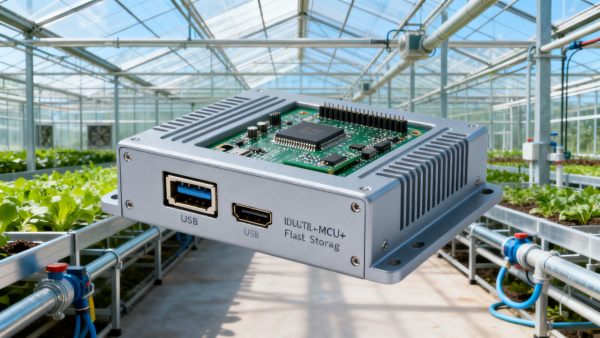
Russian demand for localized data storage solutions has surged, with USB drive sales hitting 9.05 million units in 2025 — a 23% year-on-year increase — according to Access International. This shift is accelerating the adoption of domestically sourced embedded storage modules in Smart Greenhouse environmental controllers, particularly those integrating edge computing capabilities. The trend reflects broader supply chain recalibrations amid evolving import substitution policies and infrastructure resilience priorities.
Event Overview
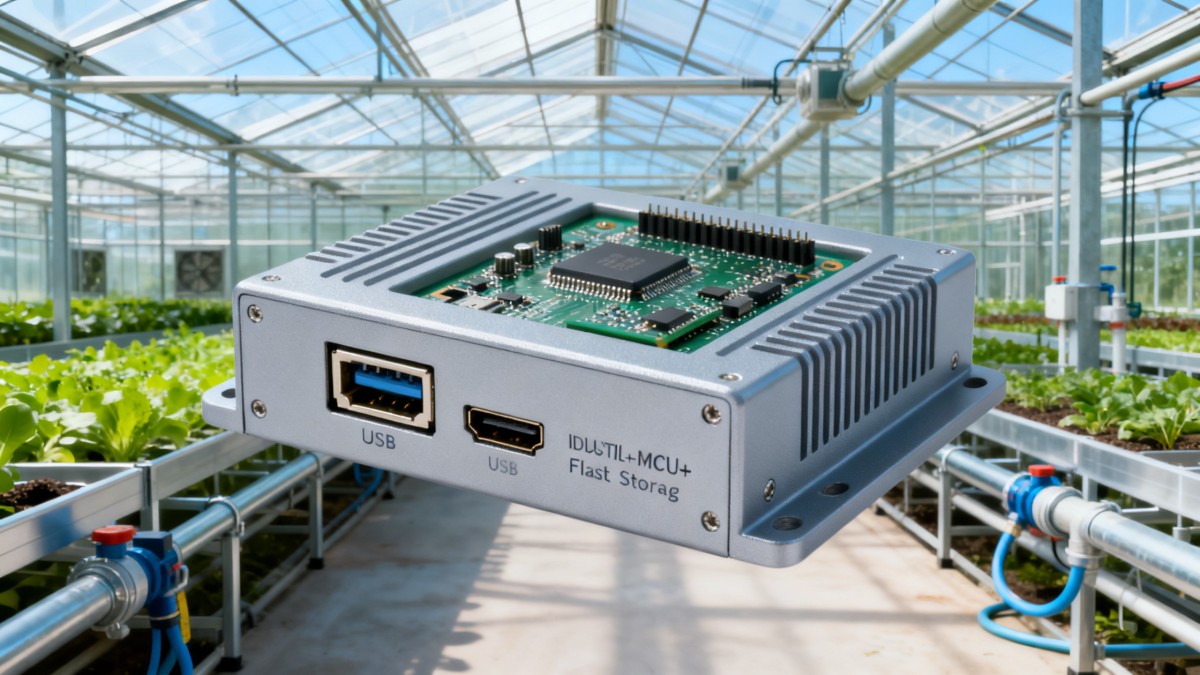
According to Access International, Russia’s USB drive market recorded 9.05 million units sold in 2025, up 23% from 2024. Growth was driven primarily by rising demand for local data storage across industrial IoT applications. As a result, system integrators in Russia have begun placing bulk orders with Chinese suppliers of MCU+Flash module solutions for integration into Smart Greenhouse controllers — devices that manage climate, irrigation, and nutrient delivery via on-device edge computation.
Industries Affected
Direct Trade Enterprises
Export-oriented electronics distributors and cross-border B2B platforms focused on Russia are experiencing heightened order volume for embedded storage modules (e.g., ARM-based MCU + SPI NAND/SD card combos). Impact manifests in faster inventory turnover, tighter logistics scheduling, and increased need for customs compliance support — especially regarding dual-use technology classifications under Russian import regulations.
Raw Material Procurement Firms
Companies sourcing NAND flash wafers, controller ICs, or PCB substrates for module assembly face amplified demand signals from downstream module makers. While no immediate raw material shortage is reported, procurement teams must now prioritize long-term wafer allocation agreements with foundries in China and Southeast Asia to secure yield stability amid concurrent global AI-chip demand pressures.
Manufacturing Enterprises
OEM/ODM manufacturers producing Smart Greenhouse controllers — especially those previously reliant on Western-branded eMMC or microSD solutions — are redesigning firmware and hardware interfaces to accommodate domestic Flash+MCU stacks. This requires validation against Russian GOST R IEC 62443-4-2 cybersecurity standards for industrial control systems, extending time-to-market by an estimated 6–8 weeks per product revision.
Supply Chain Service Providers
Third-party logistics providers, certification consultants, and localization testing labs report growing requests for Russia-specific compliance packaging (Cyrillic labeling), electromagnetic compatibility (EMC) retesting, and GOST R certification support. Notably, lead times for GOST-accredited lab slots have extended from 4 to 10 weeks since Q3 2025, indicating capacity constraints in regional conformity assessment infrastructure.
Key Considerations and Recommended Actions
Evaluate Module Certification Readiness Early
Suppliers targeting Russian Smart Greenhouse deployments should verify whether their MCU+Flash modules hold valid GOST R 007.014–2022 (information security) and GOST R 50464–2023 (electromagnetic compatibility) certifications — not just CE or FCC marks. Non-certified modules risk customs detention or post-import rejection during site audits.
Strengthen Local Technical Support Capacity
Russian system integrators increasingly require on-site firmware debugging, bootloader customization, and OTA update protocol alignment. Exporters lacking in-country engineering representation may see reduced win rates in competitive tenders — particularly for municipal greenhouse modernization projects funded under Russia’s 2025 Agro-Digitalization Program.
Monitor Dual-Use Classification Updates
The Russian Ministry of Industry and Trade updated its List of Controlled Goods in November 2025 to include certain high-density NAND configurations (>128 GB) paired with programmable logic. Exporters must reassess HS code classifications and obtain prior licensing where applicable — even for modules marketed solely for agricultural automation.
Editorial Perspective / Industry Observation
Observably, this is not merely a substitution cycle driven by sanctions — it reflects a structural pivot toward edge-resilient architecture in critical agri-tech infrastructure. Analysis shows that Russian greenhouse operators prioritize offline operability over cloud dependency, making local storage performance (e.g., write endurance, thermal tolerance, power-loss recovery) more decisive than raw capacity. Current more relevant metrics include P/E cycle durability at −20°C to +60°C ambient and deterministic boot-time latency — criteria rarely emphasized in mainstream consumer USB benchmarks.
Conclusion
This development signals a maturing phase in Russia’s industrial IoT localization strategy: from component-level import substitution to system-level interoperability design. For global suppliers, engagement must shift from transactional exporting to co-engineering partnerships — especially where firmware abstraction layers, real-time OS integration, and field-deployable diagnostics are concerned. A narrow focus on hardware replacement risks overlooking deeper architectural dependencies emerging in next-generation controlled-environment agriculture.
Source Attribution
Data sourced from Access International, December 2025 edition (publicly available industry report). Regulatory references drawn from official publications of the Russian Federal Agency for Technical Regulating and Metrology (Rosstandart) and Ministry of Industry and Trade (Minpromtorg), as of 31 December 2025. Ongoing monitoring is recommended for updates to GOST R IEC 62443-4-2 implementation guidelines and revisions to the Unified List of Dual-Use Goods (effective Q1 2026).
Related Intelligence
- Smart GreenhouseGreenhouse Equipment for Vertical Farming: Choosing Lighting and VentilationChoose greenhouse equipment for vertical farming with confidence. Compare lighting, airflow, and moisture control to improve crop uniformity and manage costs. Explore the guide.
- Smart GreenhouseSelecting Greenhouse Propagation Equipment for Hot, Humid Southeast Asian NurseriesGreenhouse propagation equipment Southeast Asia: discover how to select resilient irrigation, ventilation, benches, and automation for hot, humid nurseries.
- Smart GreenhouseWhat Are the Biggest Challenges in Agri-Tech Adoption in 2026?What are the biggest challenges in agri tech adoption for 2026? Explore cost, data, connectivity, skills, compliance, and ROI barriers.
The Morning Broadsheet
Daily chemical briefings, market shifts, and peer-reviewed summaries delivered to your terminal.
