

The Authority in Global Agricultural Chemistry & Bio-Resources
India Fast-Tracks Smart Greenhouse Clearance

On July 7, 2026, India’s Ministry of Agriculture & Farmers Welfare launched a new certification fast-track channel for selected smart greenhouse equipment through the Agri-Tech FastTrack Portal. The change matters for exporters, import-side buyers, certification teams, logistics providers, and delivery planners because it links compliance with IS 17928:2026 to faster customs handling, including document pre-verification and port-level inspection exemption for certified Chinese manufacturers. For companies active in Smart Greenhouse control systems, environmental sensors, and automated irrigation units, this is less a routine administrative update than a rule change that can affect lead time, documentation strategy, and shipment planning.
A New Compliance Route Is Now in Operation
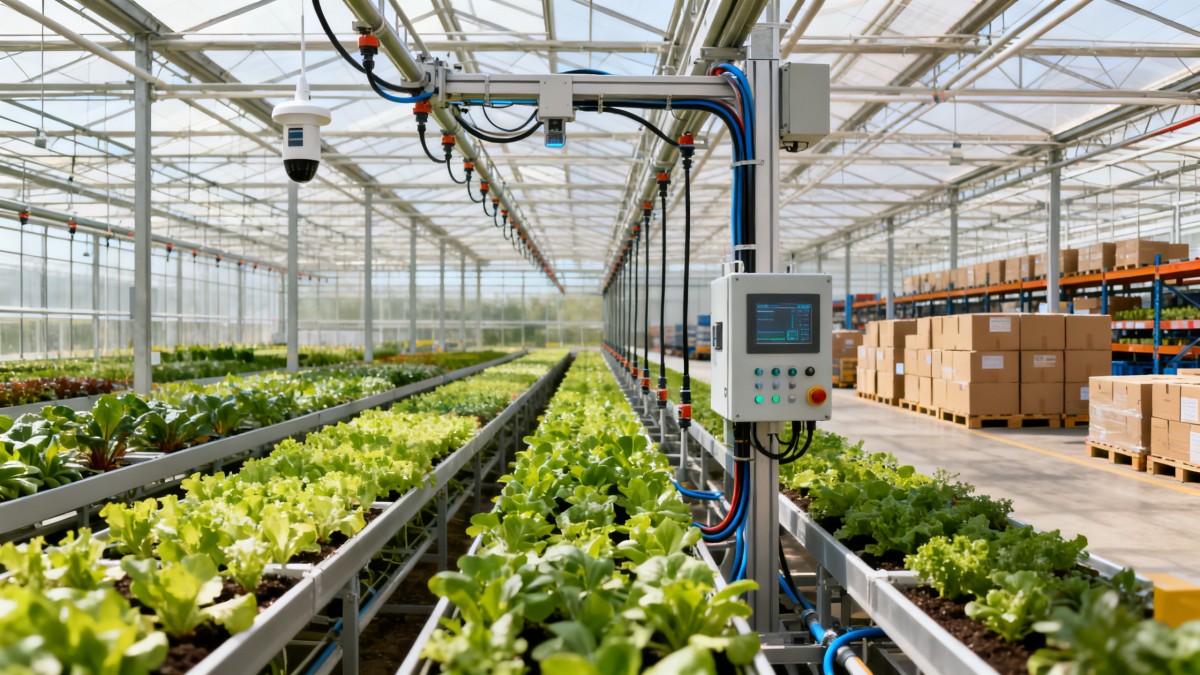
The confirmed change is that the Ministry of Agriculture & Farmers Welfare (MoA&FW) put the Agri-Tech FastTrack Portal online on July 7, 2026. According to the provided event summary, the portal opens a pre-screening fast-track channel for Smart Greenhouse control systems, environmental sensors, and automated irrigation units that meet IS 17928:2026.
The same summary states that certified Chinese manufacturers can use document pre-checks and obtain exemption from port inspection. It also states that average customs clearance time can be reduced to within 72 hours, representing an 83% acceleration compared with the previous BIS process. The first batch of certified companies has already been published on the official website.
Where the Operational Impact Is Likely to Appear First
Export planning moves closer to certification status
From an industry perspective, exporters of covered Smart Greenhouse products are likely to be affected first because the new channel directly ties shipment efficiency to whether a manufacturer has obtained the relevant certification pathway. The practical impact is likely to appear in pre-shipment review, customs file preparation, and promised delivery windows. What deserves closer attention is whether internal export documentation, technical files, and product scope descriptions are prepared in a way that aligns clearly with IS 17928:2026 and the portal’s pre-screening logic.
Procurement teams may start screening suppliers differently
For buyers and sourcing teams, the rule change may influence supplier selection and order scheduling. If a supplier is already included in the first published batch or later approved under the same route, that status may become relevant in comparing delivery reliability and import handling expectations. The impact is less about product demand by itself and more about whether procurement teams now treat certification status as part of supplier qualification, contracting, or shipment timing decisions.
Certification and testing functions become more central to delivery execution
Certification-related service providers and internal compliance teams may see the most immediate workload shift. Analysis shows that once customs speed is linked to prior approval, technical review no longer sits only in a regulatory silo; it starts to affect order execution and logistics performance. The key business link is that standard conformity, supporting records, and documentary consistency may now shape whether a shipment can benefit from the accelerated route.
Supply chain and after-sales teams need tighter traceability
Logistics providers, distributors, and after-sales service teams may also be affected because shorter clearance windows can compress downstream installation and service schedules. Observably, when border handling becomes faster for approved goods, the pressure often shifts to document handoff, model identification, and product traceability across warehousing, delivery, and service support. In this case, companies should pay attention to whether the shipped configuration, technical documentation, and certified scope remain fully aligned.
What Companies Should Check Now
Verify whether the product scope truly falls within the fast-track channel
Companies should first review whether their products fit the covered categories exactly as described in the provided event summary: Smart Greenhouse control systems, environmental sensors, and automated irrigation units. Where product portfolios are mixed or modular, the practical issue is not only product naming but also whether the exported configuration corresponds clearly to the scope recognized under IS 17928:2026.
Re-examine document packs before shipment booking
Because the reported benefit includes document pre-verification, businesses should closely review the completeness and consistency of technical documents, compliance records, and shipment paperwork. Analysis shows that faster border treatment usually depends on cleaner front-end files, so companies should treat document readiness as an execution issue, not only a regulatory formality. The provided information does not include detailed document requirements, which means firms should continue monitoring official wording and implementation instructions.
Track the published certification list and any later updates
The first batch of certified companies has already been announced on the official website, according to the event summary. That makes the published list an immediate reference point for exporters, buyers, and channel partners. What deserves closer attention is not only who appears on the list, but also whether later updates clarify product coverage, recognition conditions, or operational treatment at customs and ports.
Adjust delivery commitments carefully rather than automatically
The reported average clearance time of within 72 hours is commercially meaningful, but companies should avoid treating that figure as a blanket guarantee for every shipment scenario. Observably, execution outcomes can depend on how consistently the certification route is applied in practice, how documentation is reviewed, and whether transaction-specific details match the approved scope. For that reason, sales teams and supply chain planners should reflect the new pathway in delivery planning, while keeping room for verification during early implementation.
Why This Looks Like an Execution Signal, Not Just a Headline
Analysis shows that this development is more appropriately understood as an operational rule change than as a general policy statement. The reason is that the event summary points to a live portal, a named technical standard, a defined product scope, a specific customs facilitation mechanism, and a published first batch of certified manufacturers. Together, those elements suggest an execution-oriented move rather than a purely directional announcement.
At the same time, it is still too early to treat the entire framework as fully settled in every practical detail. Observably, the market will still need to watch how consistently the fast-track process is applied, whether supplementary compliance interpretations emerge, and how procurement documents or importer requirements respond. In that sense, the development is both a landed change and a continuing implementation story.
How the Market Should Read the Change
The immediate significance of this update is that compliance with IS 17928:2026 is now tied more directly to customs efficiency for covered Smart Greenhouse equipment entering India under the described route. For exporters and their partners, the issue is no longer limited to certification as a market-access formality; it may also shape shipment timing, supplier competitiveness, and operational planning.
A balanced reading is that the news should currently be understood as a concrete implementation signal with direct trade and delivery relevance, while important details of market execution still warrant close observation. Companies do not need to assume a broad sector-wide outcome beyond the provided facts, but they do need to treat the new route as a practical compliance and supply-chain development.
Basis of This Article and What Still Needs Verification
This article is based on the user-provided news title, event date, and event summary. For developments of this kind, the most relevant source types usually include official ministry announcements, regulator releases, customs or trade authority notices, industry association updates, standard-setting documents, and reporting by established trade or sector media.
No specific official source link was provided in the input, so the exact official publication path still needs to be verified on an ongoing basis. It is also necessary to continue watching for further detail on implementation rules, certification interpretation, tender or procurement document changes, industry feedback, and how companies actually execute under the new portal arrangement.
Related Intelligence
- Smart GreenhouseGreenhouse Equipment for Vertical Farming: Choosing Lighting and VentilationChoose greenhouse equipment for vertical farming with confidence. Compare lighting, airflow, and moisture control to improve crop uniformity and manage costs. Explore the guide.
- Smart GreenhouseSelecting Greenhouse Propagation Equipment for Hot, Humid Southeast Asian NurseriesGreenhouse propagation equipment Southeast Asia: discover how to select resilient irrigation, ventilation, benches, and automation for hot, humid nurseries.
- Smart GreenhouseWhat Are the Biggest Challenges in Agri-Tech Adoption in 2026?What are the biggest challenges in agri tech adoption for 2026? Explore cost, data, connectivity, skills, compliance, and ROI barriers.
The Morning Broadsheet
Daily chemical briefings, market shifts, and peer-reviewed summaries delivered to your terminal.
