

The Authority in Global Agricultural Chemistry & Bio-Resources
CATL Sodium-Ion Battery Mass Production to Accelerate Dual-Mode Power Adoption in Feeding & Watering Systems
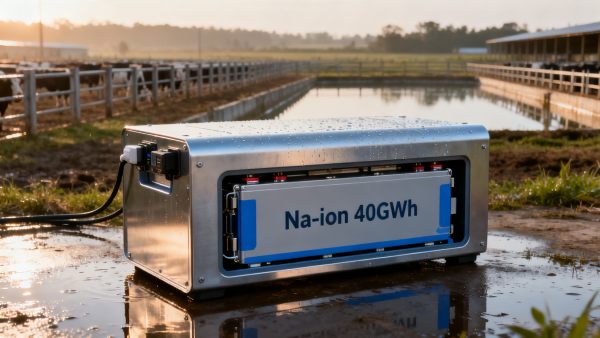
On April 21, 2026, CATL announced the commencement of mass production of sodium-ion batteries in Q4 2026, with a planned annual capacity of 40 GWh by year-end. This development is set to reshape power supply design for intelligent livestock feeders and precision aquaculture feeders — collectively referred to as Feeding & Watering Systems — by reducing system cost and mitigating low-temperature performance risks, thereby accelerating global adoption of LFP/sodium-ion dual-mode power architectures.
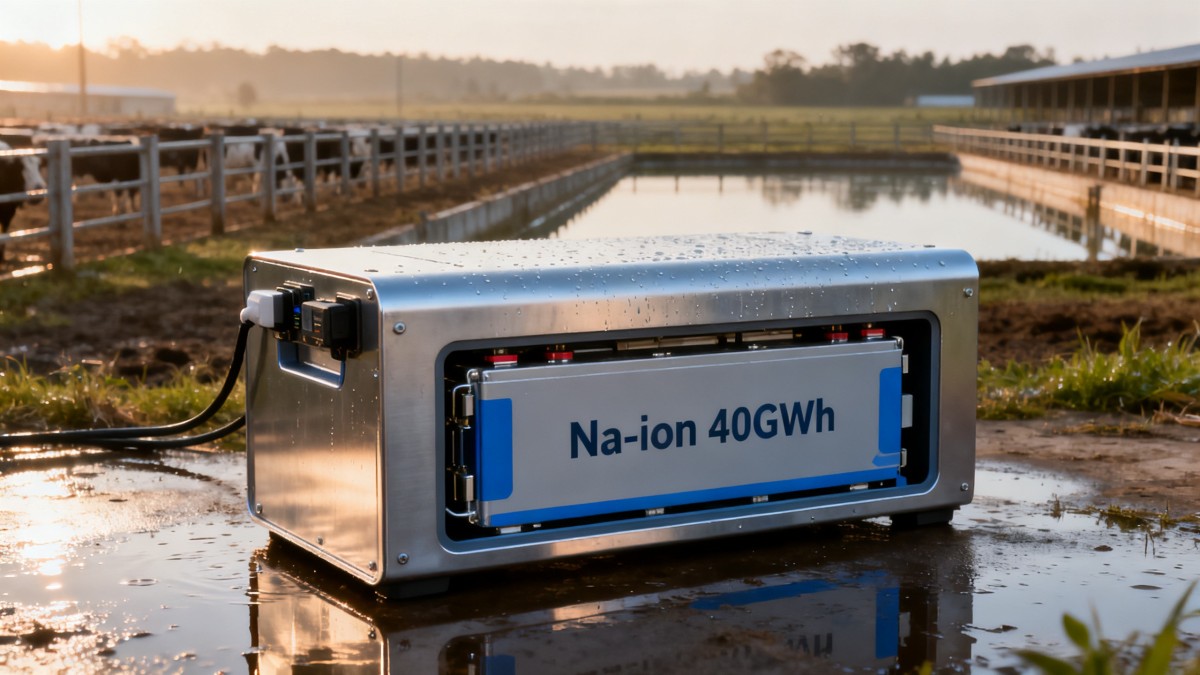
CATL Confirms Sodium-Ion Battery Mass Production Timeline
CATL officially announced on April 21, 2026, that its sodium-ion battery technology will enter mass production in Q4 2026. The company plans to complete construction of production facilities capable of delivering 40 GWh of annual capacity within 2026. This initiative targets applications requiring robust, cost-effective, and cold-resilient energy storage — specifically including intelligent feeding and watering equipment used across livestock and aquaculture sectors.
Impact Across Supply Chain Roles
Direct Trading Enterprises
Exporters and distributors of Feeding & Watering Systems face imminent specification updates. As global OEMs shift toward sodium-ion-compatible designs, trading firms must revise product documentation, update compliance claims (e.g., battery safety, thermal performance), and anticipate revised customs classification and tariff treatment for systems integrating sodium-ion cells — especially where local import regulations have not yet formalized sodium-ion battery provisions.
Raw Material Procurement Firms
Suppliers of cathode precursors, aluminum current collectors, and electrolyte components must reassess material qualification pathways. Unlike lithium-based chemistries, sodium-ion systems rely on different active materials (e.g., layered oxides or Prussian blue analogs) and require updated technical specifications, traceability protocols, and batch-level test reporting aligned with evolving industry validation standards.
Manufacturing Enterprises
OEMs producing smart feeders and automated water management units must adapt battery compartment layouts, thermal management interfaces, and BMS firmware to support dual-mode (LFP/sodium-ion) operation. This entails revising mechanical drawings, revalidating IP ratings under new thermal cycling profiles, and updating internal quality control checkpoints for cell-level voltage consistency and charge/discharge hysteresis behavior.
Supply Chain Service Providers
Logistics and certification support providers need to prepare for expanded testing requirements — including UN 38.3 revision updates specific to sodium-ion chemistry, IEC 62619 adaptations, and regional battery marking mandates (e.g., EU Battery Regulation Annex II labeling). Warehousing partners may also need to adjust ambient temperature controls, as sodium-ion cells exhibit distinct storage stability characteristics versus traditional Li-ion or lead-acid alternatives.
Key Operational Priorities for Equipment Manufacturers
Revise Technical Bid Specifications and Tender Alignment
Manufacturers bidding on government or corporate procurement contracts for agricultural automation systems must proactively update technical annexes to reflect sodium-ion compatibility — particularly regarding cycle life under sub-zero conditions, depth-of-discharge tolerance, and safety response during overcharge/short-circuit events. Failure to align with emerging tender language may result in non-compliance disqualification.
Accelerate Dual-Mode BMS Validation and Certification
Integrated battery management systems must undergo independent verification for seamless switching between LFP and sodium-ion modes — including firmware logic, state-of-charge estimation accuracy, and thermal runaway detection thresholds. Certification bodies are beginning to request comparative test reports covering both chemistries under identical operating conditions.
Reassess Component Sourcing and Supplier Qualification
Procurement teams should initiate pre-qualification of sodium-ion cell suppliers against key criteria: manufacturing location transparency, adherence to ISO 26262 functional safety principles (where applicable), and availability of full-cell aging data under simulated field conditions (e.g., repeated partial charging at −10°C).
Update Product Lifecycle Documentation
Technical manuals, CE/UKCA declarations of conformity, and environmental compliance statements must be revised to explicitly reference sodium-ion integration — including disposal guidance, recycling pathway disclosures, and updated end-of-life handling instructions compliant with upcoming EU Battery Regulation requirements.
Industry Observation: A Strategic Inflection Point for Agricultural Electrification
Analysis shows this milestone represents more than a component substitution — it signals a structural shift in how energy resilience is engineered into mission-critical agri-tech hardware. From an industry perspective, the move toward sodium-ion compatibility reflects growing prioritization of total cost of ownership over peak energy density, especially in distributed, off-grid, or seasonally exposed deployments. What deserves closer attention is the lag between cell availability and standardized test methodologies: while CATL’s timeline is clear, harmonized validation protocols for sodium-ion in outdoor industrial equipment remain under development across major standardization bodies (IEC TC 21, UL Standards Group). Manufacturers initiating dual-mode design work now will likely gain a six- to nine-month advantage in regulatory readiness and customer acceptance cycles.
Strategic Implications for Global Agri-Tech Deployment
This advancement does not replace lithium iron phosphate (LFP) but rather expands the viable power architecture spectrum — enabling optimized trade-offs between cost, cold-weather reliability, and supply chain diversification. For regions with limited lithium access or high import tariffs on cobalt/nickel-containing batteries, sodium-ion integration offers a tangible path toward localized, scalable electrification of feeding and watering infrastructure. However, success hinges less on cell performance alone and more on coordinated upgrades across certification frameworks, supplier capabilities, and end-user training — underscoring that technical readiness must be matched by ecosystem maturity.
Source Attribution and Monitoring Guidance
This article was generated exclusively from the provided information: title, event date (April 21, 2026), and summary text. Specific official source links were not provided in the input and should be verified continuously. Stakeholders are advised to monitor upcoming updates from IEC, UL, and regional agricultural equipment regulatory authorities — particularly regarding sodium-ion-specific safety testing protocols, labeling requirements under new battery regulations, and procurement policy revisions in public-sector tenders for smart farming infrastructure.
Related Intelligence
- Smart GreenhouseGreenhouse Equipment for Vertical Farming: Choosing Lighting and VentilationChoose greenhouse equipment for vertical farming with confidence. Compare lighting, airflow, and moisture control to improve crop uniformity and manage costs. Explore the guide.
- Forestry EquipmentChoosing Compact Forestry Machinery for Small Woodlots and Narrow AccessChoose compact forestry machinery that fits small woodlots and narrow access. Compare payload, turning clearance, safety, and running costs to find the right machine for your site.
- APIs & IntermediatesProcurement Planning: Which Resource Reports Help Prevent Material Shortages?Discover how procurement planning resource reports reveal usable stock, shortage dates, and supplier risks so you can prevent material shortages and keep production on track.
The Morning Broadsheet
Daily chemical briefings, market shifts, and peer-reviewed summaries delivered to your terminal.
