

The Authority in Global Agricultural Chemistry & Bio-Resources
Canton Fair Phase III Ends: Smart Greenhouse Orders Up 35%, Middle East Buyers Lead
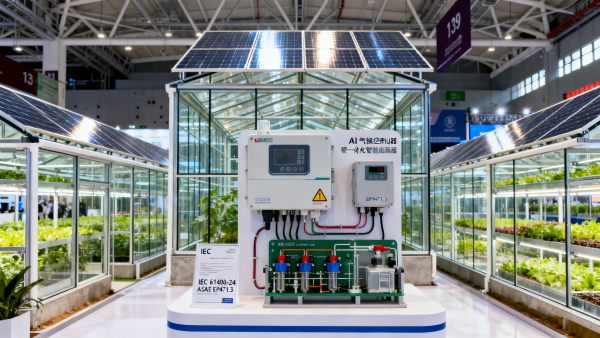
The third phase of the 139th Canton Fair (May 1–5, 2026) concluded on May 5, 2026, highlighting a significant shift in global demand for climate-resilient agricultural infrastructure—driven by tightening technical and environmental compliance requirements from key Middle Eastern markets.

Confirmed Trade Data from Phase III
According to official fair statistics, the Smart Greenhouse exhibition zone recorded a 35.2% year-on-year increase in transaction value during the third phase of the 139th Canton Fair. Buyers from Saudi Arabia, the United Arab Emirates, and Egypt collectively accounted for 41.7% of all inquiries and purchase commitments in this sector. Their primary interest focused on three product categories: photovoltaic-integrated greenhouses, AI-driven climate coupling controllers, and salt-tolerant irrigation modules. Importantly, multiple delegations explicitly stated that procurement would be contingent upon certification to IEC 61400-24 (wind load resistance) and ASAE EP471.3 (sand and dust protection).
Impact Across Supply Chain Roles
Export-Oriented Trading Enterprises
These firms face immediate pressure to verify and document compliance with IEC 61400-24 and ASAE EP471.3 before quotation or contract signing. Non-compliant offers risk automatic disqualification in formal tenders issued by Gulf Cooperation Council (GCC) governments and large agri-infrastructure developers.
Raw Material & Component Suppliers
Suppliers of structural framing, PV mounting systems, enclosure seals, and sensor housings must now align material specifications and test reports with sand ingress thresholds and dynamic wind loading scenarios—not just static strength ratings. Revisions to material datasheets and third-party verification timelines are becoming prerequisites for OEM engagement.
Manufacturing Enterprises
Producers of AI climate controllers and irrigation modules must integrate environmental stress validation into their design verification protocols. This includes accelerated testing under simulated desert operating conditions (e.g., high particulate concentration, thermal cycling, and saline mist exposure), directly impacting R&D cycle duration and production line qualification.
Supply Chain Service Providers
Logistics, customs brokerage, and technical documentation agencies are seeing rising demand for pre-shipment compliance audits, bilingual test report translation (English–Arabic), and coordination with GCC-accredited conformity assessment bodies—especially for post-fair follow-up shipments.
Key Compliance Priorities for Exporters
Targeted Certification Gap Assessment
Companies should conduct an internal audit against IEC 61400-24 (wind load) and ASAE EP471.3 (sand/dust) requirements—not generic CE or ISO standards. Gaps in structural modeling, sealing integrity, or controller housing IP ratings require urgent engineering review.
Technical Tender Alignment for GCC Projects
Specifications for photovoltaic-integrated greenhouses must now include verified wind pressure coefficients, sand abrasion resistance data for glazing, and documented salt-spray performance of electrical enclosures. Generic “desert-ready” claims are no longer sufficient for bid evaluation.
Documentation Readiness for Customs & Procurement
Exporters must prepare bilingual (English–Arabic) technical files—including test reports, certificates of conformity, and declarations of conformity referencing IEC 61400-24 and ASAE EP471.3—prior to shipment. GCC customs authorities increasingly request these at clearance stage.
Industry Observation: From Market Access to Technical Gatekeeping
Analysis shows that Middle Eastern procurement is evolving beyond price and capacity toward standardized environmental resilience benchmarks. What deserves closer attention is how IEC 61400-24 and ASAE EP471.3—originally developed for wind turbines and field equipment—are now functioning as de facto entry requirements for controlled-environment agriculture hardware. This signals a broader trend: regional buyers are leveraging internationally recognized test protocols to reduce technical due diligence overhead, shifting compliance burden upstream to manufacturers. From an industry perspective, the 35.2% order growth reflects not just demand expansion, but also early-mover advantage among firms that proactively embedded these certifications into product development cycles.
Taking Stock: A Strategic Inflection Point
This phase of the Canton Fair marks more than a sales milestone—it underscores a structural recalibration in global agricultural technology trade. The convergence of regional climate challenges, standardized technical thresholds, and buyer-led specification enforcement means that compliance is no longer a post-sale administrative step, but a core element of market positioning. Success will favor enterprises that treat IEC and ASAE standards as design inputs—not compliance checkboxes.
Source Information & Verification Guidance
This article was generated exclusively from the provided information: title, event date (2026-05-05), and summary of the third phase of the 139th Canton Fair. Specific official source links were not provided in the input and should be verified continuously. Stakeholders are advised to monitor updates from the China Council for the Promotion of International Trade (CCPIT), the Standardization Administration of China (SAC), and GCC standardization bodies—including the Gulf Standardization Organization (GSO)—for forthcoming implementation guidance, certification pathways, tender document revisions, and real-world interpretation of IEC 61400-24 and ASAE EP471.3 in greenhouse applications.
Related Intelligence
- Smart GreenhouseGreenhouse Equipment for Vertical Farming: Choosing Lighting and VentilationChoose greenhouse equipment for vertical farming with confidence. Compare lighting, airflow, and moisture control to improve crop uniformity and manage costs. Explore the guide.
- Forestry EquipmentChoosing Compact Forestry Machinery for Small Woodlots and Narrow AccessChoose compact forestry machinery that fits small woodlots and narrow access. Compare payload, turning clearance, safety, and running costs to find the right machine for your site.
- APIs & IntermediatesProcurement Planning: Which Resource Reports Help Prevent Material Shortages?Discover how procurement planning resource reports reveal usable stock, shortage dates, and supplier risks so you can prevent material shortages and keep production on track.
The Morning Broadsheet
Daily chemical briefings, market shifts, and peer-reviewed summaries delivered to your terminal.
