

The Authority in Global Agricultural Chemistry & Bio-Resources
When Broiler Cage Dimensions Cause Stocking Problems and Uneven Bird Growth
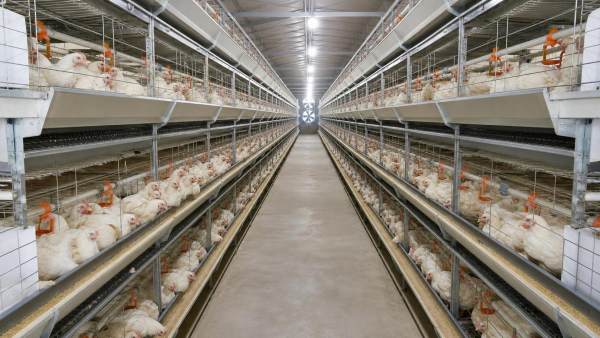
Uneven broiler growth often gets blamed on feed quality, ventilation, or chick uniformity, but cage dimensions are frequently part of the problem. When the usable floor area, feeder access, cage depth, and row layout do not match the flock plan, stocking pressure becomes inconsistent across the house. Some birds dominate feed space, some remain less active, and weight spread widens week after week. For technical evaluators, this is less a design detail than a system-level risk that affects performance forecasting, welfare management, and equipment suitability.
The issue is not simply whether a cage is “large” or “small.” Stocking problems begin when theoretical capacity is calculated from gross dimensions while bird movement, feeder clearance, drinker position, door framing, slope, or partition structure reduce the effective area. A layout that appears acceptable on paper can still produce crowding at the front of the cage, weak access to water points at the rear, and poor bird distribution between tiers or sections.
Why dimension errors show up as growth variation
Broilers do not use every part of a cage equally. In many installations, birds compete most heavily in zones closest to feed and easiest standing positions. If cage depth is excessive relative to feeder placement, smaller birds may stay farther back and eat later. If width is narrow but bird count per compartment is high, stronger birds can block lateral movement. Once that pattern begins, body weight variation increases, and the flock becomes harder to manage through a single feeding and health schedule.
Dimensions also influence heat load and litter-free contact conditions inside the cage. In dense compartments, birds have fewer options to move away from warmer areas or from more aggressive flock mates. That tends to matter more during periods of temperature instability, after vaccination stress, or when chick start quality is uneven. A dimension mismatch does not create all performance problems by itself, but it can amplify every other weakness in the house.
Technical teams reviewing cage proposals should separate three ideas that are often mixed together:
- Nominal cage size: the external or catalog dimension.
- Usable internal area: the real space birds occupy after accounting for frames, partitions, slopes, and fixtures.
- Functional capacity: the bird count that still allows practical access to feed, water, and movement during growth.
Stocking failures usually happen when decisions rely on the first figure alone.
Where layout and capacity checks matter most
Before comparing materials or automation features, evaluators need to confirm whether cage geometry matches bird size progression and house operating logic. That is why layout and capacity checks deserve early attention. A reference discussing dimension cage poulet de chair can be useful in this stage because the central question is not only cage construction, but how dimensions relate to the number of birds assigned to each section and how that scales across the full house.
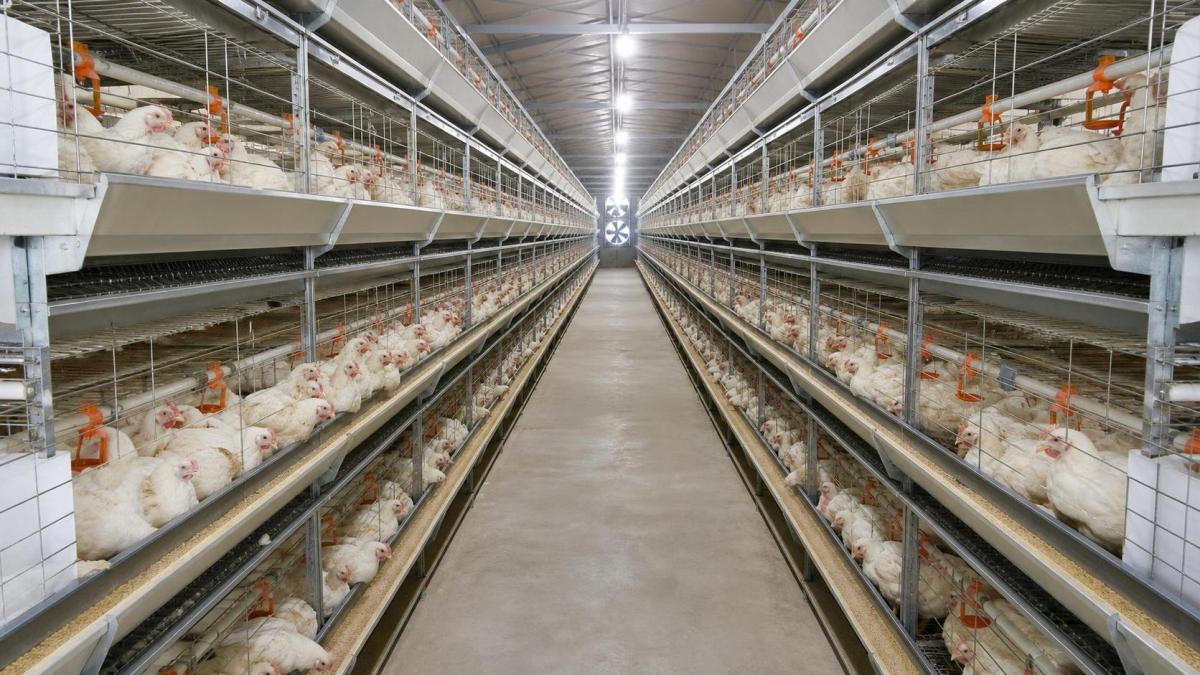
A practical review should cover compartment dimensions, total birds per cage, feeder line reach, drinker spacing, and aisle-side management access. In many projects, the bird count is adjusted late in the process to meet target output, while the cage footprint stays unchanged. That is where hidden overstocking starts. The design still fits inside the building, but bird comfort and growth consistency begin to erode.
Common signs that dimensions are driving stocking problems
Weight variation alone does not prove a cage sizing problem, yet several signs together usually point in that direction.
1. Birds crowd the feeder side even when the full compartment is available
If birds repeatedly cluster at the front, the rear zone may be too difficult to use comfortably. Possible causes include excessive cage depth, weak floor support toward the back, poor drinker placement, or an internal slope that changes footing. The result is an uneven occupation pattern that reduces effective capacity.
2. Feed intake appears adequate at flock level, but smaller birds fall behind
This often means total feed volume is not the issue; access is. A cage can hold enough birds by area, yet still fail by feeder frontage per bird. In technical evaluation, feeder design and cage dimension must be read together. A broad compartment with limited feeding access may underperform a slightly smaller one with better distribution.
3. Mortality or culling is concentrated in certain rows or tiers
When only parts of the house show problems, airflow is one possible cause, but layout should be checked too. End cages, corner transitions, and rows close to service lines can lose usable space because of door swing, bracket placement, or difficult inspection access. That creates local overstocking even if the average stocking density seems normal.
4. Birds reach target age with inconsistent breast development and frame size
That pattern is often linked to repeated interruption of feed and water access rather than one major health event. Cage proportions that force competition at specific points can create this outcome, especially where birds are stocked densely from the start.
What technical evaluators should verify in a cage proposal
Evaluation should move beyond brochure dimensions. A useful check asks how many birds can occupy the cage without reducing feeding opportunity, resting distribution, and inspection access as birds gain weight.
Another important check is whether the supplier’s capacity logic assumes a specific final weight, a specific growing period, or a specific management style. A cage that is acceptable for lighter birds or shorter cycles may become restrictive when operations target heavier market weights. Technical teams should ask whether the proposed bird count per cage remains workable at the heaviest stage, not only at placement.
Layout mistakes that look efficient on paper
Some layouts maximize the number of cages installed, but the operational penalty appears later. Narrow aisles can reduce inspection quality and make it harder to identify slow-growing birds early. Extra tiers may increase output per building, yet create ventilation or service differences between upper and lower levels. Long rows with few access breaks can complicate bird checks and maintenance. None of these are dimension issues in isolation, but all interact with cage sizing and stocking behavior.
One frequent mistake is using house dimensions as the main design driver and treating bird comfort as a secondary adjustment. This often leads to cages selected to “fit the building” rather than cages matched to growth targets. The result may still satisfy installation constraints while creating a biological mismatch. For technical evaluators, capacity calculations should be challenged whenever the design seems optimized around structure occupancy rather than bird distribution.
How cage dimensions interact with materials and construction
Material and structural design matter because they affect how much of the nominal cage volume remains usable over time. Frames that deflect, floors that lose rigidity, or partitions that intrude into bird space can gradually reduce practical capacity. In houses with high cleaning frequency or corrosive conditions, structural wear may alter cage geometry enough to influence footing and movement, especially in longer service periods.
That is why dimension review should not stop at initial measurements. Evaluators should consider whether the construction method helps the cage maintain its intended shape under flock load, routine handling, and environmental exposure. A cage with acceptable initial dimensions but weak structural retention can produce the same bird distribution problems as an undersized compartment.
In this context, the phrase dimension cage poulet de chair is useful as a technical discussion point because it links geometry, layout, and bird capacity rather than treating dimensions as a standalone catalog number. The value of that discussion rises when procurement teams are comparing systems that look similar in footprint but differ in internal usability.
A practical troubleshooting sequence for existing houses
When uneven growth is already visible, cage replacement is not the first step. A structured review can clarify whether dimensions are the main cause or one contributing factor.
- Map weight variation by row, tier, and cage section. Patterns often reveal whether the issue is localized or system-wide.
- Check effective birds per compartment, not planned birds. Stocking changes during placement or transfers may have altered real density.
- Observe feeding behavior during peak access periods. If smaller birds are delayed or displaced, feeder frontage may be insufficient.
- Inspect rear-space usage. Empty or lightly used rear zones suggest that nominal area is not fully functional.
- Review drinker and feeder alignment. Poor placement can make an adequate cage dimension behave like an inadequate one.
- Compare top, middle, and bottom tiers. If only certain levels show growth spread, layout interaction with air movement or service access may be involved.
This sequence helps separate dimension-driven crowding from feed formulation, disease challenge, or ventilation imbalance. In many houses, more than one factor is present, but dimension and capacity mismatch often explains why corrective actions in other areas produce only partial improvement.
What belongs in procurement and acceptance review
For new projects, purchasing documents should define how cage dimensions are measured and how capacity is stated. External dimensions alone are not enough. It is better to request internal clear dimensions, floor area per compartment, planned birds per compartment, feeder and drinker configuration, and any structural elements that reduce movement space. If these items are absent, different suppliers may appear comparable while using different assumptions.
Acceptance review should also confirm that installed geometry matches approved drawings. Small deviations in door frame depth, feeder alignment, or floor support can matter when repeated across hundreds of cages. This is especially relevant when target stocking levels leave little tolerance for lost usable area.
For technical evaluators, the core question is straightforward: does the cage dimension support bird access and distribution through the full growth cycle, or does it only satisfy a nominal capacity target? When that question is asked early, stocking problems are easier to prevent than to correct after uneven growth has already reduced flock uniformity.
Related Intelligence
- Poultry Housing & CagingHow Cage Specifications Affect Poultry Housing Costs in NigeriaLocally made poultry cage price in Nigeria: compare cage specifications, housing costs, durability, ventilation, manure systems, and installation factors for smarter poultry investment.
- Poultry Housing & CagingWhat Determines Battery Cage Prices in Nigeria Beyond Bird Capacity?Battery cage price in Nigeria depends on more than capacity. Compare steel, automation, logistics, and installation scope for a smarter poultry investment.
- Poultry Housing & CagingBuilding a Poultry Farm Equipment Solution Around Flock Size and LayoutPoultry farm equipment solution planning for flock size and layout—optimize feeding, water, ventilation, automation, and future expansion.
The Morning Broadsheet
Daily chemical briefings, market shifts, and peer-reviewed summaries delivered to your terminal.
