

The Authority in Global Agricultural Chemistry & Bio-Resources
Saudi Arabia Unveils Local Assembly Incentives for Poultry Housing Equipment
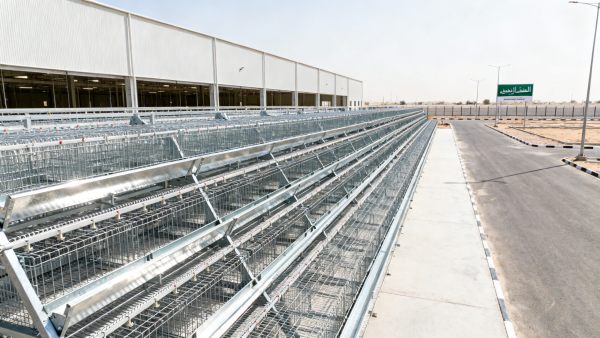
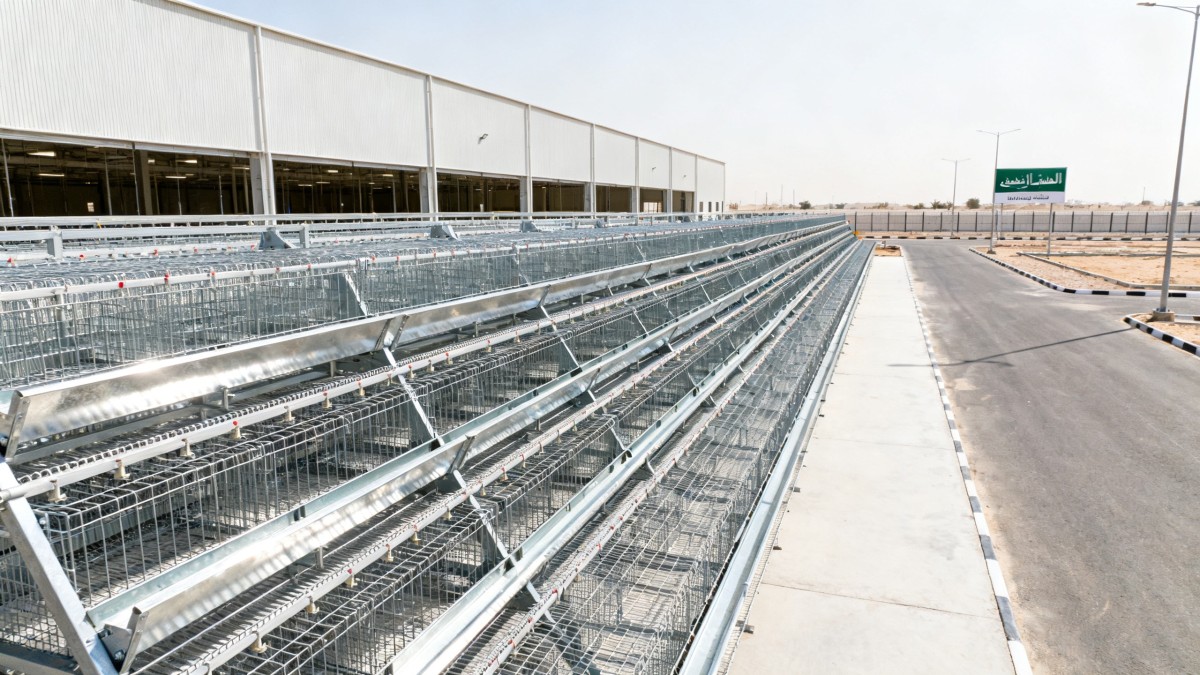
Saudi Arabia’s Ministry of Industry and Mineral Resources released a draft policy on May 21, introducing targeted incentives for the local assembly of poultry housing and caging systems. The move signals a strategic shift toward domestic value addition in the livestock infrastructure sector — with direct implications for global exporters, particularly those in China, Turkey, and the EU supplying to the Kingdom’s rapidly expanding poultry industry.
Event Overview
On May 21, the Saudi Ministry of Industry and Mineral Resources published a draft framework titled the ‘Local Assembly Incentive Program for Agricultural Equipment’. Under the proposal, poultry housing and caging equipment assembled in Saudi Arabia — with at least 40% of its total value added locally — qualifies for full exemption from import duties and a 15% VAT refund on eligible inputs. The program is scheduled to launch pilot industrial zones in the second half of 2026.
Industries Impacted
Direct Exporters (Trade Enterprises): Companies exporting fully built poultry housing systems into Saudi Arabia face immediate margin pressure under current tariff structures. The new incentive effectively penalizes ‘ready-to-install’ imports while rewarding localized assembly — shifting competitive advantage toward firms that can adapt supply chains or establish local partnerships. Revenue models may need to pivot from FOB sales to CKD (Completely Knocked Down) kits or technical licensing arrangements.
Raw Material & Component Suppliers: Suppliers of galvanized steel frames, ventilation fans, automated feeding rails, and cage mesh — especially those serving Chinese OEMs — may see demand fragmentation. Orders could split between export-ready components (for CKD shipments) and locally sourced alternatives (to meet the 40% local value-add threshold), requiring dual sourcing strategies and tighter compliance tracking.
Manufacturing & Systems Integrators: Firms capable of modular design, pre-fabricated panel production, or turnkey poultry house commissioning stand to gain if they align with Saudi partners early. However, meeting the 40% local value-add benchmark demands verified documentation of labor, logistics, and sub-assembly costs — raising operational transparency requirements beyond typical export contracts.
Supply Chain & Logistics Service Providers: Third-party logistics operators, customs brokers, and CKD kit kitting centers will face increased demand for ‘border-adjacent’ deconsolidation, labeling, and light-assembly warehousing near designated industrial zones (e.g., King Salman Energy Park or MODON clusters). This also raises the need for certified VAT recovery support services in Saudi Arabia.
Key Considerations and Recommended Actions
Evaluate CKD Feasibility by Q4 2024
Exporters should conduct technical and cost feasibility studies for CKD packaging — including component standardization, corrosion-resistant pre-treatment, and modular interface specifications — before the draft policy enters public consultation phase.
Identify Qualified Local Engineering Partners
Given the emphasis on local value creation, collaboration with Saudi-registered engineering firms holding Class A contracting licenses (under SASO and NCEC frameworks) is likely essential for joint venture registration and VAT refund eligibility.
Prepare for Enhanced Traceability Requirements
The 40% local value-add threshold implies granular cost accounting: labor hours, local subcontractor invoices, warehouse occupancy, and even domestic transport must be auditable. ERP systems should be adapted to capture and certify these data points ahead of pilot zone activation.
Editorial Insight / Industry Observation
Observably, this policy is less about protectionism and more about catalyzing a domestic ecosystem — one that mirrors earlier successes in automotive and defense localization. Analysis shows the 15% VAT refund is unusually generous compared to other Saudi industrial programs, suggesting high political priority for food security-linked infrastructure. From an industry perspective, the real bottleneck may not be technology transfer, but rather the availability of certified local technicians trained in automated poultry environment controls — a gap currently unaddressed in the draft text.
Conclusion
This initiative marks a structural inflection point for poultry infrastructure trade with Saudi Arabia. It does not eliminate export opportunities — but redefines them around co-investment, modularity, and verifiable local economic contribution. For international suppliers, success will hinge less on product specs alone and more on demonstrable integration capacity within Saudi regulatory and industrial frameworks.
Source Attribution
Official draft document published by the Saudi Ministry of Industry and Mineral Resources on May 21, 2024 (Ref: MOIMR/AGRI/2024/05/DFT-07). Note: Final implementation timeline, eligibility criteria for ‘local value addition’, and list of designated pilot zones remain pending formal gazette publication — subject to stakeholder consultation and royal decree approval. Monitoring advised through the Saudi Standards, Metrology and Quality Organization (SASO) and the National Industrial Development and Logistics Program (NIDLP) updates.
Related Intelligence
- Poultry Housing & CagingHow Cage Specifications Affect Poultry Housing Costs in NigeriaLocally made poultry cage price in Nigeria: compare cage specifications, housing costs, durability, ventilation, manure systems, and installation factors for smarter poultry investment.
- Poultry Housing & CagingWhat Determines Battery Cage Prices in Nigeria Beyond Bird Capacity?Battery cage price in Nigeria depends on more than capacity. Compare steel, automation, logistics, and installation scope for a smarter poultry investment.
- Poultry Housing & CagingBuilding a Poultry Farm Equipment Solution Around Flock Size and LayoutPoultry farm equipment solution planning for flock size and layout—optimize feeding, water, ventilation, automation, and future expansion.
The Morning Broadsheet
Daily chemical briefings, market shifts, and peer-reviewed summaries delivered to your terminal.
