

The Authority in Global Agricultural Chemistry & Bio-Resources
China's Natural Ingredients Export Surges 18.3% YoY in April
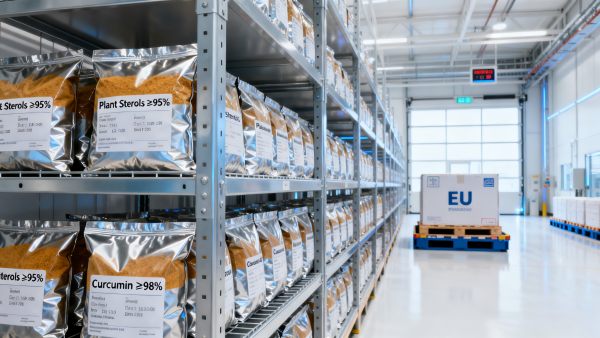
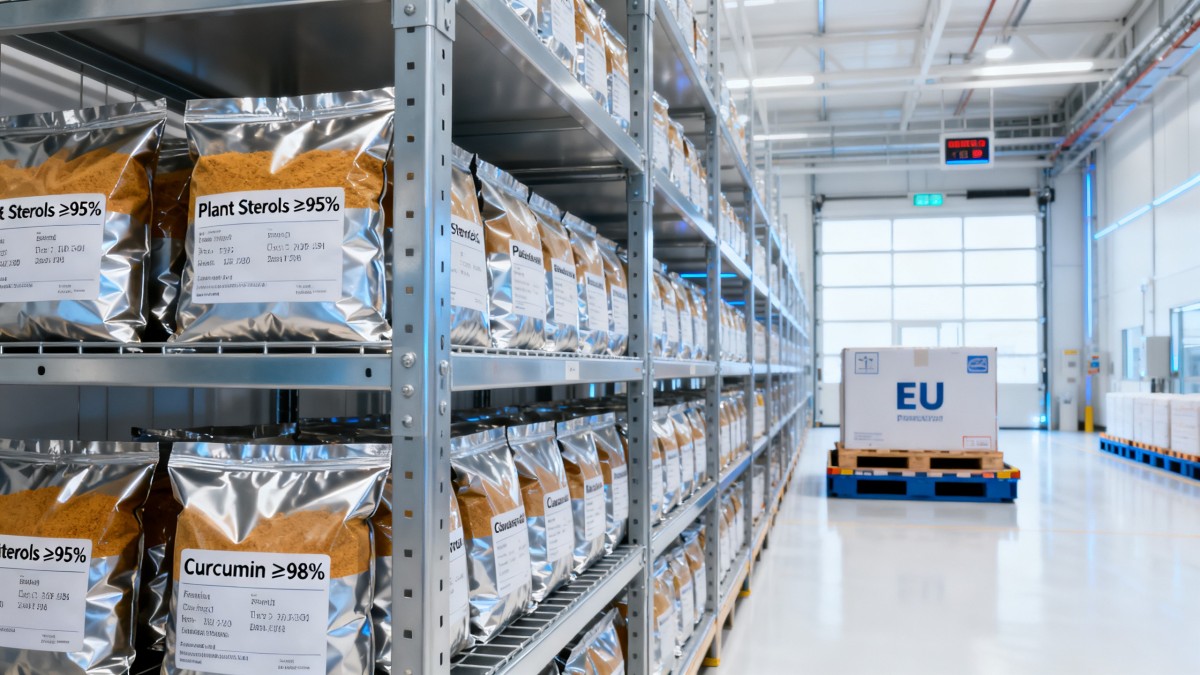
In April 2026, China’s natural ingredients export value reached USD 1.27 billion, up 18.3% year-on-year — driven primarily by concentrated order releases to the European Union and surging demand for high-purity plant sterols and curcumin. This development signals intensified structural shifts in global health food and pet nutrition supply chains, with implications across trade, sourcing, manufacturing, and logistics stakeholders.
Event Overview
According to data released by China’s General Administration of Customs on May 22, 2026, natural ingredients exports from China totaled USD 1.27 billion in April 2026, representing an 18.3% increase compared to April 2025. Exports to the EU accounted for 39.6% of the total — the highest share on record. Within this, ≥95% purity plant sterols (used in functional dairy products) and ≥98% purity curcumin (used in pet nutritional supplements) saw export volumes rise by 67% and 53% year-on-year, respectively.
Industries Affected
Direct trading enterprises: Exporters specializing in natural actives face heightened compliance pressure and opportunity. The EU’s tightening of botanical ingredient specifications — particularly around residual solvents, heavy metals, and microbiological limits — means that only suppliers with validated GMP-compliant facilities and full traceability documentation can sustain participation in this growth segment. Revenue upside is real, but margin compression risk rises if certification or testing costs are not factored into pricing.
Raw material procurement enterprises: Buyers of natural actives — especially those serving EU-based brand owners — are experiencing tighter lead times and increased scrutiny on batch-level analytical reports. The surge in demand for ≥95% and ≥98% purity grades implies a shift away from commodity-grade intermediates; procurement strategies must now prioritize supplier capability over lowest landed cost alone.
Processing and formulation manufacturers: Companies producing finished functional foods, beverages, or pet supplements must reassess their raw material qualification protocols. Higher-purity actives often behave differently in matrix systems — e.g., curcumin ≥98% may require modified dispersion techniques or co-stabilizers to maintain bioavailability in wet pet food. Formulation R&D timelines are likely extending as compatibility testing intensifies.
Supply chain service providers: Third-party testing labs, customs brokers with botanical expertise, and cold-chain logistics partners focused on temperature-sensitive naturals are seeing elevated demand for EU-specific documentation support — including Certificates of Analysis aligned with EU Commission Regulation (EU) No 2023/2008, and proof of origin under the EU-China Trade Facilitation Agreement. Capacity constraints are emerging in key ports like Shanghai and Shenzhen for pre-shipment verification services.
Key Focus Areas and Recommended Actions
Align product specifications with EU market readiness thresholds
Manufacturers should verify whether their current plant sterol or curcumin offerings meet the minimum ≥95% and ≥98% purity benchmarks *and* associated stability data required by EU importers — not just regulatory minimums. Pre-emptive third-party validation against EN 15662:2022 (for botanicals) is advised.
Review and upgrade traceability infrastructure
EU buyers increasingly require full farm-to-batch digital traceability — including harvest dates, solvent use logs, and chromatographic fingerprinting. Enterprises still relying on paper-based batch records should initiate digitization pilots before Q3 2026, given lead times for ERP module integration.
Engage early with EU-based regulatory consultants
As of April 2026, over 62% of new EU health claim dossiers referencing plant sterols or curcumin cite Chinese-sourced actives. However, EFSA evaluation timelines have lengthened to 14–18 months. Firms planning novel food applications or health claim substantiation should initiate scoping discussions with EU regulatory advisors no later than Q2 2026.
Editorial Insight / Industry Observation
Observably, this April surge is not merely cyclical — it reflects a structural inflection point in how EU health and pet nutrition brands source active ingredients. Analysis shows that the 67% volume jump in high-purity plant sterols correlates strongly with the March 2026 launch of three new cholesterol-management dairy lines across Germany and the Netherlands — all featuring ‘clinically dosed’ phytosterol blends. Similarly, the 53% rise in curcumin exports aligns with revised EU pet feed safety guidelines (EFSA Panel on Additives and Products or Substances used in Animal Feed, April 2026), which now explicitly recognize curcuminoids above 95% purity as ‘low-risk functional additives’. Current more critical question is not whether demand will persist, but whether China’s upstream capacity — particularly in standardized extraction and crystallization — can scale without compromising consistency.
Conclusion
This export acceleration underscores a broader transition: natural ingredients are shifting from commoditized inputs to performance-critical functional actives in regulated markets. For industry participants, the implication is clear — competitive advantage will accrue less to volume scale and more to specification discipline, regulatory foresight, and verifiable quality execution. A sustained 18.3%+ growth rate is unlikely to continue quarterly, but the underlying trend toward higher-purity, application-validated naturals is durable and accelerating.
Source Attribution
Data source: General Administration of Customs of the People’s Republic of China, release dated May 22, 2026 (April 2026 monthly foreign trade statistics, HS Code 2932.99 – ‘Other heterocyclic compounds’ and 1302.19 – ‘Vegetable saps and extracts’).
Regulatory references: EU Commission Regulation (EU) No 2023/2008; EFSA Guidance on Safety Assessment of Botanicals (2024 update); EFSA Panel on Additives and Products or Substances used in Animal Feed (FEEDAP), Scientific Opinion on Curcuminoids (April 2026).
Ongoing observation: EU’s upcoming revision of the Novel Food Catalogue (expected Q4 2026), which may reclassify certain high-purity botanical isolates as ‘non-novel’ — potentially lowering market entry barriers for qualified Chinese suppliers.
Related Intelligence
- Natural IngredientsBotanical Ingredient Prices in Europe: Comparing Quotes by Grade and Order VolumeCompare Europe botanical ingredients price quotes by grade and order volume. Discover how potency, testing, delivery, and inventory costs reveal real savings before you buy.
- Natural IngredientsMayonnaise vs. Salad Dressing: Ingredient and Texture DifferencesMayonnaise vs. salad dressing: discover key ingredient, texture, stability, and application differences to choose the right product for every recipe.
- Natural IngredientsIndustrial-Scale Agricultural Sourcing: Key Criteria for Reliable SupplyIndustrial scale agri sourcing made reliable: assess supplier capacity, traceability, landed cost, logistics, and resilience to protect production continuity.
The Morning Broadsheet
Daily chemical briefings, market shifts, and peer-reviewed summaries delivered to your terminal.
