

The Authority in Global Agricultural Chemistry & Bio-Resources
EU REACH Annex XVII Adds Limits for Natural Fragrance Ingredients
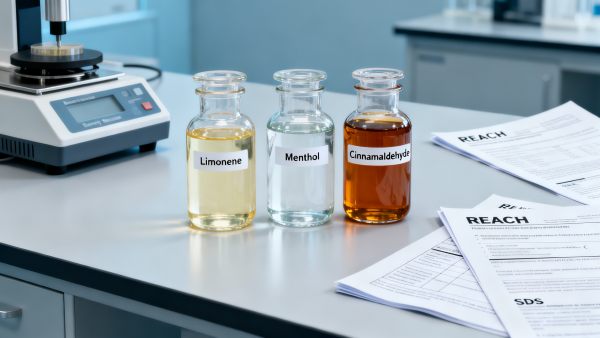
On 17 May 2026, the European Commission adopted Regulation (EU) 2026/912, amending Annex XVII of the REACH Regulation to introduce specific migration limits for 17 terpene- and phenylpropanoid-based substances in natural fragrance ingredients used in food contact materials. The update directly affects exporters of natural aroma compounds — particularly those from China — and triggers immediate reassessment of compliance pathways across the global supply chain.
Event Overview
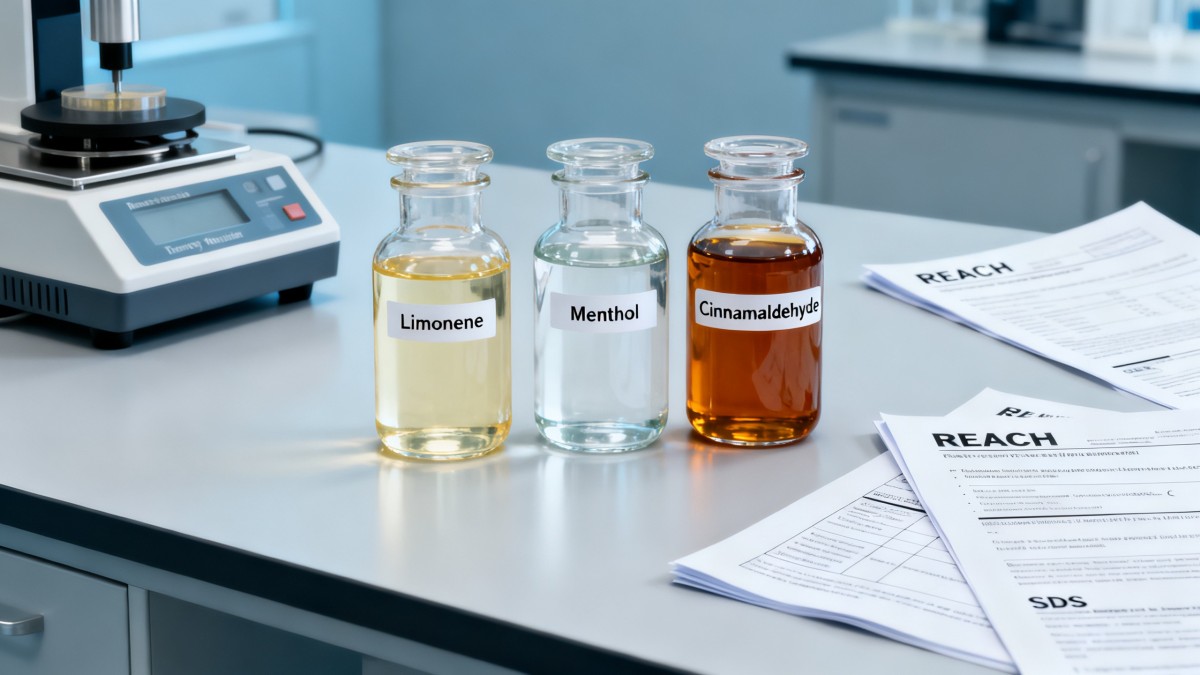
The European Commission published Regulation (EU) 2026/912 on 17 May 2026. It adds new entries to Annex XVII of Regulation (EC) No 1907/2006 (REACH), setting maximum migration limits ranging from 0.01 to 0.5 mg/kg for 17 naturally occurring terpenes and phenylpropanoids — including limonene, menthol, cinnamaldehyde, and others — when present in natural fragrance ingredients intended for use in food contact materials. The requirements enter into force on 1 November 2026. Affected products include citrus oils, peppermint oil, cinnamon oil, and other widely exported natural aroma extracts. Exporters must conduct new migration testing and revise Safety Data Sheets (SDS) and Declarations of Conformity (DoC) accordingly.
Industries Impacted
Direct Trading Enterprises
Export-oriented trading companies handling natural fragrance ingredients face direct regulatory exposure: non-compliant shipments risk customs rejection, market withdrawal, or penalties under EU Market Surveillance Regulation (EU) 2019/1020. Impact manifests in revised documentation workflows, third-party lab coordination, and potential delays in order fulfilment — especially for high-volume SKUs like cold-pressed orange oil or steam-distilled spearmint oil.
Raw Material Sourcing Enterprises
Companies sourcing botanical raw materials (e.g., citrus peels, mint leaves, cinnamon bark) must now trace variability in natural constituent profiles — as terpene concentrations fluctuate with harvest season, geography, and extraction method. This necessitates tighter supplier qualification, batch-level analytical verification, and updated specifications in procurement contracts to allocate migration-related compliance responsibility.
Processing & Manufacturing Enterprises
Manufacturers blending, standardising, or formulating natural fragrance ingredients — such as encapsulated citrus oils for beverage applications — must revalidate migration behaviour under simulated food contact conditions (e.g., aqueous, acidic, or fatty food simulants per Regulation (EU) No 10/2011). Reformulation may be required where natural co-extractives exceed newly restricted thresholds, even if the primary active ingredient remains unchanged.
Supply Chain Service Providers
Laboratories, regulatory consultancies, and certification bodies are seeing increased demand for targeted migration testing (EN 13130 series), REACH-compliant SDS authoring, and DoC drafting aligned with Article 16 of Regulation (EU) No 10/2011. Notably, test method harmonisation remains pending: current EN standards do not uniformly cover all 17 listed substances, creating interpretation variance among labs.
Key Focus Areas and Recommended Actions
Conduct substance-specific migration testing before November 2026
Testing must reflect actual end-use conditions (e.g., temperature, contact time, food simulant type) and cover all 17 listed substances — not only major constituents but also minor co-extractives that may migrate above threshold. Pre-screening via GC-MS profiling is advised to prioritise high-risk batches.
Update SDS and DoC with verified migration data
SDS Section 3 must now explicitly declare presence and migration potential of each regulated substance; Section 15 requires reference to Regulation (EU) 2026/912. DoC must state compliance with Annex XVII entry XX (to be assigned) and list tested migration results per substance — generic statements such as “complies with REACH” are no longer sufficient.
Review upstream specifications and contractual liability clauses
Importers and blenders should amend purchase agreements to require suppliers to warrant migration compliance on a per-batch basis — including analytical reports — and define recourse mechanisms for non-conforming lots. Joint sampling protocols between buyer and supplier are increasingly common practice.
Editorial Perspective / Industry Observation
Analysis shows this amendment marks a structural shift in how the EU regulates ‘natural’ substances: regulatory scrutiny is no longer focused solely on synthetic additives or contaminants, but extends to intrinsic plant metabolites previously assumed low-risk due to origin. Observably, the 0.01 mg/kg floor — applied to limonene and α-pinene — signals heightened sensitivity toward volatile terpenes in acidic food simulants, likely informed by emerging toxicokinetic data. From an industry perspective, this is less about restricting naturalness and more about demanding scientific rigour in safety substantiation. Current more critical concern lies not in feasibility of compliance, but in the absence of EU-endorsed reference methods for 9 of the 17 substances — leaving test outcomes vulnerable to inter-lab variability.
Conclusion
This revision reinforces that ‘natural’ does not equate to ‘regulatorily exempt’ in the EU framework. For global suppliers, it underscores the need to treat botanical extracts as complex chemical systems — requiring analytical transparency, process control, and proactive regulatory engagement. A rational interpretation is that the policy incentivises investment in characterisation infrastructure over reliance on historical safety assumptions.
Source Attribution
Official text: Regulation (EU) 2026/912, published in the Official Journal of the European Union L 145, 17 May 2026. Implementation guidance and updated testing standards are expected from ECHA and CEN; these remain pending and warrant continuous monitoring.
Related Intelligence
- Natural IngredientsBotanical Ingredient Prices in Europe: Comparing Quotes by Grade and Order VolumeCompare Europe botanical ingredients price quotes by grade and order volume. Discover how potency, testing, delivery, and inventory costs reveal real savings before you buy.
- Natural IngredientsMayonnaise vs. Salad Dressing: Ingredient and Texture DifferencesMayonnaise vs. salad dressing: discover key ingredient, texture, stability, and application differences to choose the right product for every recipe.
- Natural IngredientsIndustrial-Scale Agricultural Sourcing: Key Criteria for Reliable SupplyIndustrial scale agri sourcing made reliable: assess supplier capacity, traceability, landed cost, logistics, and resilience to protect production continuity.
The Morning Broadsheet
Daily chemical briefings, market shifts, and peer-reviewed summaries delivered to your terminal.
