

The Authority in Global Agricultural Chemistry & Bio-Resources
Animal Feeding Automation Sourcing Guide: How to Compare Systems, Suppliers, and ROI
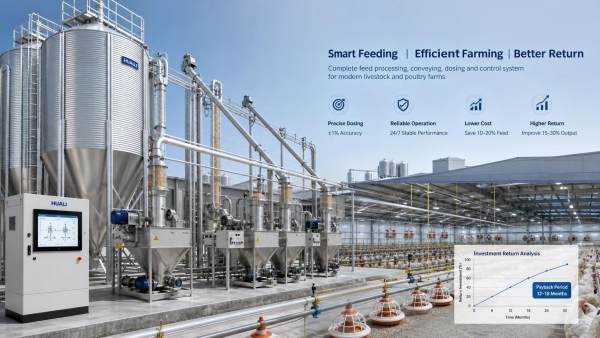
This guide is written for buyers who are already past the “what is automation” stage. The real question behind most searches in this area is more commercial: which feeding system will improve consistency, labor efficiency, and feed conversion without locking the farm into a brittle platform, an unreliable supplier, or a payback model that only works on paper. In practice, animal feeding automation is no longer a simple machinery purchase. It sits at the intersection of herd or flock performance, data visibility, maintenance capability, energy use, software integration, and supplier service reach. That is why sourcing decisions are increasingly less about headline features and more about operational fit and lifecycle control.
For procurement teams, the difficulty is that systems are often sold with very different assumptions. One supplier may emphasize throughput and dosing precision, another may lead with software dashboards, and a third may focus on labor reduction. All three may be technically credible, yet only one may be suitable for the site conditions, species, feed format, biosecurity standards, and internal maintenance culture of the buying organization. A useful sourcing process therefore starts by translating business goals into operating conditions before comparing equipment specifications.
Why feeding automation has become a sourcing priority
Across livestock, poultry, aquaculture, and integrated feed operations, feeding is becoming more operationally critical for three reasons. First, feed remains one of the largest cost centers in most animal production systems. Even modest gains in feed efficiency, reduction in waste, or tighter ration control can materially affect margins. Second, labor markets remain uneven in many regions, especially for repetitive and time-sensitive tasks such as scheduled feeding, monitoring, and routine adjustments. Third, buyers are being pushed toward better traceability and process control by customer requirements, retailer standards, and, in some markets, tighter environmental and welfare scrutiny.
That does not mean every operation should automate at the same speed. The strongest business case usually appears where feeding variability is already causing measurable losses, where labor availability is unstable, where multiple sites need standardized practices, or where management wants decision-grade data rather than manual logs. Smaller or less standardized operations may still benefit, but the ROI threshold is usually more sensitive to installation complexity, training burden, and after-sales support quality.
Start with the use case, not the brochure
Procurement failures often begin with a category mistake: buying a “modern” system without defining the production problem it must solve. For some buyers, the main need is accurate feed delivery by time and quantity. For others, the real need is automated adjustment based on animal weight, appetite signals, water intake, climate conditions, or growth stage. These are not the same purchase.
A practical sourcing brief should answer a few business-level questions before vendor engagement begins:
- Is the operation trying to reduce labor dependency, improve feed conversion, increase uniformity, expand capacity, or strengthen traceability?
- Is the system intended for retrofit or greenfield installation?
- How variable are feed types, particle sizes, moisture levels, or ingredient blends?
- Will site personnel manage software configuration internally, or will they depend on vendor support?
- How costly is downtime during feeding windows?
These questions determine whether a buyer should prioritize mechanical robustness, software flexibility, sensor integration, modular expansion, or service responsiveness. Without that prioritization, comparisons become superficial and biased toward sales presentations.
What buyers should compare beyond core equipment specs
Most vendor comparisons begin with storage volume, conveyance rate, dosing accuracy, feeding frequency, and control interface. Those are necessary but insufficient. In live operations, system value is shaped by a wider set of constraints that do not always appear in front-page technical sheets.
1. Feed compatibility and handling stability
Different systems perform very differently depending on whether they handle pellets, mash, crumble, liquid feed, micro-dosed additives, or species-specific diets. Hygroscopic or fragile feed materials may bridge, segregate, cake, or degrade during transfer. If the buyer runs multiple formulations or anticipates diet changes, the system should be evaluated for cleanout efficiency, cross-contamination risk, and calibration stability between recipes.
2. Control logic and data usefulness
Many systems now include dashboards, alerts, and historical records, but buyers should separate “data visibility” from “decision value.” A useful system should support actionable control points: ration adjustments, feeding curve management, abnormal consumption alerts, batch traceability, and exportable records. Procurement teams should ask whether data can be integrated with farm management, ERP, or quality systems, and whether access depends on proprietary subscriptions or third-party middleware.
3. Mechanical simplicity versus software sophistication
Not every site benefits from the most advanced control architecture. A highly connected system may be appropriate for multi-site industrial operators with technical staff and centralized performance management. A mechanically simpler platform may deliver better uptime in remote or maintenance-constrained environments. Overbuying complexity is a recurring mistake in this category, especially when software capability exceeds the site’s actual ability to configure, troubleshoot, and sustain it.
The best system is usually the one the operation can run consistently, not the one that demos best.
Supplier due diligence matters as much as system design
Animal feeding automation is not a one-time hardware transaction. It is a long-term operational dependency. That makes supplier assessment at least as important as machine assessment.
Procurement teams should examine supplier credibility across four dimensions. The first is engineering maturity: how long the system architecture has been in the field, what failure patterns have appeared, and how upgrades are handled across installed units. The second is manufacturing control: whether key components are produced in-house, sourced from stable partners, or substituted frequently due to cost or availability. The third is service infrastructure: response times, local technician coverage, remote diagnostics capability, and spare parts stocking policy. The fourth is commercial transparency: software licensing terms, warranty exclusions, commissioning scope, and conditions that shift risk back to the buyer.
Reference checks are especially important here. But buyers should go beyond generic testimonials. Ask existing users about calibration drift, sensor reliability in dusty or humid environments, cleaning burden, false alarms, downtime during power instability, and how quickly the supplier resolves issues after installation. A supplier with strong hardware and weak service discipline can erase the expected ROI surprisingly fast.
Compliance is not just a checkbox
In many markets, feeding systems are evaluated mainly on productivity. That is too narrow. Depending on geography and species, procurement teams may need to consider machinery safety, electrical conformity, sanitation design, environmental controls, feed-contact material suitability, and recordkeeping expectations tied to customer audits or export requirements. Specific certifications and standards vary by jurisdiction, so any hard compliance claim should be confirmed against local law and the intended use case【待核实】.
For buyers supplying regulated food chains, the more relevant issue is often auditability rather than certification alone. Can the system support consistent ration execution? Can it maintain records of changes, alarms, and feed events? Can it demonstrate process discipline when a customer or regulator asks how feeding was controlled over a given production period? These questions become more important as integrated producers and large buyers tighten quality assurance requirements upstream.
Where ROI models often go wrong
Vendors and buyers both tend to overstate labor savings and understate adaptation costs. In reality, returns usually come from a mix of effects: lower feed waste, more consistent growth, reduced manual intervention, fewer missed feedings, better batch control, and improved managerial visibility. Labor reduction may be real, but it is rarely as simple as eliminating headcount. More often, labor is reallocated toward monitoring, maintenance, animal checks, and exception handling.
That means a credible ROI model should include more than equipment price and nominal labor savings. It should account for installation downtime, civil or electrical modifications, commissioning support, software fees, spare parts inventory, staff training, preventive maintenance, expected sensor replacement intervals, and the operational cost of unplanned stoppages.
A useful procurement approach is to model three cases:
- Base case: current performance with conservative assumptions on improvement.
- Operational upside case: measurable gains in feed efficiency, consistency, or throughput.
- Failure or underperformance case: delayed ramp-up, support gaps, or lower-than-promised utilization.
This framework helps buyers avoid payback calculations built on ideal conditions. If the project only works under an aggressive best-case scenario, the sourcing decision is not yet mature.
Questions that expose hidden cost and vendor risk
Some of the most important sourcing questions sound unremarkable, which is why they are often skipped. Buyers should ask:
- What components are proprietary, and what can be replaced through standard industrial channels?
- What is the lead time for critical spare parts during peak season?
- Which functions stop if connectivity is lost?
- What maintenance tasks can site staff perform without voiding warranty?
- How are software updates tested and rolled out?
- What site conditions are assumed in the quoted performance metrics?
- What commissioning outcomes define acceptance?
These questions reveal whether the supplier is offering an industrial tool or a dependency trap. They also help procurement distinguish between low purchase price and low ownership cost. The two are often confused in competitive tenders.
Regional sourcing conditions are changing the evaluation process
For multinational buyers and exporters, the market context has shifted. Lead times for automation equipment and control components have been affected in recent years by electronics constraints, freight volatility, and uneven local service capacity. Even where component supply has improved, buyers should still verify whether a supplier’s quoted delivery window depends on imported controls, specialist drives, or single-source sensors.
At the same time, there is a gradual shift from standalone mechanical systems toward digitally managed feeding environments. That brings longer-term value, but it also increases exposure to interoperability issues, cybersecurity concerns, subscription pricing, and vendor lock-in. The most resilient sourcing strategies now treat feeding automation as part of a broader operational architecture rather than a one-off asset class.
In a “comprehensive industry” context, this is the larger pattern worth watching: primary industries are adopting automation less as a labor substitute alone and more as a control layer for margin protection, compliance readiness, and performance standardization. Buyers who understand that shift tend to run better tenders because they compare systems not only by what they do today, but by how well they fit future reporting, integration, and resilience requirements.
How to structure a practical sourcing decision
For procurement teams, the cleanest process is usually staged rather than purely price-led. Start with a short list based on operating fit. Then evaluate supplier credibility and service reach. Only after that should commercial comparison move into full detail. Pilot installations or phased rollouts are often justified for larger groups, especially where site conditions differ significantly across regions or species.
A strong decision memo should show five things clearly: the production problem being solved, the operational conditions the system must handle, the total cost assumptions over the asset life, the service and supply risks by vendor, and the trigger points that would justify expansion after initial deployment. When those elements are visible, internal stakeholders can debate the real tradeoffs instead of defaulting to headline capex.
For most buyers, the objective is not to find the “most advanced” feeding automation platform. It is to secure a system and supplier combination that can perform under routine pressure, adapt to operational variability, and support margin discipline over time. That is a narrower target than many sales narratives suggest, but it is the one that usually produces the better procurement outcome.
Related Intelligence
- Feeding & Watering SystemsHow to Size Commercial Farm Feed Systems for Herd Capacity and Feed FlowFarm commercial feed systems: learn how to size storage, conveyors, and feed flow for herd capacity, peak demand, resilience, and efficient farm operations.
- Feeding & Watering SystemsSelecting a Nipple Drinking System for Broiler and Layer HousesNipple drinking system selection guide for broiler and layer houses: compare water flow, pressure control, flushing, durability, and installation needs.
- Feeding & Watering SystemsHow to Select Poultry Feeding Systems for Broiler Farms by Flock Size and Feed WasteFarm poultry feeding systems: learn how to match feeder design to broiler flock size, reduce feed waste, improve uniformity, and control lifecycle costs.
The Morning Broadsheet
Daily chemical briefings, market shifts, and peer-reviewed summaries delivered to your terminal.
