

The Authority in Global Agricultural Chemistry & Bio-Resources
Selecting a Nipple Drinking System for Broiler and Layer Houses
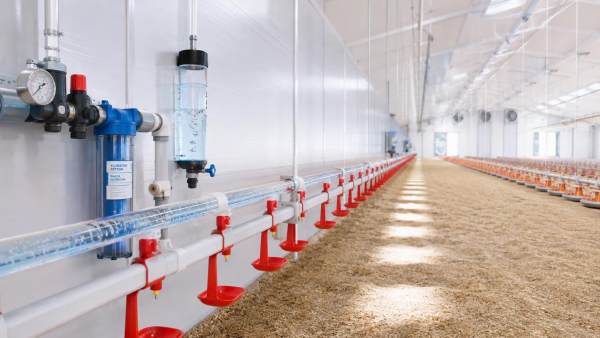
A drinking line is often specified late in a poultry-house project, after ventilation, feeding, and housing dimensions have already been discussed. That can be costly. Water delivery affects litter condition, bird access, medication routines, cleaning workload, and the consequences of a small installation error. For procurement teams, the task is not simply to compare unit prices for nipples and pipes. It is to select a system that can deliver clean water reliably at the right height, pressure, and flow rate throughout the production cycle.
Broiler and layer houses place different demands on drinker equipment. Broilers need rapid access as body weight increases and litter becomes more vulnerable to wet spots. Layers require sustained reliability over a longer productive life, with line placement and pressure management that remain suitable as birds mature. A system that appears economical on a quotation may create recurring operating costs if it leaks, is difficult to flush, or cannot be adjusted consistently across the house.
Start with the house, flock, and water source
Procurement should begin with operating conditions rather than a catalog description. The number of birds, house layout, stocking plan, climate, litter program, and water source all shape the correct configuration. A line designed around one bird density or house width may not perform well when used in a longer building, with a different pressure profile, or in a retrofit where supports and ceiling heights are fixed.
Water quality deserves early attention. Sediment, mineral content, organic contamination, and unstable source pressure can affect any drinker line. Fine particles may interfere with moving parts inside a nipple valve, while scale can gradually restrict flow or make components harder to clean. If the site relies on untreated bore water, seasonal water sources, or stored water with variable quality, filtration and water-treatment compatibility need to be included in the scope. It is risky to assess the drinkers alone while leaving filters, regulators, flushing points, and connection fittings as unspecified accessories.
For a new build, buyers should request a line layout showing pipe runs, suspension points, regulator locations, end-of-line flushing arrangements, and connections to the farm water supply. For a replacement project, the review should also cover existing ceiling structure, winch systems, room clearance, electrical or heating equipment, and whether old pipework or headers could introduce contamination into new lines.
Broiler and layer requirements are related but not identical
Both production systems need birds to reach water without excessive searching, competition, or spillage. The difference lies in how access changes over time and how long the equipment must remain stable in service.
Bird type also matters. Young chicks may require a setup that makes water easy to locate during placement, whereas heavier broilers need line height and flow conditions that prevent birds from sitting or drinking awkwardly. In layer operations, the housing design may introduce additional constraints around cages, aviary levels, slats, nests, and service aisles. A purchasing specification should describe the actual system of production rather than using a generic “poultry drinker” requirement.
Evaluate the drinking line as a complete system
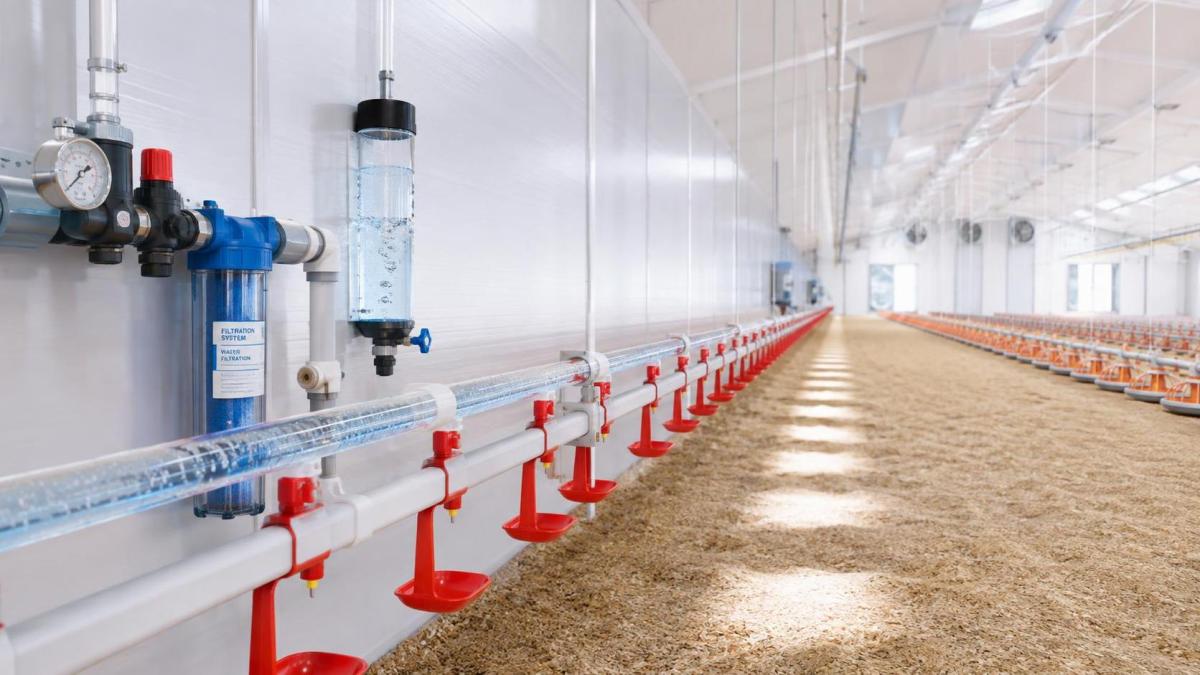
A nipple valve is only one part of the water-delivery arrangement. Performance depends on the interaction between valves, pipe, pressure regulation, filters, line supports, suspension equipment, flush hardware, and the farm’s cleaning process. A well-chosen component can still perform poorly when installed on uneven lines or supplied with poorly controlled pressure.
When comparing a nipple drinking system, buyers should look beyond the advertised nipple count per line. The relevant question is whether the complete arrangement can maintain suitable water availability for the intended bird population at the far end of the line as well as near the inlet. Long runs, elevation changes, pressure losses, and uneven suspension can all affect delivery. Suppliers should be able to explain how pressure is managed and how the operator can verify conditions in normal use.
Valve design and drinking behavior
Nipple drinkers generally release water when the bird actuates a pin or mechanism. The design must respond consistently without creating unnecessary leakage. Buyers should ask how the valve is intended to be operated by birds of the relevant age and type, whether drip cups are used, and how the assembly performs when exposed to routine cleaning chemicals and water-treatment programs.
Drip cups can help contain incidental water, but they should not be treated as a substitute for correct pressure adjustment or a leak-free valve. A cup that is constantly wet points to an underlying issue: excessive pressure, a worn valve, debris, uneven line height, or birds using the drinker incorrectly. During evaluation, it is useful to distinguish between normal droplets after use and continual leakage that can accumulate in litter or beneath equipment.
Pipe material, fittings, and line support
Pipe rigidity and dimensional consistency affect how well nipples remain aligned. Materials must tolerate the farm’s water conditions and cleaning routine without becoming brittle, deforming, or difficult to seal at joints. Fittings require the same scrutiny as the main pipe. A line may contain many joints, end caps, connectors, and take-off points; each is a potential leak path if tolerances are poor or installation instructions are unclear.
Suspension is equally practical. In a broiler house, operators adjust drinker height frequently, so the winch and support arrangement should lift the line evenly. A sagging line changes bird access and can create localized pressure differences. In a layer house, the concern may be less frequent adjustment but more prolonged loading and the need to keep lines aligned with the surrounding housing equipment. Ask what support spacing is required, what hardware is included, and whether the quote covers all necessary hangers and connection points.
Pressure regulation, flushing, and cleaning are procurement issues
Water lines need a method for controlling pressure and a practical way to flush them. These are not optional maintenance details. Pressure that is too low can restrict access at peak demand; pressure that is too high can encourage dripping and wet litter. The correct operating setting depends on the system design, bird age, line length, and supplier guidance, so buyers should avoid accepting a proposal that provides no clear adjustment method or operating instructions.
Flushing serves several functions: it helps remove sediment, refreshes water in lines, and supports cleaning between flocks or during planned water-management routines. The end-of-line arrangement should be reachable without creating a difficult manual task for staff. In large houses, a nominal flush point that is awkward to access may simply be used inconsistently. Procurement documents can require a description of the flush process, the required connections, drainage considerations, and the components needed to isolate or service a line.
Chemical compatibility must be checked against the farm’s actual treatment plan. Disinfectants, acidifiers, vaccines administered through water, and other additives may be used under veterinary or management direction. The buyer should request written confirmation of compatible materials and identify any concentration, contact-time, or rinsing limitations specified by the equipment manufacturer. Assumptions in this area can shorten component life or leave residue in a line that should have been flushed.
Build a specification that exposes hidden differences
Comparing quotations is difficult when one supplier prices a complete installed line and another lists only pipe and nipple assemblies. A useful procurement schedule separates the system into verifiable elements and asks suppliers to state what is included, excluded, and required from the farm.
- Intended application: broiler, replacement pullet, commercial layer, breeder, or another defined flock type.
- House dimensions, line quantity and length, expected bird capacity, and any layout constraints.
- Nipple assemblies, cups if required, pipes, regulators, filters, connectors, end sets, hangers, and suspension hardware.
- Recommended filtration arrangement and compatibility with the available water source.
- Flushing method, drainage requirements, and access needed for routine cleaning.
- Installation instructions, commissioning checks, operating guidance, and spare-parts identification.
- Packaging, delivery lead time, shipment condition, warranty terms, and process for handling shortages or damaged components.
This approach makes omissions visible before an order is placed. It also helps the farm compare lifecycle considerations rather than only initial purchase cost. A lower-priced line may become more expensive if it has difficult-to-source replacement valves, requires frequent sealing repairs, or needs substantial on-site modification to fit the house.
Inspect quality before full installation
Receiving inspection should not be limited to counting cartons. Before installation begins, the farm or contractor can check that line sections match the approved layout, fittings join correctly, nipples are consistently positioned, and seals are present and undamaged. Random functional checks can identify obvious sticking, leakage, or poor fit before the equipment is distributed throughout the building.
Once installed, commissioning should include a visual review of line level, support tension, regulator connections, and all joints. The lines should be flushed according to the supplier’s instructions before birds arrive. Staff should then observe whether water is available across the full length of each line and whether nipples or cups show persistent dripping. These checks are far easier to complete in an empty house than after litter, birds, and production schedules limit access.
Documentation also matters after handover. Keep the line layout, component list, settings guidance, cleaning instructions, and spare-part references together. If a problem appears months later, a maintenance team needs to know whether a replacement item matches the installed thread, pipe profile, seal type, and pressure-control arrangement. Generic substitutes may fit physically while creating a weak point in the system.
Common purchasing mistakes and how to avoid them
One common mistake is selecting on valve price while treating filtration and regulation as secondary. Another is ordering equipment for the current flock without considering future changes in bird type, stocking approach, or house renovation. Buyers also sometimes accept a single system description without confirming how it will connect to existing infrastructure. These gaps often surface as installation delays, extra fittings, or inconsistent performance after the flock is placed.
Overlooking workforce routines can create a similar problem. If the farm has limited labor available for line adjustment, flushing, and inspection, the selected equipment should make those tasks straightforward and repeatable. A technically acceptable arrangement may still be unsuitable when its daily management demands exceed what the site can reliably perform.
The strongest selection is usually the one that matches water quality, housing layout, bird category, cleaning practice, and maintenance capability in a single defined package. For broiler houses, that often means prioritizing uniform height adjustment and control of moisture around the line. For layer houses, it commonly means emphasizing durable service over a longer operating period and access for maintenance within the housing configuration. In either case, a clear specification, a complete bill of materials, and careful commissioning provide more protection than a low unit price alone.
Related Intelligence
- Feeding & Watering SystemsFeed Production Systems for Dairy Farms: Sizing for Herd Size and Ration NeedsSize feed production systems for dairy farms to match herd size, ration needs, and feeding schedules. Discover how to choose capacity, avoid bottlenecks, and plan for growth.
- Feeding & Watering SystemsHow to Size Commercial Farm Feed Systems for Herd Capacity and Feed FlowFarm commercial feed systems: learn how to size storage, conveyors, and feed flow for herd capacity, peak demand, resilience, and efficient farm operations.
- Feeding & Watering SystemsSelecting a Nipple Drinking System for Broiler and Layer HousesNipple drinking system selection guide for broiler and layer houses: compare water flow, pressure control, flushing, durability, and installation needs.
The Morning Broadsheet
Daily chemical briefings, market shifts, and peer-reviewed summaries delivered to your terminal.
