

The Authority in Global Agricultural Chemistry & Bio-Resources
Livestock Climate Control in Southeast Asia: Ventilation for Hot, Humid Farms
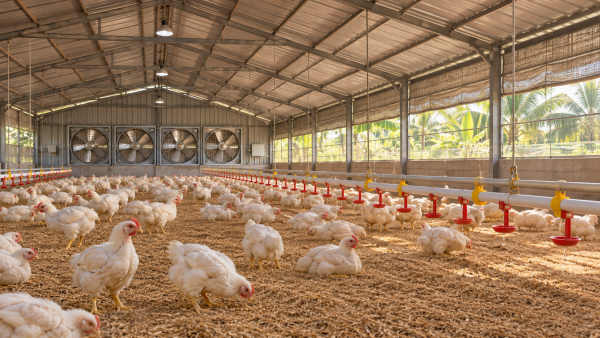
Effective livestock climate control in Southeast Asia starts with a practical question: can the housing remove enough heat and moisture when the weather is hot, humid, and still? The answer depends on more than fan capacity. Animal type, stocking density, building layout, incoming air, water availability, and backup power all affect whether a system will work when it is needed most.
For a new build or retrofit, the strongest starting point is to define conditions at animal level, then select a ventilation approach that can deliver them across the house. A system that moves a large volume of air but leaves stagnant pens, draws in rain, or fails during a power interruption can still expose livestock to serious heat stress.
Start with the animals and the site, not the equipment list
Different animals experience the same housing conditions differently. Broilers, laying hens, pigs, and dairy cattle have different heat loads, tolerances, and housing needs. Age matters too: young animals may need a warmer environment, while heavier or more productive animals can generate more heat. A design intended for several production stages needs controls that can respond to those changes without creating cold drafts during periods of lower heat demand.
Stocking density changes the problem. More animals in the same space produce more heat, moisture, carbon dioxide, and manure. It also becomes harder for air to reach every animal. A ventilation design based on a lower occupancy than the house will actually carry can struggle during peak production, even if it performs well when the building is partly stocked.
Site conditions deserve the same attention. Review typical hot and humid periods, prevailing winds, rainfall, exposure to storms, and the reliability of electricity and water. Buildings close together may obstruct wind or draw exhaust air from a neighboring house. Nearby trees and terrain can provide shade but may also interrupt useful airflow. On a constrained site, these interactions can determine whether a naturally ventilated design is practical.
Before suppliers propose equipment, set out the intended species, maximum occupancy, building dimensions, production stages, and operating schedule. Include any planned expansion. This gives each supplier the same basis for sizing and makes competing proposals easier to compare.
Choose a ventilation strategy that fits the building
There is no single ventilation system that suits every farm in the region. The choice depends on how much control the building needs and how reliably the site can support that control.
Natural ventilation
Open-sided housing uses wind and the movement of warm air to exchange indoor air. It can be a sensible option where buildings have good exposure, sufficient openings, suitable orientation, and enough space between houses. It also reduces dependence on continuously powered exhaust fans.
Its limitation is variability. On a hot, still day, the same house may have little useful air movement when animals need it most. Rain protection, curtains, and neighboring structures can further restrict openings. Natural ventilation should therefore be assessed under poor-wind conditions as well as under favorable ones; circulation fans or other supplementary measures may still be needed.
Mechanical and tunnel ventilation
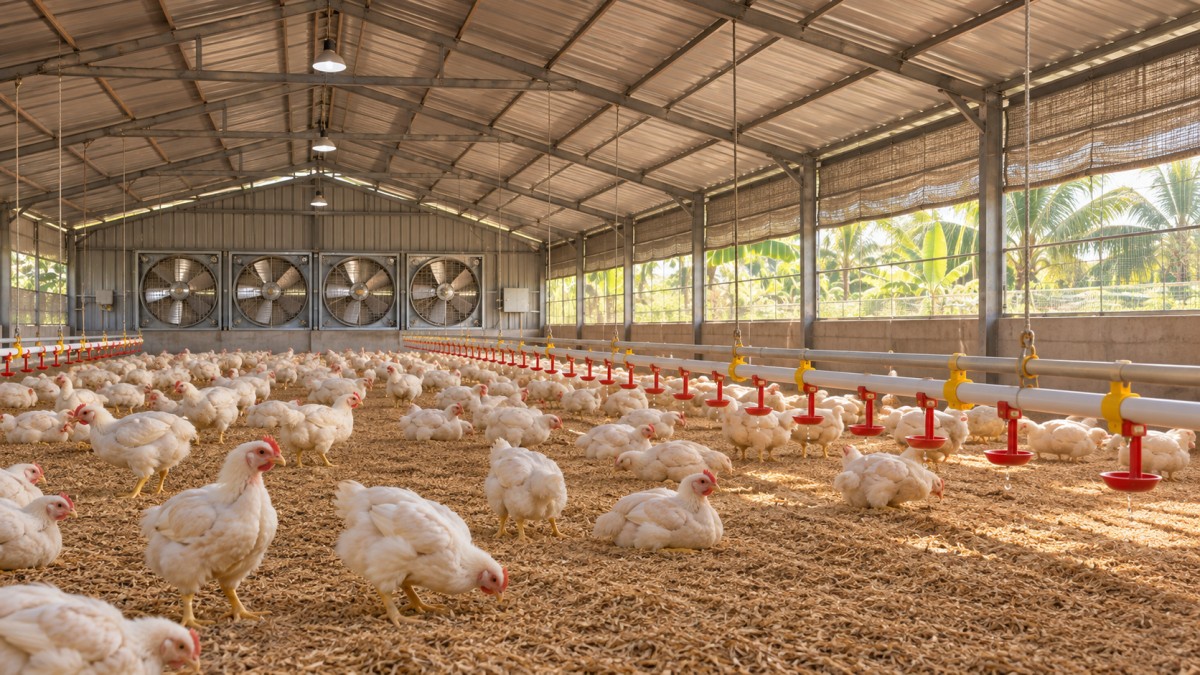
Mechanical systems use fans and controlled openings to move air through the building. In tunnel ventilation, air generally enters at one end and travels along the house toward exhaust fans at the other. This can provide more consistent air exchange and air movement around animals, provided the building, inlets, and fan arrangement work together.
Tunnel systems are often considered for enclosed poultry and pig houses where tighter environmental control is needed. Their performance depends on a reasonably controlled air path: major leaks can cause incoming air to bypass intended inlets, while obstacles and uneven animal distribution can produce pockets of slow-moving air. A design also needs a lower-ventilation operating mode for cooler periods and young stock; running every fan continuously is not a complete control strategy.
Hybrid ventilation
A hybrid design combines natural openings with powered fans or automated controls. It can reduce fan use when outdoor conditions are favorable while retaining mechanical assistance during hot, still periods. The trade-off is operational complexity: curtains, inlets, fans, and controls must respond in a coordinated way, and staff need to understand what happens when power or a control signal fails.
When comparing options, ask each supplier to show the intended air path and explain how the system performs at maximum occupancy, at reduced ventilation, and during a power outage. A list of fan models alone does not establish that the house will ventilate evenly.
Follow the air through the whole house
Good ventilation has two related jobs: exchange indoor air and move air where animals can benefit from it. Air exchange removes moisture and gases; air speed over animals can help them lose heat. A design can appear adequate on one measure while failing on the other.
Trace the route from each inlet to the exhaust or outlet. Consider pens, partitions, feed lines, drinkers, equipment, and the animals themselves. An obstruction that looks minor on a drawing can create a poorly ventilated area at livestock level. In a tunnel house, check conditions along the length and width of the building, including near sidewalls and behind partitions.
Inlets should be sized and positioned as part of the system, not added after the fans are selected. Too little effective inlet area can restrict airflow; poorly located openings can allow short-circuiting, where fresh air leaves before reaching occupied areas. Screens, shutters, and cooling pads also add resistance, particularly when dirty. Fan selection should account for the resistance of the installed system rather than relying only on an unrestricted airflow rating.
Roof design matters as well. Shading and roof insulation can reduce heat entering the house, easing the load on ventilation. Overhangs and rain protection help keep openings usable during storms, but they must be arranged so they do not block the air path. Drainage around inlets and building edges also helps prevent wet floors and standing water.
Use evaporative cooling with realistic expectations
Evaporative cooling can lower incoming air temperature as water evaporates, but its cooling potential falls as outdoor air becomes more humid. That limitation matters in much of Southeast Asia, especially during periods when both heat and humidity remain high. Adding water does not guarantee that animals will feel cooler.
Cooling pads can be useful in a properly designed mechanical system where air is drawn through the wetted surface and then distributed through the house. Their value depends on outdoor conditions, airflow, pad maintenance, and a dependable supply of suitable water. Dirty or unevenly wetted pads increase resistance and can reduce system performance.
Misting or sprinkling requires particular care. Water must evaporate, or in some systems wet the animal in a controlled way, for cooling to be useful. Excess water can raise indoor humidity, wet litter or floors, and create hygiene and footing problems. The appropriate method differs by species and housing system; a strategy suited to cattle should not automatically be transferred to poultry or pigs.
When assessing a cooling proposal, ask what conditions it is designed for and how performance changes during humid weather. Include water treatment, drainage, cleaning access, and operating costs in the comparison. Ventilation must continue to remove moisture generated by animals and cooling equipment.
Build controls around animal conditions
Temperature alone does not describe heat stress. Humidity affects how readily moisture evaporates, while air movement influences heat loss from the animal. Solar exposure, animal size, health, and access to drinking water also matter. Controls should therefore be selected for the species and production stage, using temperature and humidity together where appropriate.
Sensor location is as important as sensor type. A probe near a cooling pad, direct sunlight, a wet wall, or an exhaust fan may not represent conditions where animals are housed. Place and protect sensors so they reflect occupied areas, and use more than one monitoring point when a single reading could conceal large differences across the building.
Staged fan operation can match ventilation to changing demand and reduce unnecessary energy use. Controls should also prevent competing equipment from working against itself. For example, automated openings and exhaust fans need a coordinated sequence so that air follows the intended route. Setpoints and alarm limits should be documented for each production stage and adjusted by trained staff when conditions require it.
Monitoring does not replace observation. Panting, crowding, reduced activity, or changes in feed and water behavior can signal trouble even when a single sensor reading appears acceptable. Staff need a clear procedure for checking airflow, water supply, equipment status, and animal distribution when those signs appear.
Design for outages, maintenance, and daily use
In an enclosed house, fan failure can quickly become an animal welfare emergency. Backup power should be sized for the equipment required to maintain safe emergency ventilation, including starting loads and control systems. A generator that is present but cannot start, carry the necessary load, or deliver fuel for the required period is not a complete backup plan.
Provide alarms for power loss and critical temperature conditions, with a notification route that reaches someone who can respond. Emergency openings or curtains may provide another layer of protection where the building design allows, but their operation and expected airflow need to be assessed for the site. Test the sequence under realistic conditions and train staff to act without waiting for a specialist.
Maintenance access belongs in the original layout. Fans need safe access for cleaning and repair; shutters must open freely; inlets and pads need regular inspection; and sensors need cleaning and calibration. Dust and debris can reduce delivered airflow, while corrosion and moisture can affect electrical equipment. Protected electrical installations and drainage around equipment are particularly relevant in wet environments.
Operational responsibilities should be explicit before handover. Identify who checks alarms, who maintains the generator, how spare parts are obtained, and what staff should do if a fan, controller, or water supply fails. These details influence system reliability as much as the initial equipment selection.
What to request before approving a design
A useful proposal makes its assumptions visible. Ask the design team and suppliers for a coordinated package that includes:
- Design basis: species, production stages, maximum occupancy, building dimensions, and the outdoor conditions used for sizing.
- Airflow plan: inlet and exhaust locations, expected air paths, operating modes, and the treatment of partitions or other obstructions.
- Equipment performance: fan airflow at the resistance expected in the installed system, including screens, shutters, and cooling pads where fitted.
- Control sequence: sensor locations, fan stages, cooling operation, alarms, and emergency responses.
- Resource and maintenance needs: electrical load, backup requirements, water demand, cleaning access, and routine service tasks.
- Commissioning plan: checks for airflow distribution, controls, alarms, backup power, and staff handover.
Compare proposals on the conditions they are designed to deliver and the assumptions behind them, rather than on equipment count alone. A lower initial price may come with higher operating demand, limited redundancy, or less predictable air distribution. Conversely, added automation has little value if the farm cannot maintain it or respond to its alarms.
After installation, commissioning should include observations at animal level across the house, with the system operating in its different modes. Check for uneven airflow, rain entry, unexpected leakage, and areas where animals gather or avoid. Record the results and adjust inlets, controls, or operating procedures before treating the design as complete.
Related Intelligence
- Climate Control & VentilationLivestock Climate Control in Southeast Asia: Ventilation for Hot, Humid FarmsLivestock climate control Southeast Asia: discover ventilation and cooling strategies for hot, humid farms, plus practical tips to reduce heat stress.
- Climate Control & VentilationEvaluating Climate Control Suppliers: Capacity, Controls and SupportEvaluate supplier capability for climate control with practical guidance on capacity, controls, commissioning and lifecycle support. Make a confident procurement decision.
- Climate Control & VentilationLivestock Climate Control System Prices: Equipment and Installation CostsLivestock climate control price depends on equipment, installation and operating costs. Learn how to compare quotes, avoid hidden expenses and plan your budget.
The Morning Broadsheet
Daily chemical briefings, market shifts, and peer-reviewed summaries delivered to your terminal.