

The Authority in Global Agricultural Chemistry & Bio-Resources
New Rules Take Effect July 1 for Overseas Investment Services

China’s new State Council rules on outbound investment take effect on July 1, 2026, following their formal release on June 11. The change is notable for exporters, manufacturers, procurement teams, and cross-border service providers because it signals a more integrated support framework linking foreign affairs, legal, customs, and trade promotion resources around overseas delivery. For companies supplying APIs, Custom Synthesis, and Smart Greenhouse solutions to customers in Europe, the United States, and Southeast Asia, the development is worth watching as a concrete policy change with potential implications for compliance coordination, documentation, and project execution.
What the new rules formally establish
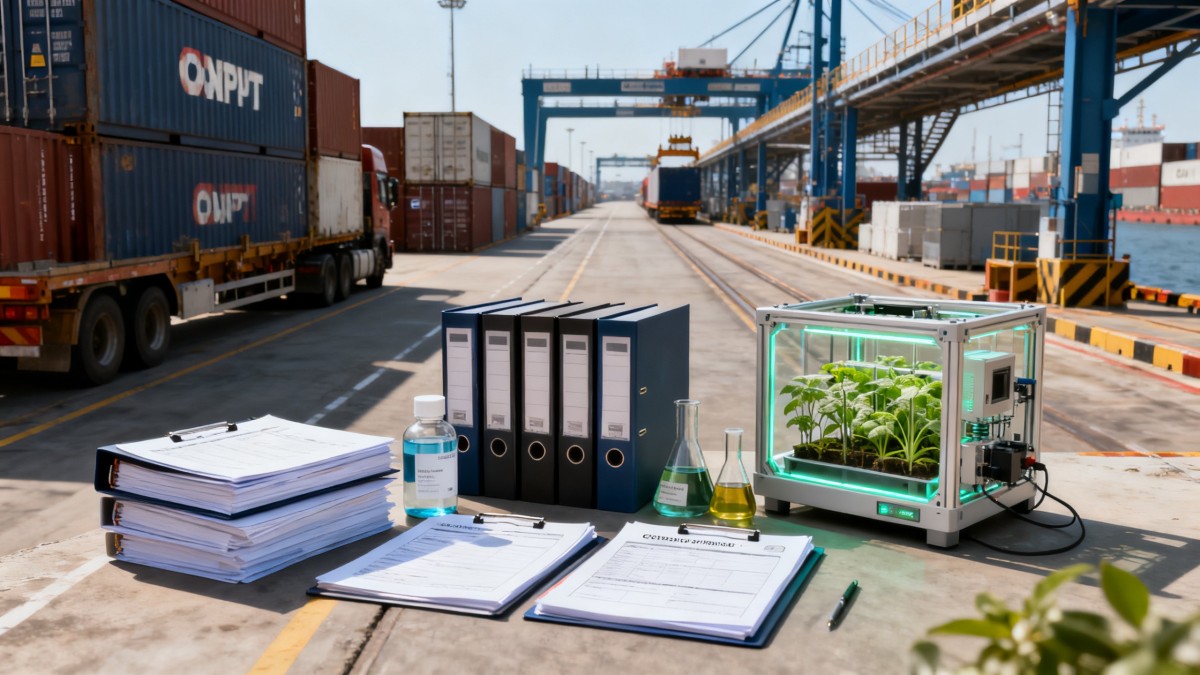
The confirmed facts are limited but clear. The Regulations of the State Council on Outbound Investment were officially published on June 11, 2026 and came into force on July 1, 2026. According to the provided summary, the rules call for the integration of resources related to foreign affairs, legal services, customs, and trade promotion, and they set out an “overseas comprehensive service system.” The same summary states that this framework is intended to support Chinese companies in providing one-stop delivery solutions for overseas customers, including APIs, Custom Synthesis, and Smart Greenhouse offerings.
The provided information also indicates that the rules create an institutional tailwind for manufacturers exporting Custom Synthesis and Smart Greenhouse solutions to markets in Europe, the United States, and Southeast Asia. Beyond that, no additional implementation detail, agency guidance, or operational mechanism is confirmed in the input.
Where the practical effects may emerge first
Export manufacturers may see changes in delivery coordination
From an industry perspective, manufacturers serving overseas customers are among the most directly affected participants because the policy language emphasizes one-stop overseas delivery support. The likely impact is not only at the contract stage, but also across legal review, customs-related preparation, and trade service coordination. What deserves closer attention is whether companies will need to reorganize internal export files, technical documentation, and customer-facing compliance materials so they can align more efficiently with a more integrated service framework.
Procurement and project teams may need tighter document control
For procurement-side and project execution teams, the relevance lies in cross-border fulfillment rather than in domestic purchasing alone. Where overseas customers expect bundled delivery of products and solutions, teams may need to pay closer attention to the consistency of technical documents, supporting declarations, testing records, and transaction files used during quotation, contracting, and shipment preparation. Analysis shows that the policy direction points toward more connected service support, which can increase the importance of document completeness even before any detailed enforcement guidance appears.
Supply chain and trade service providers may face new coordination demands
Supply chain service companies, customs-facing support providers, and trade facilitation participants may also be affected because the rules explicitly reference the integration of customs and trade promotion resources. Observably, that does not yet confirm a specific procedural change, but it does suggest that service providers involved in overseas projects may need to follow future updates on filing expectations, supporting paperwork, and coordination workflows tied to outbound projects and integrated delivery models.
Compliance-sensitive solution exporters should watch market-specific execution
For businesses exporting APIs, Custom Synthesis, or Smart Greenhouse solutions, the issue is not only market access but also whether overseas delivery can be supported more coherently across legal, customs, and commercial channels. Analysis shows that the immediate implication is less about a single new obligation and more about the possibility that compliance review, handover materials, and after-sales support expectations could become more structured in practice as the new framework begins to operate.
What companies should monitor as implementation begins
Check whether compliance review materials are presentation-ready
Because the rules highlight an integrated overseas service system, companies involved in outbound projects should review whether their legal, customs, and trade-related materials are internally consistent and ready for external use. This is especially relevant for businesses offering packaged technical solutions rather than standalone goods.
Track official wording and follow-up interpretations
The input confirms the rules and their effective date, but it does not provide detailed implementation guidance. It is therefore more appropriate to understand this stage as the formal start of a framework whose practical meaning will depend on later official wording, operating interpretations, and execution practice.
Review documents used in tenders, quotations, and delivery files
For exporters targeting Europe, the United States, and Southeast Asia, one practical area to watch is whether tender files, technical specifications, shipment documents, and customer support packages need to be updated to match a more integrated outbound service model. At present, this is a monitoring point rather than a confirmed mandatory adjustment.
Prepare for closer links between delivery and post-delivery support
Where companies provide one-stop solutions, after-sales response, traceability records, and handover files may become more important alongside the physical shipment itself. Observably, the policy summary supports this reading, but it does not yet confirm a defined compliance checklist or uniform operational standard.
Why this looks like an execution signal rather than a finished rule set
Analysis shows that this development is best read as a formal policy signal with direct relevance to cross-border business organization. The rules are already in force, so this is not a speculative proposal. At the same time, the currently confirmed information remains high-level. That means the market should not assume that all operational questions have been settled. What deserves closer attention is how later official explanations, service practices, and market-facing documents translate the integrated support concept into daily trade execution.
For the affected sectors, the value of this policy move lies in the direction it sets: overseas delivery is being framed not only as export activity, but as a coordinated service process linking legal, customs, and trade support. Whether that produces faster procedures, clearer documentation pathways, or more standardized execution still requires observation.
How the market may reasonably read the change now
At this stage, the event is best understood as an enacted rule change with practical importance for outbound investment and trade-linked delivery services, especially for manufacturers exporting Custom Synthesis and Smart Greenhouse solutions. It should not yet be treated as proof of uniform implementation outcomes. A neutral reading is that the policy creates a clearer institutional basis for integrated overseas support, while the actual compliance rhythm, documentation expectations, and business impact still depend on how the framework is applied in practice.
Basis of this article and what still needs verification
This article is generated from the user-provided news title, event date, and event summary. For events of this type, relevant source categories typically include official government announcements, releases from regulatory authorities, customs or trade administration information, industry association updates, standards-related documents, and reporting by authoritative media. No specific official source link was provided in the input, so the exact original link remains to be verified on an ongoing basis.
Further observation is still needed on implementation details, compliance interpretations, certification-related expectations where applicable, changes in tender or transaction documents, market feedback, and how companies execute under the new framework after July 1, 2026.
Related Intelligence
- Custom SynthesisDoes organic chemical synthesis scale-up require different solvent recovery thresholds above 500 L batch volume?Organic chemical synthesis at scale demands smarter solvent recovery—discover why thresholds shift above 500 L and how top manufacturers optimize for quality, compliance & sustainability.
- Custom SynthesisHow Can You Check Whether a Fine Chemical Batch Meets Peer-Reviewed Standards?Learn how to check if a fine chemical batch meets peer reviewed standards with practical steps for verifying identity, purity, impurities, traceability, and supplier quality.
- Custom SynthesisHow to Evaluate a Polymer Custom Synthesis Partner for Scale-Up ProjectsPolymer custom synthesis partner evaluation made practical: assess scale-up readiness, quality systems, process control, traceability, and supply reliability.
The Morning Broadsheet
Daily chemical briefings, market shifts, and peer-reviewed summaries delivered to your terminal.
