

The Authority in Global Agricultural Chemistry & Bio-Resources
ISO 22000:2026 Released with Digital-Native Traceability Mandate
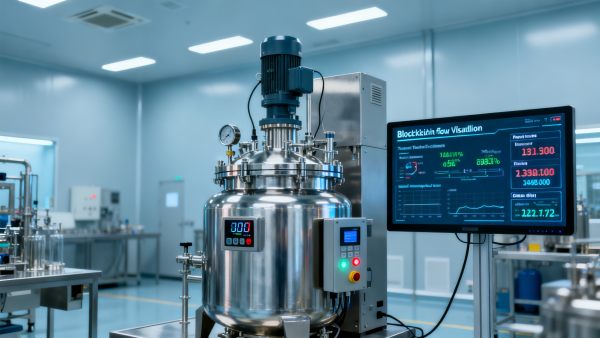
On 14 May 2026, the International Organization for Standardization (ISO) published ISO 22000:2026, the latest revision of the food safety management system standard. For the first time, it introduces ‘Digital-Native Traceability’ as a mandatory requirement—specifically targeting custom synthesis enterprises producing active pharmaceutical ingredients (API) intermediates for food-contact synthetic chemicals exported to the EU, UK, and Singapore. This development warrants close attention from chemical manufacturers, regulatory affairs professionals, and supply chain operators in specialty chemistry and food-contact materials sectors.
Event Overview
The International Organization for Standardization (ISO) officially released ISO 22000:2026 on 14 May 2026. The standard mandates ‘Digital-Native Traceability’ for all custom synthesis enterprises supplying food-contact synthetic chemicals to the European Union, United Kingdom, and Singapore. Under this requirement, full-process traceability of API intermediates—including blockchain-based immutable recording and millisecond-level logging of critical process parameters—is compulsory. A transition period is set until 30 June 2027.
Industries Affected
Custom Synthesis Manufacturers
These enterprises are directly subject to the new traceability mandate. Impact arises from the requirement to embed real-time data capture, cryptographic hashing, and on-chain storage into existing production control systems—particularly for API intermediates used in food-contact applications. Compliance affects equipment validation, electronic batch record design, and audit readiness.
Export-Oriented Chemical Distributors & Traders
Distributors acting as legal manufacturers or responsible persons under EU Regulation (EC) No 1935/2004 or UK Food Contact Materials Regulations face upstream verification obligations. They must now assess whether their custom synthesis suppliers meet the ISO 22000:2026 digital traceability criteria—especially when declaring conformity for products placed on EU/UK/Singapore markets.
Contract Development and Manufacturing Organizations (CDMOs)
CDMOs engaged in food-contact–related synthesis must align internal quality management systems (QMS) with the new standard’s technical clauses. The requirement extends beyond documentation to infrastructure: integration between distributed control systems (DCS), laboratory information management systems (LIMS), and blockchain ledgers becomes a prerequisite—not optional—for certification audits.
Key Focus Areas and Recommended Actions
Monitor official interpretations and national adoption timelines
While ISO 22000:2026 is an international standard, its enforceability depends on incorporation into regional regulatory frameworks—for example, via updates to EU Commission guidelines or Singapore’s Singapore Food Agency (SFA) advisory notes. Enterprises should track announcements from national accreditation bodies (e.g., UKAS, DAkkS, SAC) regarding certification scope alignment.
Identify high-priority product lines and export destinations
Not all custom synthesis outputs fall under the scope. Focus should be placed on API intermediates explicitly intended for food-contact applications (e.g., catalysts, stabilizers, or monomers used in food packaging polymers). Prioritize compliance efforts for shipments destined for the EU, UK, and Singapore—where market access may soon require third-party verification against ISO 22000:2026.
Distinguish between standard publication and operational implementation
The release of ISO 22000:2026 marks the start—not the completion—of compliance preparation. Certification bodies have not yet published updated audit checklists or interpretation documents. Enterprises should avoid premature system overhauls; instead, initiate gap assessments against Clause 8.5.3 (Traceability) and Annex A.3 (Digital-Native Traceability requirements) using current draft guidance where available.
Begin cross-functional readiness planning now
Implementation requires coordination across quality assurance, process engineering, IT infrastructure, and regulatory affairs. Start by mapping existing process data flows (e.g., temperature, pressure, residence time logs), evaluating blockchain-readiness of current MES/SCADA platforms, and reviewing contractual terms with cloud service providers for data sovereignty and immutability guarantees.
Editorial Perspective / Industry Observation
Observably, ISO 22000:2026 signals a structural shift—not merely an incremental update—from paper-based or database-centric traceability toward architecture-level integration of industrial automation and distributed ledger technology. Analysis shows this is less about immediate enforcement and more about establishing a technical baseline for future regulatory convergence. From an industry perspective, the inclusion of ‘millisecond-level parameter logging’ suggests growing alignment between food safety standards and pharmaceutical GMP expectations for critical process data integrity. Current more appropriate understanding is that ISO 22000:2026 functions primarily as a forward-looking benchmark—its practical impact will unfold gradually through national accreditation policies, certification body readiness, and buyer procurement specifications over the 2026–2027 transition window.
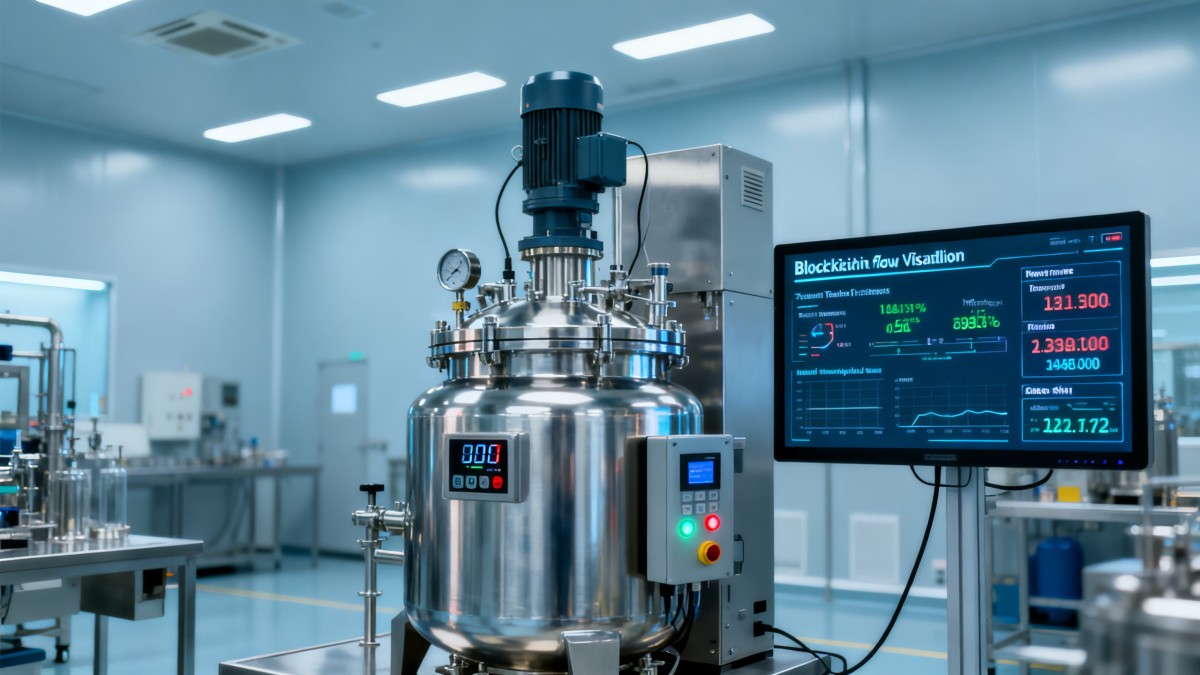
In summary, ISO 22000:2026 introduces a foundational requirement for digital-native traceability in food-contact chemical synthesis—marking the first time ISO has embedded blockchain and real-time process data governance into a widely adopted food safety standard. Its significance lies not in immediate disruption, but in setting a long-term technical expectation for supply chain transparency. Enterprises are advised to treat it as a strategic signal requiring measured, evidence-based preparation—not urgent overhaul.
Source: International Organization for Standardization (ISO), official publication notice dated 14 May 2026. Note: National implementation guidance, certification body procedures, and auditor training materials remain pending and are subject to ongoing observation.
Related Intelligence
- Custom SynthesisWhat Data Should a Chemical Manufacturer Provide for a GMP Audit?What data should a chemical manufacturer provide for GMP audit readiness? Explore the essential records for traceability, validation, data integrity, and confident compliance.
- Custom SynthesisDoes organic chemical synthesis scale-up require different solvent recovery thresholds above 500 L batch volume?Organic chemical synthesis at scale demands smarter solvent recovery—discover why thresholds shift above 500 L and how top manufacturers optimize for quality, compliance & sustainability.
- Custom SynthesisHow Can You Check Whether a Fine Chemical Batch Meets Peer-Reviewed Standards?Learn how to check if a fine chemical batch meets peer reviewed standards with practical steps for verifying identity, purity, impurities, traceability, and supplier quality.
The Morning Broadsheet
Daily chemical briefings, market shifts, and peer-reviewed summaries delivered to your terminal.
