

The Authority in Global Agricultural Chemistry & Bio-Resources
Global Feed Raw Material Price Index Rises 8.3% Weekly
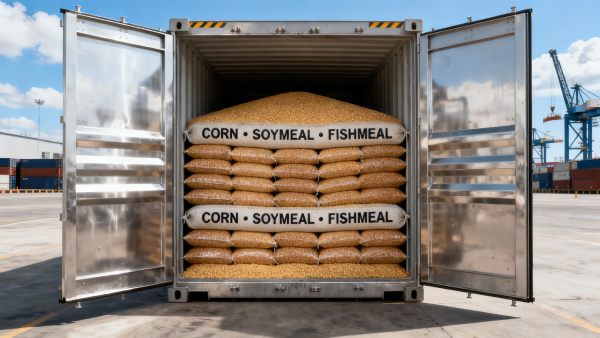
On May 14, 2026, the International Feed Industry Federation (IFIF) reported an 8.3% weekly increase in the Global Feed Raw Material Price Index (FFPI), the largest rise since September 2025. This development directly affects feed pellet exporters, raw material buyers, and international trade stakeholders — particularly those engaged in corn, soybean meal, and fishmeal procurement or commercial feed pellet supply chains.
Event Overview
On May 14, 2026, the International Feed Industry Federation (IFIF) released its latest Global Feed Raw Material Price Index (FFPI), indicating that average prices for corn, soybean meal, and fishmeal rose 8.3% week-on-week. As a result, FOB export quotations for Commercial Feed Pellets from China increased by 5–7%, and some buyers in South America and Southeast Asia have initiated comparative supplier evaluations.
Industries Affected
Direct Trading Enterprises
These enterprises face immediate margin pressure due to rising input costs and revised export pricing. The 5–7% FOB quotation adjustment reflects pass-through of upstream cost increases, but also risks buyer pushback or order deferral in price-sensitive markets.
Raw Material Procurement Entities
Procurement teams are exposed to volatility across three core commodities — corn, soybean meal, and fishmeal — whose joint price surge signals potential supply tightness or logistical constraints. Short-term hedging and contract renegotiation may be triggered, especially for fixed-price agreements signed prior to May 2026.
Feed Manufacturing & Pellet Producers
Manufacturers reliant on imported raw materials face compressed gross margins unless pricing adjustments are fully reflected downstream. Export-oriented producers must balance competitiveness against cost recovery — particularly where buyers in South America and Southeast Asia are actively benchmarking alternatives.
Supply Chain & Logistics Service Providers
Freight forwarders, customs brokers, and warehousing operators may see shifting demand patterns: e.g., accelerated pre-shipment activity ahead of anticipated further price hikes, or regional rerouting as buyers diversify sourcing. Volume stability could be challenged if buyer substitution accelerates.
What Relevant Enterprises or Practitioners Should Monitor and Do
Track official updates from IFIF and national feed associations
IFIF’s FFPI is updated weekly; subsequent releases (especially May 21 and May 28, 2026) will clarify whether the 8.3% jump reflects a sustained trend or a short-term anomaly. National feed associations in key import markets (e.g., Brazil, Vietnam, Thailand) may issue parallel assessments affecting local buyer behavior.
Monitor price movements in the three core commodities separately
The index aggregates corn, soybean meal, and fishmeal — but their drivers differ (e.g., weather in U.S. Midwest vs. Peruvian anchoveta catch quotas vs. Chinese crush margins). Tracking individual commodity indices helps distinguish systemic inflation from isolated bottlenecks.
Review open export contracts for price adjustment clauses
Commercial Feed Pellet exporters with fixed-price contracts expiring mid- to late-Q2 2026 should assess enforceability of cost-pass-through mechanisms. Contracts lacking indexation or force majeure provisions related to raw material cost spikes may require proactive renegotiation.
Prepare contingency communication with key buyers in South America and Southeast Asia
Since some buyers in these regions have already begun alternative supplier comparisons, maintaining transparency on cost drivers — supported by IFIF data — can help sustain trust. Preemptive outreach may support longer-term relationship continuity over short-term price sensitivity.
Editorial Perspective / Industry Observation
Observably, this 8.3% weekly FFPI increase functions primarily as a near-term signal rather than an established structural shift — it marks the sharpest weekly gain since September 2025, but does not yet confirm a new pricing plateau. Analysis shows the move likely reflects synchronized short-term pressures (e.g., delayed harvest logistics, vessel scheduling delays, or inventory drawdowns) rather than irreversible supply deficits. From an industry perspective, the more significant implication lies in buyer response: the fact that South American and Southeast Asian importers are initiating formal supplier comparisons suggests eroding price tolerance at current levels. Current monitoring should therefore focus less on whether prices will rise further, and more on how quickly procurement behaviors adapt — including shifts toward regional suppliers or formulation changes to reduce reliance on high-cost inputs.
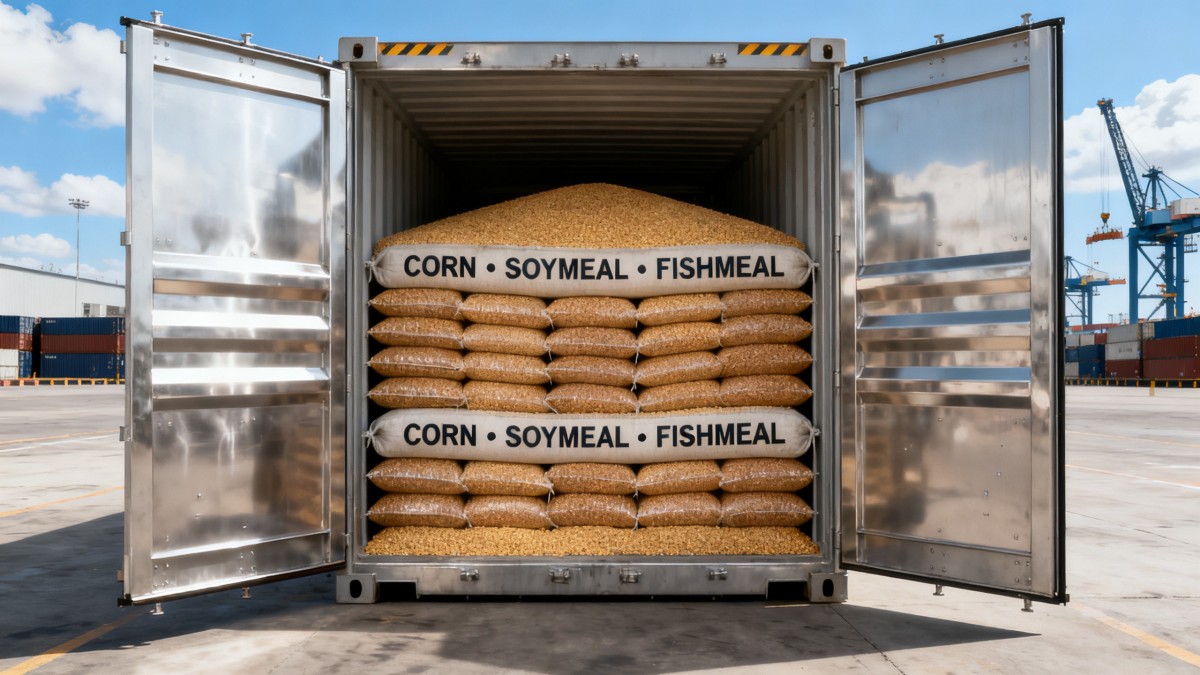
Conclusion: This index movement underscores growing cost transmission pressure across the global compound feed value chain. It is not yet evidence of a prolonged upward cycle, but it is a clear indicator that raw material volatility is re-entering operational planning horizons. Practitioners are better served treating it as a timely prompt to review pricing models, contract terms, and buyer engagement strategies — rather than as a definitive market inflection point.
Source: International Feed Industry Federation (IFIF), Global Feed Raw Material Price Index (FFPI) report dated May 14, 2026.
Further observation required for: FFPI trajectory over the next two reporting cycles (May 21 and May 28, 2026), and official buyer feedback from South America and Southeast Asia on substitution progress.
Related Intelligence
- Commercial Feed PelletFeed Production System Price Trends: Cost Drivers and Budgeting for New LinesFeed production systems price trend insights: compare cost drivers, automation, utilities, compliance, and total ownership costs to budget smarter for new feed lines.
- Commercial Feed PelletHow to Troubleshoot Common Feed Machinery BreakdownsHow to troubleshoot common feed machinery breakdowns with practical checks for blockages, pellet mills, mixers, motors, and preventive maintenance.
- Commercial Feed PelletHow Can Feed Pellet Quality Be Kept Consistent Across Batches?Learn how to ensure feed pellet quality consistency across batches with proven controls for ingredients, conditioning, milling, cooling, testing, and traceable process data.
The Morning Broadsheet
Daily chemical briefings, market shifts, and peer-reviewed summaries delivered to your terminal.
