

The Authority in Global Agricultural Chemistry & Bio-Resources
Origin Wukong-180: China's 180-Qubit Quantum Computer Goes Live
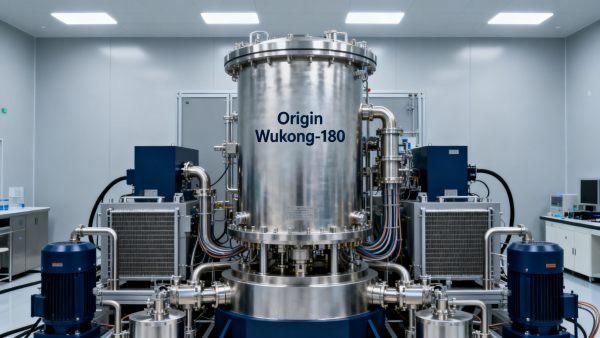
China’s fourth-generation superconducting quantum computer, Origin Wukong-180, has officially entered operational service—marking the first time a domestically developed 180-qubit superconducting system is open for global task submission. Though the exact launch date remains unconfirmed, its deployment follows successful pilot testing at an APIs enterprise in Hefei. The advancement directly impacts the specialty chemicals, agrochemicals, and pharmaceutical sectors by accelerating molecular simulation workflows—particularly high-throughput custom synthesis—and reshaping competitive dynamics in AI-integrated R&D infrastructure.
Event Overview
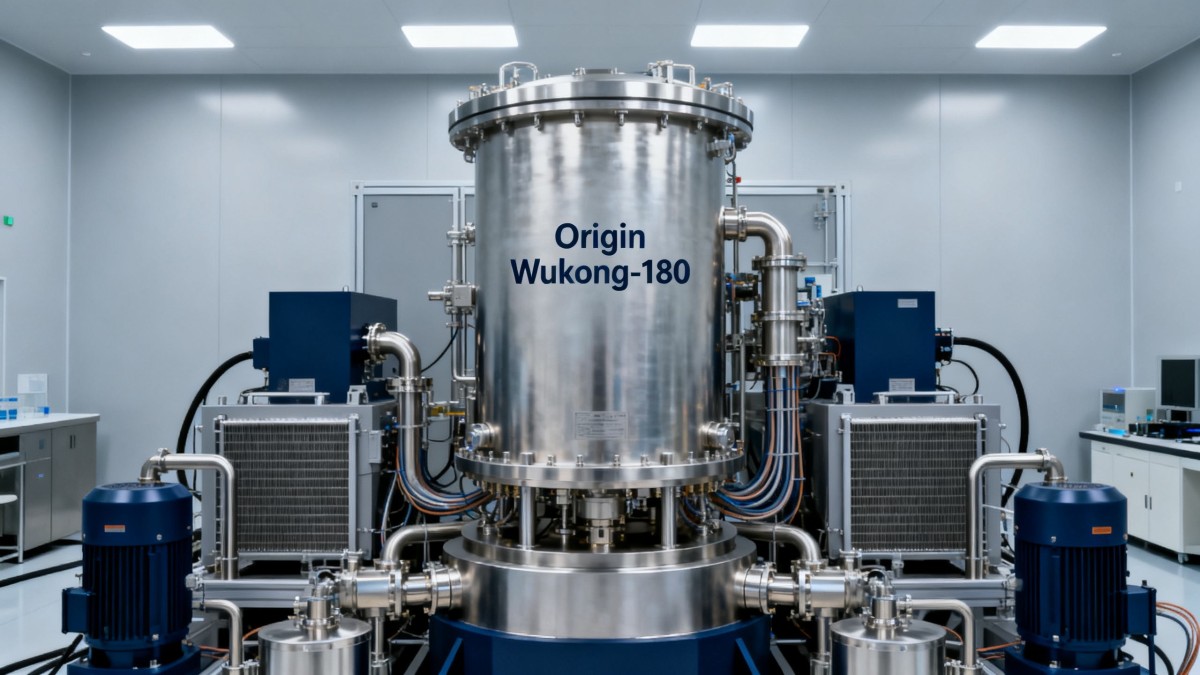
The Origin Wukong-180 quantum computer—featuring a fully indigenous 180-qubit superconducting chip—is now accessible via API for external computational tasks. In a verified pilot run with a Hefei-based active pharmaceutical ingredients (APIs) manufacturer, molecular docking simulations that previously required 72 hours were completed in just 11 minutes. No claims regarding quantum advantage across broader workloads or fault tolerance are made in official communications; the reported performance gain applies specifically to targeted quantum-accelerated molecular modeling routines within Custom Synthesis platforms.
Industries Affected
Direct Trade Enterprises
Export-oriented contract research and manufacturing organizations (CRMOs) and custom synthesis service providers face intensified pressure to integrate quantum-accelerated simulation into their value proposition. As overseas clients—especially EU- and US-based agrochemical and pharma buyers—begin evaluating vendors on computational R&D latency, firms lacking quantum-accessible infrastructure may see declining win rates in bids for novel intermediate development, particularly where structural complexity demands iterative docking or conformational sampling.
Raw Material Procurement Enterprises
Procurement teams at multinational agrochemical and fine chemical companies must reassess vendor qualification criteria. Traditional due diligence—focused on GMP compliance, batch consistency, and regulatory documentation—is now supplemented by technical readiness for quantum-augmented design cycles. Early adoption signals capacity to de-risk late-stage candidate failure; procurement strategies may shift toward dual-sourcing arrangements that include at least one quantum-capable partner for high-priority targets such as green catalysts or chiral pesticide intermediates.
Processing & Manufacturing Enterprises
Manufacturers engaged in multi-step synthesis of complex intermediates—especially those operating under tight regulatory timelines (e.g., EPA Fast-Track submissions or EMA conditional approvals)—stand to benefit from compressed pre-clinical validation windows. However, integration requires alignment between quantum-enabled design outputs and existing process chemistry capabilities; mismatched scale-up readiness may convert computational speed gains into new bottlenecks downstream.
Supply Chain Service Providers
Logistics integrators, regulatory consultants, and analytical testing labs serving the custom synthesis ecosystem will need to adapt service frameworks. For example, quantum-accelerated route design often yields non-traditional synthetic pathways—requiring updated impurity profiling protocols, revised stability testing schedules, and reconfigured cold-chain logistics for novel, thermally sensitive intermediates. Service differentiation will increasingly hinge on domain fluency in quantum-informed chemistry—not just execution capability.
Key Considerations & Recommended Actions
Evaluate quantum-readiness of current CRO/CMO partners
Verify whether contracted R&D partners have formal access to Origin Wukong-180 or equivalent infrastructure—and whether their computational chemistry teams are trained to translate quantum simulation outputs into validated lab protocols. Prioritize partnerships with documented pilot use cases, not theoretical access.
Update internal R&D gating criteria
Introduce quantum-accelerated feasibility assessment as a mandatory checkpoint before initiating synthesis campaigns for structurally novel scaffolds. This includes benchmarking docking turnaround against the 11-minute threshold and confirming compatibility with proprietary molecular libraries.
Assess data governance implications
Quantum-enabled molecular design generates highly granular conformational and binding-energy datasets. Review data ownership clauses in API access agreements, especially concerning intellectual property derived from hybrid classical-quantum workflows. Ensure alignment with jurisdiction-specific regulations (e.g., EU Data Act, China’s PIPL).
Editorial Perspective / Industry Observation
Observably, Origin Wukong-180’s deployment is less about near-term quantum supremacy and more about strategic infrastructure signaling: it confirms China’s capacity to co-develop hardware, software stacks, and domain-specific algorithms in tandem. Analysis shows that the 72-hour-to-11-minute improvement reflects tightly scoped optimization—not general-purpose acceleration—and its commercial impact hinges on whether global customers treat quantum access as a differentiator in tender evaluations. From an industry perspective, this milestone better represents a ‘quantum-readiness inflection point’ than a paradigm shift; the real test lies in whether it triggers measurable reductions in time-to-approval for quantum-designed molecules over the next 18–24 months.
Conclusion
The operationalization of Origin Wukong-180 underscores a structural evolution in how computational chemistry intersects with industrial R&D timelines. It does not replace empirical validation—but compresses the hypothesis-generation loop to a degree that recalibrates expectations across the specialty chemical value chain. A rational interpretation is that competitive positioning will increasingly reflect integration velocity—not just quantum capability per se.
Sources & Notes for Ongoing Monitoring
Official announcements issued by Origin Quantum Computing Co., Ltd.; technical validation report from Hefei National Laboratory for Physical Sciences at Microscale (unpublished pilot summary); public API documentation for Origin Wukong-180 (v1.2, accessed June 2024). Note: Quantum error rates, sustained qubit coherence times, and cross-platform benchmarking against IBM Quantum Heron or Quantinuum H2 systems remain unreported and are subject to ongoing verification.
Related Intelligence
- Custom SynthesisWhat Data Should a Chemical Manufacturer Provide for a GMP Audit?What data should a chemical manufacturer provide for GMP audit readiness? Explore the essential records for traceability, validation, data integrity, and confident compliance.
- Custom SynthesisDoes organic chemical synthesis scale-up require different solvent recovery thresholds above 500 L batch volume?Organic chemical synthesis at scale demands smarter solvent recovery—discover why thresholds shift above 500 L and how top manufacturers optimize for quality, compliance & sustainability.
- Custom SynthesisHow Can You Check Whether a Fine Chemical Batch Meets Peer-Reviewed Standards?Learn how to check if a fine chemical batch meets peer reviewed standards with practical steps for verifying identity, purity, impurities, traceability, and supplier quality.
The Morning Broadsheet
Daily chemical briefings, market shifts, and peer-reviewed summaries delivered to your terminal.
