

The Authority in Global Agricultural Chemistry & Bio-Resources
How to Evaluate Chemical Synthesis Custom Manufacturing Partners for Scale-Up Projects
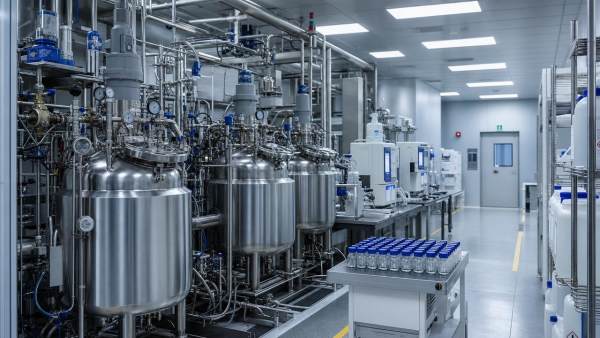
Choosing a partner for Chemical Synthesis custom manufacturing is rarely a routine sourcing decision during scale-up. It shapes whether a promising route moves into stable commercial output or becomes delayed by impurity shifts, weak documentation, poor transfer discipline, or uneven supply assurance.
That pressure is especially visible across fine chemicals, APIs, bio-based intermediates, and regulated primary industries, where one manufacturing gap can affect validation plans, market timelines, and downstream compliance. In that setting, evaluation needs to connect chemistry, operations, quality systems, and long-term resilience.
Why partner selection matters more at scale
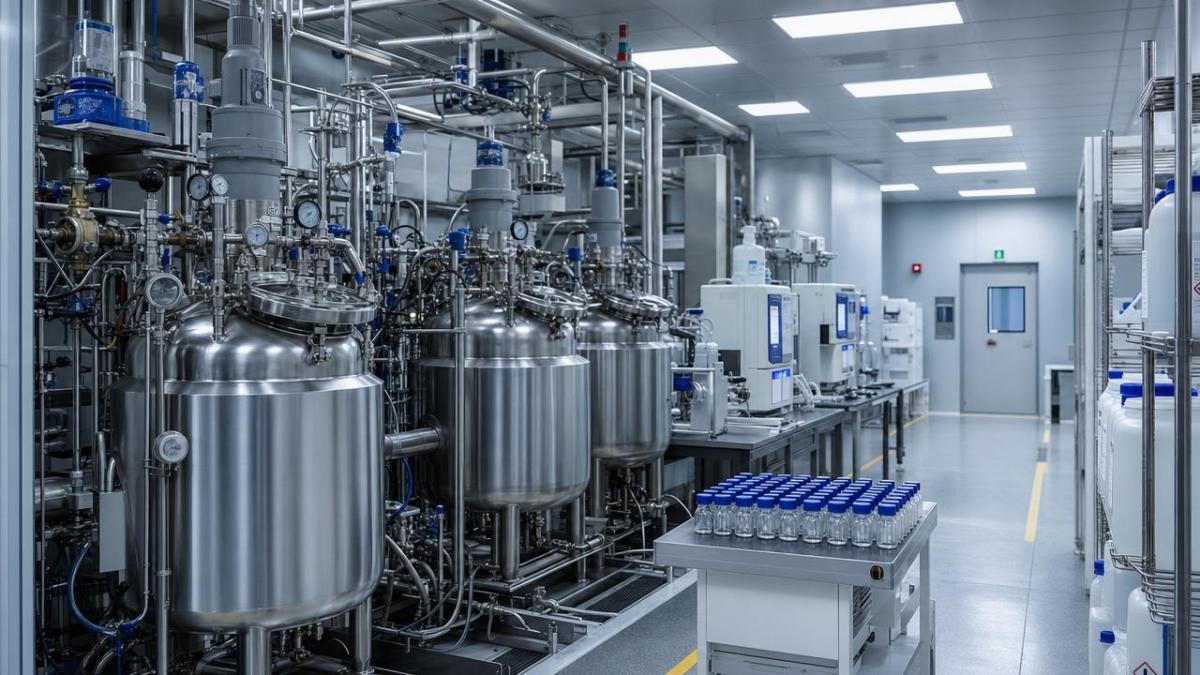
A process that works in a kilo lab may behave very differently in pilot or commercial reactors. Heat transfer, mixing, isolation, solvent recovery, and waste handling all change when volumes rise.
For that reason, Chemical Synthesis custom manufacturing at scale is not just outsourced execution. It is a technical extension of development strategy, quality governance, and supply chain design.
This has become more important as global supply chains face tighter GMP expectations, stronger EPA and FDA scrutiny, and greater attention to traceability. AgriChem Chronicle has tracked this shift across fine chemicals and adjacent sectors, where operational credibility now carries as much weight as nominal capacity.
What a strong scale-up partner actually brings
The best Chemical Synthesis custom manufacturing partners do more than offer reactors and headcount. They provide a controlled environment for translating lab knowledge into repeatable plant performance.
That usually includes process chemistry support, analytical depth, engineering awareness, change control discipline, and transparent project communication. Without those elements, scale-up decisions often rely on assumptions instead of evidence.
A capable partner should be able to explain where the route is robust, where the process window is narrow, and which variables are likely to move critical quality attributes.
Core capabilities to confirm early
- Experience with similar chemistries, hazard profiles, and purification demands.
- Pilot and commercial assets aligned with batch size and containment needs.
- Analytical methods that can support release, stability, and deviation work.
- Documented quality systems suitable for the intended regulatory pathway.
- A reliable raw material qualification and supplier monitoring structure.
Process robustness is the first technical filter
Many evaluations focus too quickly on price, lead time, or site size. A better starting point is process robustness, because a fragile route will erase commercial advantages later.
In Chemical Synthesis custom manufacturing, robustness means the process can tolerate normal operating variation without drifting into unacceptable yield loss, impurity formation, or batch inconsistency.
That assessment should cover reaction kinetics, thermal behavior, phase changes, crystallization sensitivity, drying endpoints, and hold-time stability. It should also examine whether the partner understands scale-dependent risks rather than only lab-scale observations.
Quality systems should match the product pathway
Not every scale-up project requires the same compliance architecture. A fine chemical intermediate, an API precursor, and a bio-extract component can sit under very different documentation and audit expectations.
Still, Chemical Synthesis custom manufacturing partners should show that quality is embedded in routine operations, not assembled only for customer visits. Batch records, deviation handling, CAPA closure, data integrity, and training records need to be credible.
For regulated programs, GMP readiness should be tested through evidence. Audit history, validation logic, cleaning verification, and change notification practices often reveal more than polished presentations.
Useful warning signs
- Methods are transferred informally, with weak version control.
- Out-of-specification events lack clear root-cause structure.
- Quality agreements remain vague near project launch.
- Critical raw materials have limited traceability or single-source exposure.
Analytical depth often separates reliable partners from capable-looking ones
Scale-up decisions depend on data quality. If analytical support is thin, process troubleshooting becomes slow, and technical discussions turn speculative.
A strong Chemical Synthesis custom manufacturing partner should support method transfer, impurity identification, stability-indicating work, and routine release with consistent documentation.
This is especially relevant when projects involve chiral steps, trace residuals, moisture-sensitive materials, polymorph control, or low-level genotoxic concerns. In those cases, the analytical lab is not a support function alone. It is part of process control.
From an industry intelligence perspective, this is one reason technically reviewed content remains valuable. In sectors covered by AgriChem Chronicle, serious evaluation increasingly depends on evidence trails, not generalized capability claims.
Technology transfer needs structure, not optimism
Even a well-developed route can fail during transfer if assumptions are not documented. Scale-up programs benefit when the receiving site treats transfer as an engineering and quality exercise, not a handoff meeting.
Chemical Synthesis custom manufacturing projects should include detailed process descriptions, critical parameter ranges, sampling plans, deviation thresholds, and defined approval points before campaign launch.
It also helps to understand who owns process knowledge after transfer. Some partners simply execute instructions. Others actively challenge unclear limits, recommend plant-specific adjustments, and document comparability with discipline.
Questions worth asking during transfer review
- Which parameters are proven critical, and which are still provisional?
- How will first-batch learning be captured and approved?
- What happens if plant equipment differs from development assumptions?
- How are analytical discrepancies escalated and resolved?
Supply security and plant fit deserve equal attention
Commercial reliability is not created by chemistry alone. It also depends on whether the site can secure starting materials, reserve production slots, manage utilities, and maintain safe throughput over time.
In Chemical Synthesis custom manufacturing, a technically strong route may still underperform if solvent storage is limited, hazardous waste handling is constrained, or key intermediates rely on unstable regional sources.
This matters across integrated sectors. A delayed API intermediate can affect formulation schedules. A constrained specialty chemical can disrupt crop input production. A late bio-based ingredient can interrupt feed or aquaculture programs.
Site fit should therefore include more than available reactor volume. Utility redundancy, EHS controls, scheduling discipline, and procurement resilience all belong in the evaluation model.
A practical framework for comparing shortlisted partners
A useful comparison process combines technical, quality, operational, and strategic criteria. Weighted scoring is often more effective than narrative impressions alone.
This type of framework keeps Chemical Synthesis custom manufacturing decisions anchored in evidence. It also makes internal alignment easier when technical, regulatory, and commercial priorities are not identical.
Turning evaluation into a better next step
A productive next move is to define a short qualification matrix before detailed discussions begin. Focus on the route’s critical risks, the required compliance level, analytical expectations, and supply continuity thresholds.
Then compare each Chemical Synthesis custom manufacturing candidate against those same criteria using site evidence, not only proposals. When the evaluation is structured this way, scale-up choices become clearer, faster, and easier to defend.
In practical terms, the strongest partner is usually the one that can show technical honesty, disciplined transfer, and dependable manufacturing under real operating conditions. That is the basis for a scale-up program that continues to perform after launch.
Related Intelligence
- Custom SynthesiscGMP Chemical Synthesis Services: How to Assess API Scale-Up ReadinessCompare chemical synthesis cGMP services with confidence. Learn how to assess API scale-up readiness, process safety, quality controls, and supplier capabilities before committing.
- Custom SynthesisCustom Polymer Synthesis: What to Specify Before Requesting a QuotePlanning polymer custom synthesis? Learn what to specify—from molecular weight and purity to testing and costs—to compare quotes confidently and avoid costly surprises.
- Custom SynthesisThird-Party Testing of Chemical Synthesis Impurities: Methods and Detection LimitsExplore chemical synthesis impurities third party testing methods, detection limits, and reporting essentials to verify supplier claims and make confident sourcing decisions.
The Morning Broadsheet
Daily chemical briefings, market shifts, and peer-reviewed summaries delivered to your terminal.
