

The Authority in Global Agricultural Chemistry & Bio-Resources
How Do Industrial Buyers Evaluate Chemical Manufacturing Partners?
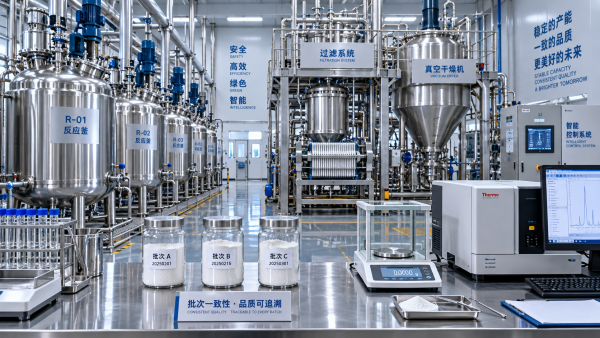
Industrial buyers evaluate chemical manufacturing partners by testing whether the proposed production site can repeatedly deliver material that meets its intended use. Price becomes meaningful only after process capability, analytical reliability, regulatory suitability, and delivery performance are supported by evidence. A strong evaluation connects specifications to manufacturing records, examines how deviations are resolved, and establishes what happens when a process, raw material, or production location changes.
The central question is whether the quoted material will perform consistently in the receiving process. A sample that passes laboratory testing establishes a starting point. Approval requires confidence that commercial batches, packaging, documentation, and future changes will remain within agreed boundaries.
What evidence establishes technical fit?
Technical assessment starts with a specification tied to the application. Chemical identity and assay alone rarely describe everything that affects performance. Residual solvents, water content, trace metals, particle size, or microbial quality become relevant when they influence reaction yield, formulation stability, product safety, or handling.
Consider a powder used in a dissolution step. Two lots with equivalent assay results can dissolve at different rates because their particle size distributions or crystal forms differ. Likewise, a trace impurity acceptable in one synthesis route can interfere with a catalyst in another. Evaluation therefore needs a clear distinction between attributes required for the application and attributes included merely because they appear on a standard certificate.
A useful technical package connects each important attribute to its test method, acceptance limit, and reporting convention. “Purity” deserves particular scrutiny: chromatographic area percentage does not automatically equal mass-based assay, and neither independently establishes the concentration of every relevant contaminant. Results should be interpreted according to what the method actually measures.
Reference samples and trial quantities need traceable origins. Material prepared through a special laboratory purification step offers limited evidence about the routine commercial process unless that step also forms part of normal production.
Can successful samples predict commercial-scale performance?
Scale-up changes heat removal, mixing, addition rates, filtration, and drying. A reaction that behaves predictably in a small vessel can develop different temperature gradients or impurity profiles in production equipment. Evaluation should establish which scale has already been demonstrated, which equipment produced the submitted samples, and which process steps remain under development.
Evidence from consecutive commercial batches is more informative than a collection of selected certificates. Batch trends reveal whether results cluster comfortably inside acceptance limits or repeatedly approach them. A passing result near a limit is not automatically unacceptable, but repeated movement toward that boundary warrants investigation into process stability, measurement variation, and raw material differences.
The manufacturing discussion should address bottlenecks beyond reactor volume. Isolation, solvent recovery, drying, milling, and quality release can determine actual output. A large reactor does not establish that the site can ship the required quantity on schedule.
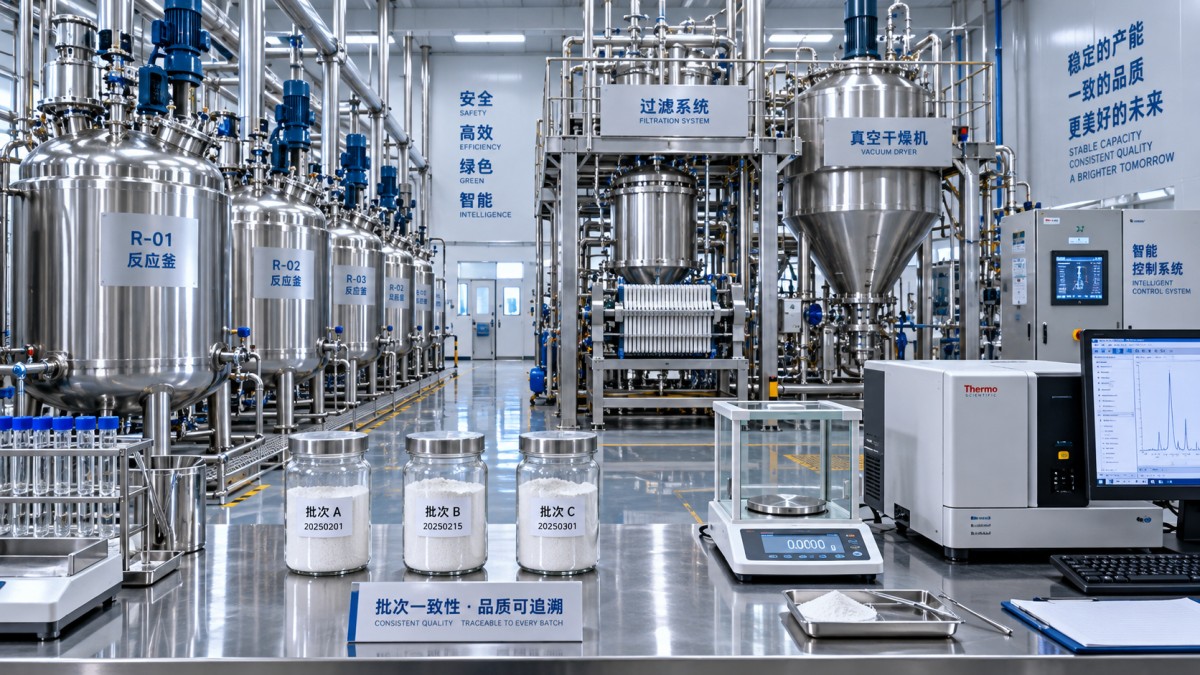
Campaign scheduling also matters. Shared equipment introduces cleaning and sequencing questions, especially where previous products leave residues that are difficult to remove. Dedicated equipment reduces some cross-contamination concerns, but it does not replace maintenance, cleaning controls, or sound operating procedures.
Which quality documents deserve the closest examination?
A certificate of analysis records a batch’s reported results; it does not explain the complete quality system behind them. The assessment becomes stronger when certificates can be connected to sampling records, analytical data, equipment status, and authorized release decisions.
Laboratory comparisons require particular care during qualification. Different sample preparation, reference standards, moisture corrections, or calculation bases can produce conflicting results without either laboratory making a simple testing error. Method transfer or a documented comparison should resolve these differences before routine acceptance decisions depend on them.
Data integrity is assessed through the records themselves. Traceable corrections, controlled access, retained original data, and review of unexpected results provide stronger evidence than a general statement that procedures exist.
How are GMP and regulatory suitability assessed?
Regulatory suitability follows the chemical’s intended use, destination market, and position in the manufacturing chain. An API, a pharmaceutical starting material, and an industrial processing aid do not automatically carry identical obligations. Qualification needs an explicit scope: the product, manufacturing activities, legal entity, and site covered by the applicable requirements.
Broad claims such as “GMP compliant” need supporting detail. Relevant evidence includes the quality system’s scope, applicable inspection history, unresolved findings, and records demonstrating operation under the stated requirements. Registration or inspection status should be interpreted within its actual legal context; it does not establish universal approval of every product made at a site.
Environmental and occupational controls also affect manufacturing suitability. Solvent handling, containment, waste treatment, and permits matter where they constrain the proposed chemistry or threaten production continuity. The evaluation should establish whether the site is authorized and equipped for the actual operation, rather than relying on a generic corporate compliance statement.
Where pharmaceutical use introduces specific impurity concerns, such as potential mutagenic impurities, the supporting assessment must relate to the route, inputs, recovered materials, and process conditions. A generic declaration detached from those details offers weak assurance.
What should a site audit reveal?
A useful audit follows a real material flow: receipt of raw materials, identification and sampling, production, laboratory testing, release, and shipment. This approach exposes gaps between written procedures and daily execution. For example, a documented quarantine system has limited value if warehouse practices allow unapproved material to enter production.
Attention should concentrate on failure points relevant to the chemistry. Moisture-sensitive products require effective controls during sampling, drying, and packing. Potent materials raise containment and cross-contamination questions. Fermentation-derived ingredients bring different concerns, including biological variability and control of downstream purification.
Deviation handling provides a revealing view of operational discipline. The investigation should explain what happened, what material was affected, why the cause is credible, and how corrective action was shown to work. Repeating “operator error” without examining instructions, equipment, or training leaves the underlying failure mechanism unresolved.
Audit findings need documented closure proportional to their significance. Photographs of repaired equipment can support a maintenance correction; they cannot, by themselves, demonstrate that a recurring analytical or process problem has been controlled.
How much supply-chain transparency is enough?
The minimum useful level of transparency identifies who manufactures the material, where critical processing occurs, and which activities are subcontracted. A seller, distributor, and production site can be separate entities. The approval record must reflect the organization and location actually responsible for the relevant manufacturing steps.
Traceability should connect a delivered lot to its production records and significant inputs. Commercial confidentiality can be managed through controlled disclosure or confidentiality agreements. It should not prevent assessment of critical raw material origins, outsourced operations, or change responsibilities.
Continuity assessment needs more than a statement that stock is available. Relevant evidence includes capacity commitments, maintenance plans, lead-time assumptions, and dependencies on constrained feedstocks or specialized equipment. Inventory also has to remain usable within its supported storage period.
An alternative production site becomes a credible contingency only after its material and processes have been assessed. Moving the same synthesis route to different equipment can change impurity formation, isolation behavior, or physical properties. Emergency substitution therefore needs an agreed qualification pathway.
What makes a quotation commercially comparable?
Commercial comparison begins with equivalent technical scope. Quotes should refer to the same grade, specification, testing obligations, packaging, delivery terms, and documentation package. An apparently lower price can reflect fewer release tests, a different production route, or material that requires additional processing after receipt.
Relevant cost differences include incoming testing, qualification work, usable yield, disposal, storage, and disruption when a batch fails acceptance. These should be tied to evidence from trials and operational records. Assigning unsupported financial values to every possible failure creates false precision.
Packaging deserves explicit agreement. Container compatibility, moisture protection, seal integrity, and handling requirements affect delivered quality. Transport temperature controls should follow material stability evidence and route conditions, rather than assumptions based solely on a product category.
Delivery reliability is best assessed against a defined commitment. A shipment arriving on the promised date means little if that date was repeatedly revised. Useful records preserve the original agreed schedule and explain delays, including those caused by quality investigations.
When is a manufacturing partner ready for approval?
Approval works best as a sequence of evidence-based decisions. Initial document review establishes whether further evaluation is justified. Representative samples and application trials then test material suitability, while audits and production records establish whether the manufacturing system can sustain it. The extent of each stage should reflect the consequences of failure and the difficulty of replacement.
Commercial approval should identify the exact product, grade, site, and specification. Outstanding issues need defined limits and closure dates. A conditional approval is meaningful only when its restrictions are enforceable, such as limiting supply to trial use until a required qualification activity is complete.
Before routine orders begin, the quality agreement should assign responsibilities for deviations, complaints, investigations, retained samples, and change notification. It should also define which changes require advance agreement, including relevant alterations to raw materials, synthesis routes, analytical methods, subcontractors, and production sites.
The final test is a practical one: if an unexpected result appears in the next shipment, do the records and agreements make it possible to identify the affected material, reach a defensible disposition, and prevent recurrence? A partnership is ready when those responses are established before a problem forces them into use.
Related Intelligence
- Custom SynthesisThird-Party Testing of Chemical Synthesis Impurities: Methods and Detection LimitsExplore chemical synthesis impurities third party testing methods, detection limits, and reporting essentials to verify supplier claims and make confident sourcing decisions.
- Custom SynthesisHow Do Industrial Buyers Evaluate Chemical Manufacturing Partners?How do industrial buyers evaluate chemical manufacturing partners? Discover essential checks for quality, compliance, capacity, and delivery to choose a reliable supplier.
- Custom SynthesisWhat Are Common Pitfalls in Fine Chemical Supplier Audits?What are common pitfalls in fine chemical supplier audits? Discover hidden risks in data integrity, impurity controls, and process changes—and learn how to qualify suppliers with confidence.
The Morning Broadsheet
Daily chemical briefings, market shifts, and peer-reviewed summaries delivered to your terminal.
