

The Authority in Global Agricultural Chemistry & Bio-Resources
Custom Chemical Synthesis Production: When to Choose Route Development vs Scale-Up
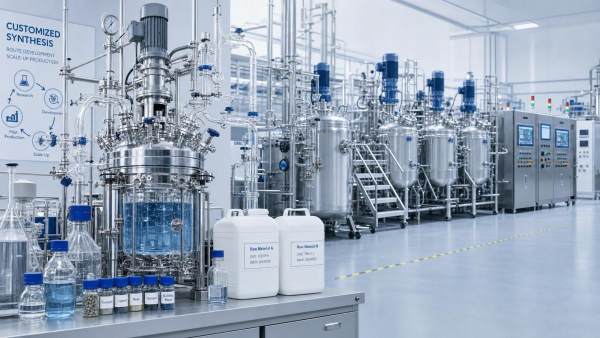
In custom chemical synthesis production, the choice between route development and scale-up shapes far more than laboratory workflow. It influences batch consistency, regulatory readiness, cost visibility, raw material resilience, and the ability to move from technical promise to dependable supply.
That decision matters across fine chemicals, APIs, bio-extract derivatives, and adjacent primary industries where quality systems and supply chain traceability now carry equal weight. In markets tracked closely by AgriChem Chronicle, process choices are no longer only scientific. They are commercial and strategic.
Why the distinction matters early
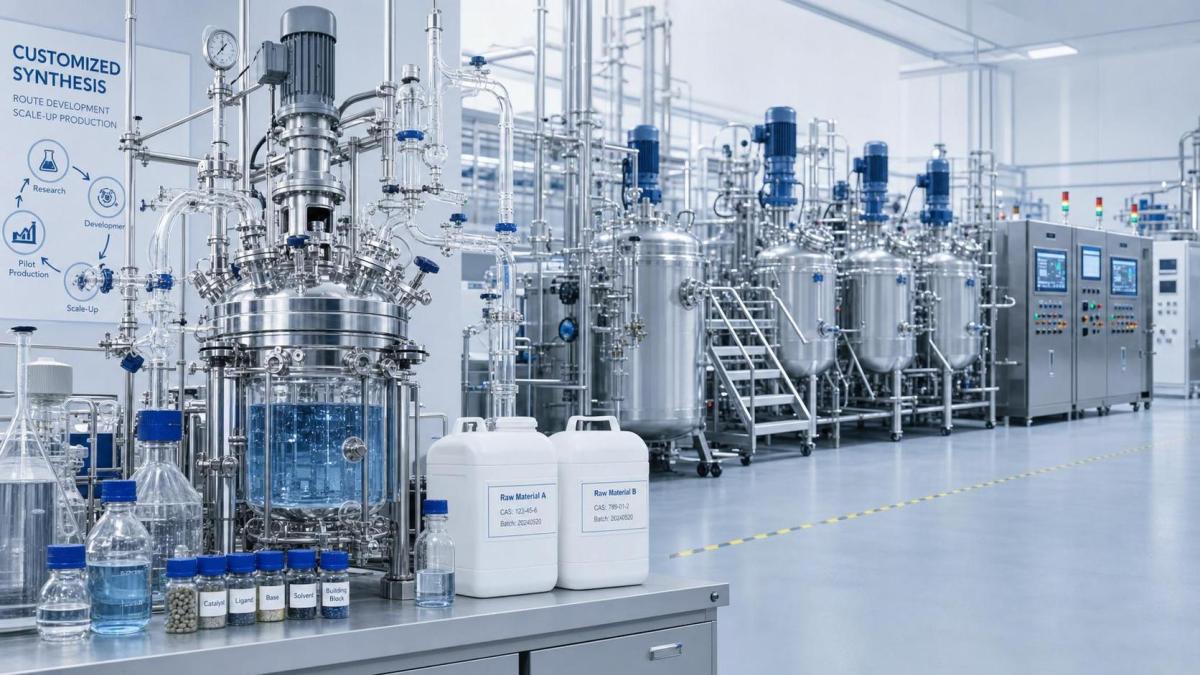
Route development and scale-up are related, but they solve different problems inside custom chemical synthesis production.
Route development focuses on designing or redesigning the synthetic pathway. The goal is to create a practical, robust, and safe process before volume becomes the main concern.
Scale-up starts from a route that is already largely defined. The challenge then shifts to reproducing reaction behavior, purity, yield, and safety at pilot or commercial scale.
Simple lab success does not guarantee manufacturing success. A route may look elegant on paper, yet fail when heat transfer, solvent recovery, impurity purge, or equipment limitations appear at larger scale.
For that reason, the route-versus-scale-up decision should not be treated as a routine handoff. It is an early risk filter.
What route development is really solving
In custom chemical synthesis production, route development is chosen when the existing path is still uncertain, inefficient, unsafe, or too exposed to supply volatility.
A development program may evaluate alternative starting materials, catalyst systems, reaction sequences, isolation methods, or impurity control strategies.
This work becomes especially valuable when a molecule sits in a regulated chain. APIs, intermediates, and bioactive compounds often require a route that supports documentation, reproducibility, and future validation.
It also matters when raw material availability is unstable. In agricultural and biochemical sectors, feedstock seasonality, geopolitical trade shifts, and environmental restrictions can quickly weaken a once-acceptable route.
- Yields are inconsistent across repeats.
- Critical reagents are expensive or hard to source.
- Impurity profiles threaten downstream acceptance.
- Waste streams create EHS or disposal pressure.
- The chemistry depends on narrow laboratory conditions.
In these situations, scaling a weak route usually magnifies cost and compliance problems instead of solving them.
When scale-up becomes the better choice
Scale-up fits projects where the chemistry is already credible and the main question is manufacturability. The pathway is known, the reaction sequence is stable, and the focus turns to operational control.
Within custom chemical synthesis production, this usually means moving from gram or kilogram work toward pilot lots, engineering runs, or validated commercial batches.
At this stage, attention shifts to mixing efficiency, mass transfer, temperature gradients, hold times, filtration behavior, solvent handling, cleaning, and batch record discipline.
Scale-up is often the right path when time to market matters and the existing route already satisfies technical expectations.
The strongest scale-up programs do not assume laboratory data will translate directly. They treat engineering behavior as a separate technical discipline.
Current industry pressure points
The route decision now sits inside a wider industrial context. Fine chemicals and APIs face rising audit intensity, while bio-based compounds and agricultural inputs face stronger traceability demands.
That is why custom chemical synthesis production increasingly requires a cross-functional view. Chemistry, sourcing, environmental controls, documentation, and plant capability must be evaluated together.
ACC’s market lens is useful here because the same pattern appears across sectors. Buyers want deeper visibility into origin, process robustness, and continuity planning, not just a target specification.
A route that depends on one restricted solvent or one fragile precursor can become a strategic liability. A scale-up plan that ignores emissions controls or cleaning validation can slow commercialization even after technical success.
How to read the decision in practical terms
A useful way to judge custom chemical synthesis production is to ask what problem is actually blocking progress.
Choose route development when the process logic is weak
This applies when the chemistry still carries unknowns. Perhaps the impurity map is incomplete. Perhaps yield depends on operator technique. Perhaps the route only works with materials that cannot support long-term sourcing.
In such cases, scaling up too soon can create larger deviations, more waste, and higher investigation costs.
Choose scale-up when the route is sound but the plant path is unclear
This applies when process chemistry is stable, yet unit operations remain uncertain. Filtration time may change sharply. Crystallization may behave differently. Heat removal may become the limiting factor.
Here, the right investment is not a new route. It is controlled transfer into larger equipment and realistic batch conditions.
Typical scenarios across regulated and performance-driven sectors
Different sectors reach the same decision through different triggers.
- API intermediates often require route development when impurity control must align with GMP expectations before formal scale-up begins.
- Crop protection ingredients may need route redesign when precursor supply is exposed to regional regulation or seasonal availability.
- Bio-extract derivatives may favor scale-up once extraction chemistry is proven, but solvent recovery and purification still need industrial tuning.
- Feed and grain processing additives may move directly to scale-up if formulation chemistry is mature and manufacturing consistency is the main challenge.
What changes is not the framework, but the weight placed on compliance, raw materials, waste profile, and production cadence.
Key checks before committing resources
Before selecting route development or scale-up in custom chemical synthesis production, several checks help clarify the right path.
- Review whether critical quality attributes are linked to understood process parameters.
- Test raw material flexibility, including second-source feasibility.
- Map safety risks under larger thermal and mixing loads.
- Estimate waste treatment and solvent recovery under realistic production volumes.
- Confirm that batch documentation can support future regulatory or customer review.
- Compare laboratory assumptions with actual equipment constraints.
These checks reduce the chance of choosing scale-up for a chemistry problem, or route development for what is really an engineering problem.
A balanced next step
The most effective custom chemical synthesis production strategy usually starts with a disciplined gap review. That means separating route weakness from scale weakness, then ranking risks by their impact on supply, compliance, and cost.
For projects tied to regulated chemicals, agricultural inputs, or fine chemical supply chains, a useful next move is to build a short decision matrix around route maturity, plant readiness, impurity control, and sourcing resilience.
Once that picture is clear, the choice between route development and scale-up becomes less theoretical. It becomes a practical way to protect timelines, preserve quality, and support reliable commercial execution.
Related Intelligence
- Custom SynthesisWhat Data Should a Chemical Manufacturer Provide for a GMP Audit?What data should a chemical manufacturer provide for GMP audit readiness? Explore the essential records for traceability, validation, data integrity, and confident compliance.
- Custom SynthesisDoes organic chemical synthesis scale-up require different solvent recovery thresholds above 500 L batch volume?Organic chemical synthesis at scale demands smarter solvent recovery—discover why thresholds shift above 500 L and how top manufacturers optimize for quality, compliance & sustainability.
- Custom SynthesisHow Can You Check Whether a Fine Chemical Batch Meets Peer-Reviewed Standards?Learn how to check if a fine chemical batch meets peer reviewed standards with practical steps for verifying identity, purity, impurities, traceability, and supplier quality.
The Morning Broadsheet
Daily chemical briefings, market shifts, and peer-reviewed summaries delivered to your terminal.
